

 Travel Essentials
 Travel Essentials

Explore the life, habitat, and quirky 'dance' of the kakapo, one of the world's rarest birds, in New Zealand's pristine wilderness. Learn conservation efforts and where to spot them.
 Travel Essentials
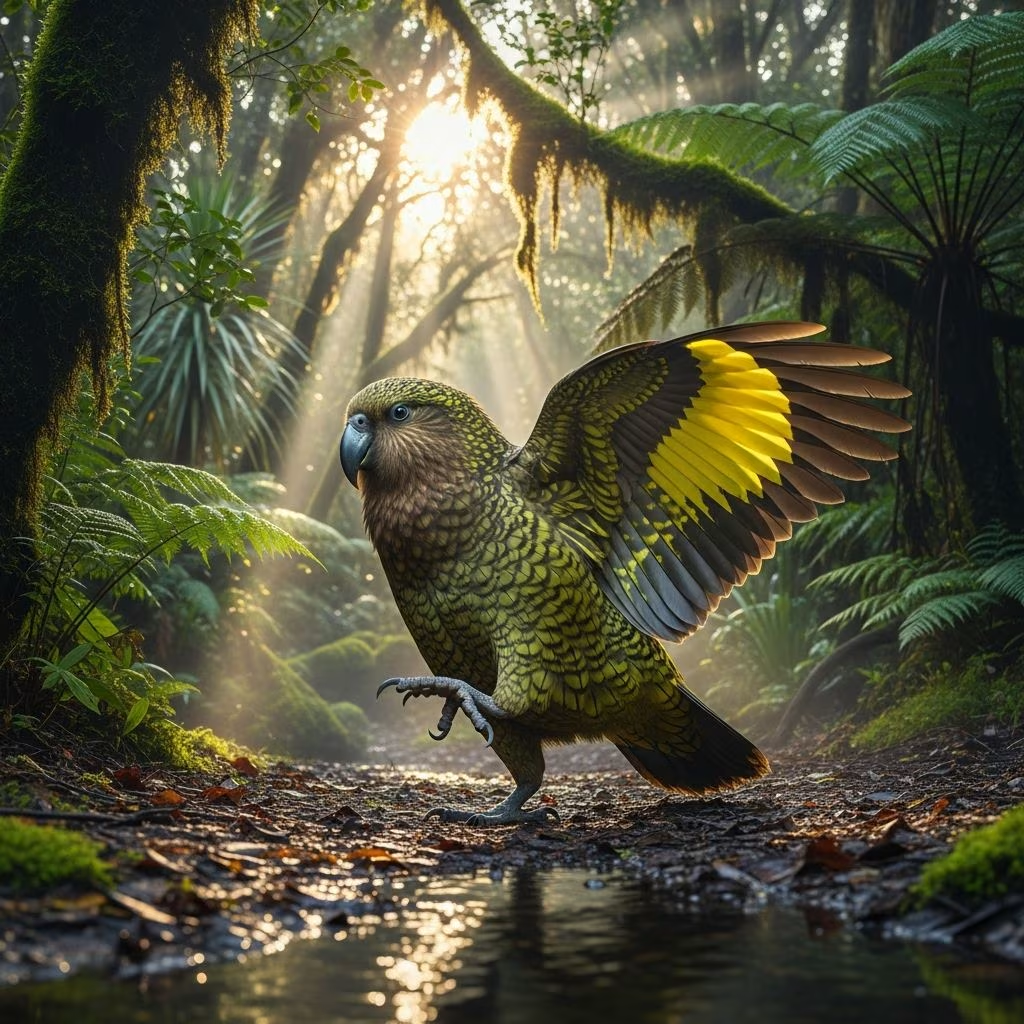
The kakapo, often called the owl parrot, stands out as one of New Zealand’s most extraordinary native species. This flightless bird, with its mossy green feathers and owl-like face, captivates with behaviors that resemble a peculiar dance, especially during mating season. Endemic to the islands of Aotearoa, the kakapo’s survival story intertwines with human conservation triumphs and the nation’s rugged landscapes.
Large and nocturnal, the kakapo (Strigops habroptilus) weighs up to 4 kilograms, making it the heaviest parrot species globally. Unlike typical parrots, it cannot fly, relying instead on strong legs for a distinctive bounding gait. Its feathers provide superb camouflage against forest floors, blending seamlessly with lichen-covered trees and undergrowth.
Scientifically classified under the Strigopidae family, the kakapo evolved in isolation on New Zealand’s predator-free islands for millions of years. This led to unique traits like reduced wings and a strong sense of smell, rare among birds. Department of Conservation records note fewer than 250 individuals remain, all on managed offshore islands.
What locals and researchers term the ‘kakapo dance’ refers to the male’s elaborate courtship display. From late summer to autumn, males trek to leks—communal display areas on ridges. Here, they perform a symphony of booming calls, head-bobbing, and stomping that echoes through the night, audible up to 1 km away.
The ritual unfolds in stages:
This performance, lasting months, tests male endurance. Females, selective, visit multiple leks before mating. Such displays ensure genetic diversity in this solitary species.
Before human arrival around 1300 AD, kakapos numbered in the millions across both main islands. Polynesian settlers introduced rats, stoats, and dogs, decimating populations. European settlers in the 1800s exacerbated this with ship rats, possums, and habitat clearance for farming.
| Era | Population Estimate | Main Threats |
|---|---|---|
| Pre-1300 AD | Millions | None (predator-free) |
| 1900s | ~100,000 | Introduced predators |
| 1990s | <50 | Stoats, rats |
| 2024 | ~250 | Intensive management |
By the 1970s, mainland populations vanished, shifting all survivors to sanctuaries like Stewart Island.
New Zealand’s Department of Conservation (DOC) launched the Kakapo Recovery Programme in 1995. Key strategies include:
Milestones include the first wild chick in 30 years (2016) and a record 21 chicks in 2023. DOC partners with Ngai Tahu iwi, integrating Maori knowledge. Volunteers endure remote conditions, hand-rearing chicks.
Public access is limited to protect the birds, but opportunities exist:
Visitors must follow biosecurity protocols—no food scraps, boot washes—to prevent disease.
In Maori tradition, the kakapo (kākāpō) symbolizes the night and is linked to Rongo, god of cultivated food. Legends describe it as a guardian of forests, its call a portent of weather changes. Modern Kapa Haka groups incorporate kakapo motifs in poi dances, mimicking wing flaps with rhythmic twirls, echoing folklore where birds dance to summon rain.
Contemporary artists like Helen Taylor celebrate it in children’s books such as Kakapo Dance, blending storytelling with education on its ‘boogie’ moves.
Despite progress, hurdles persist: fertility issues from inbreeding, climate impacts on rimu masting (breeding trigger), and funding needs. Mycoplasma infections have claimed lives recently. DOC aims for 500 birds by 2030, requiring sustained effort.
Climate models predict warmer, drier conditions altering food cycles, demanding adaptive management.
Its mating display involves booming, stomping, and bowing in rhythmic patterns, resembling a dance under moonlight.
Limited; permits required for islands like Codfish. Sanctuaries offer closer views.
Approximately 250 as of 2024, all intensively managed.
Introduced stoats, rats, and possums prey on eggs, chicks, and adults.
No, it’s a parrot with owl-like facial discs for directional hearing.
The kakapo’s journey from brink of extinction to hopeful recovery showcases human dedication to biodiversity. Its quirky dance reminds us of nature’s wonders worth preserving amid New Zealand’s emerald isles.
