

 Travel Essentials
 Travel Essentials

Uncover the secrets of the Kalahari Desert spanning Botswana, Namibia, and South Africa. Learn about its unique wildlife, best parks, travel tips, and cultural heritage in this comprehensive guide.
 Travel Essentials
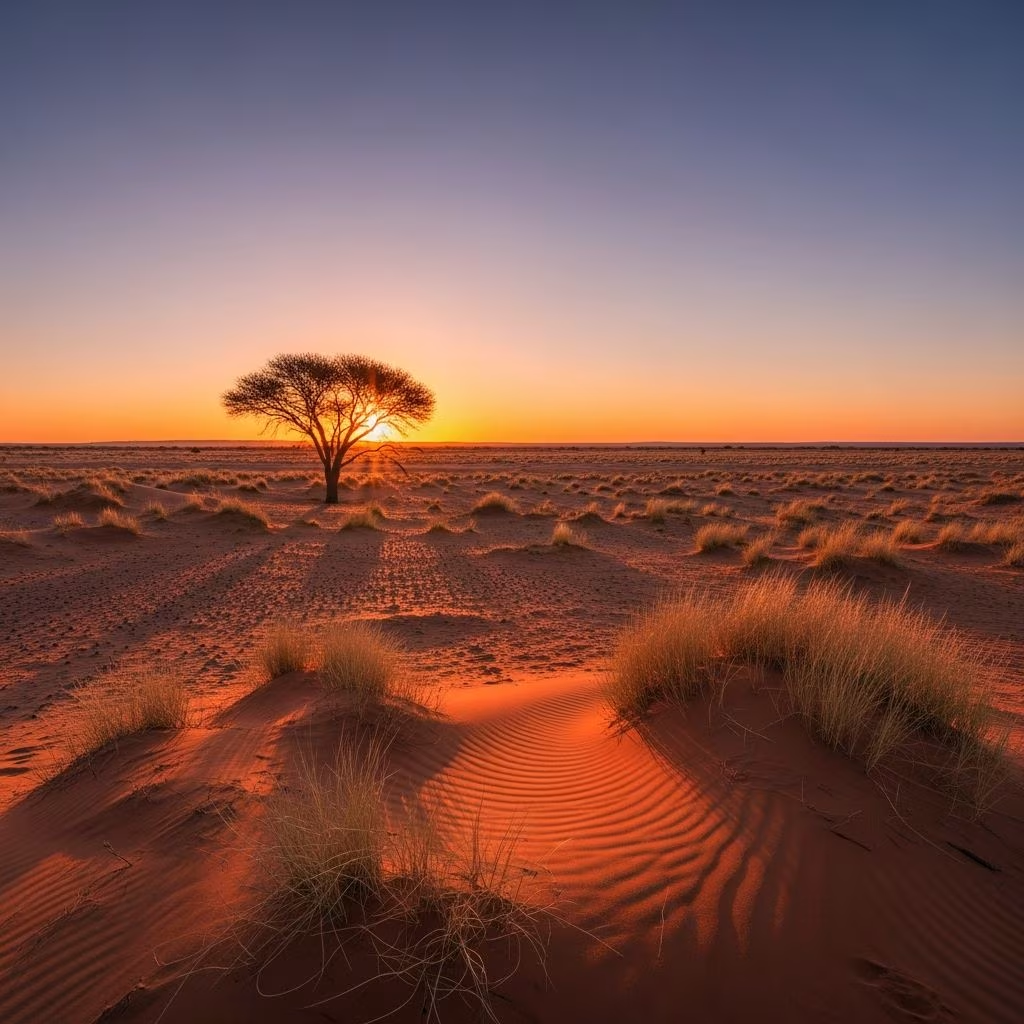
The Kalahari Desert, often called the ‘Great Thirst,’ captivates adventurers with its immense semi-arid landscapes stretching across Southern Africa. Covering nearly a million square kilometers, this region dominates much of Botswana, extends into eastern Namibia, and reaches northern South Africa, offering a mosaic of golden grasslands, salt pans, and fossilized riverbeds rather than endless dunes.
Unlike true deserts like the Namib, the Kalahari receives more rainfall, classifying it as a semi-desert savanna. This supports a surprising diversity of life amid its red sands and acacia-dotted plains. The landscape features vast open grasslands, ancient dry river valleys, and expansive white salt pans that shimmer under the sun.
Climate here is defined by distinct seasons. The dry period from May to October brings mild days around 25-30°C (77-86°F) and cool nights, ideal for travel with minimal rain and excellent wildlife viewing as animals congregate around water sources. Rainy months from November to April can see sudden thunderstorms, greening the land temporarily but making some tracks muddy and impassable—though overall precipitation rarely disrupts plans severely.
| Season | Months | Temperature (Day/Night) | Pros | Cons |
|---|---|---|---|---|
| Dry | May-Oct | 25-30°C / 5-15°C | Clear skies, wildlife at waterholes, low malaria risk | Cooler nights require layers |
| Wet | Nov-Apr | 30-35°C / 15-20°C | Lush greenery, birdwatching peak | Possible track closures, higher humidity |
The Kalahari teems with resilient species adapted to its harsh conditions. Iconic sights include black-maned lions with their striking dark manes, cheetahs sprinting across open plains, meerkats standing sentinel at burrow entrances, and oryx (gemsbok) with their elegant horns navigating dunes. Other highlights: bat-eared foxes, honey badgers, brown hyenas, giraffes, and even rare African wild dogs.
This malaria-free zone provides uncrowded safaris, allowing intimate encounters under star-filled skies and dramatic sunsets.
Botswana embodies the Kalahari’s essence, enveloping 90% of its land. Key parks include the massive Central Kalahari Game Reserve (CKGR), Africa’s second-largest protected area at 52,800 km². Here, fossilized valleys link to shimmering salt pans amid scrubland dunes, home to lions, giraffes, and cheetahs. Nxai Pan National Park offers fossilized trees and zebra migrations, while Makgadikgadi Pans provide surreal salt flats.
Access requires 4×4 vehicles and mandatory guides; self-drive is limited to prepared adventurers with extra fuel and water.
South Africa’s slice features the Kgalagadi Transfrontier Park, straddling borders with Botswana at 38,000 km²—twice Kruger’s size. Its iconic red dunes and ancient riverbeds host 19 carnivore species, including lions, leopards, and cheetahs. Tswalu Kalahari, the nation’s largest private reserve, blends conservation with luxury camps offering private game drives amid mountains and savannas.
High-clearance vehicles suffice in parts, with tire deflation aiding sand traversal.
Namibia’s eastern Kalahari offers quieter explorations through grassy plains and acacia woodlands. Reserves here complement the transfrontier parks, with self-drive options available. Wildlife mirrors the broader region, emphasizing cheetahs and oryx.
The San people, or Bushmen, have thrived here for over 20,000 years, masters of tracking, hunting, and survival. Many reserves offer guided walks with San communities, sharing knowledge of edible plants, animal behaviors, and ancient rock art. These ethical interactions highlight their harmonious desert life, though modernization challenges persist.
Visitors can join bushcraft sessions learning arrow-making or persistence hunting techniques, fostering respect for this resilient heritage.
Preparation is key for this remote wilderness.
Fly into Maun (Botswana) or Upington (South Africa) for access, then self-drive or join organized tours for safety.
Low visitor numbers aid conservation, but responsible practices matter: stick to tracks, avoid off-roading, support community-led initiatives, and minimize plastic use. Parks like CKGR enforce strict rules to protect fragile ecosystems.
Yes, with guided tours; its calm, uncrowded nature suits all ages, though young children need supervision near wildlife.
Dry season for golden light and active animals; early mornings or late afternoons yield stunning shots.
Possible with experience, but Botswana mandates guides in core parks.
Desert adaptations like black-maned lions and water-storing oryx thrive in aridity.
Absolutely—Tswalu offers high-end camps with private guides and gourmet dining.
This vast desert promises transformative journeys blending raw nature, wildlife spectacles, and cultural depth. Plan meticulously for an unforgettable escape into Southern Africa’s soul.
