

 Travel Essentials
 Travel Essentials

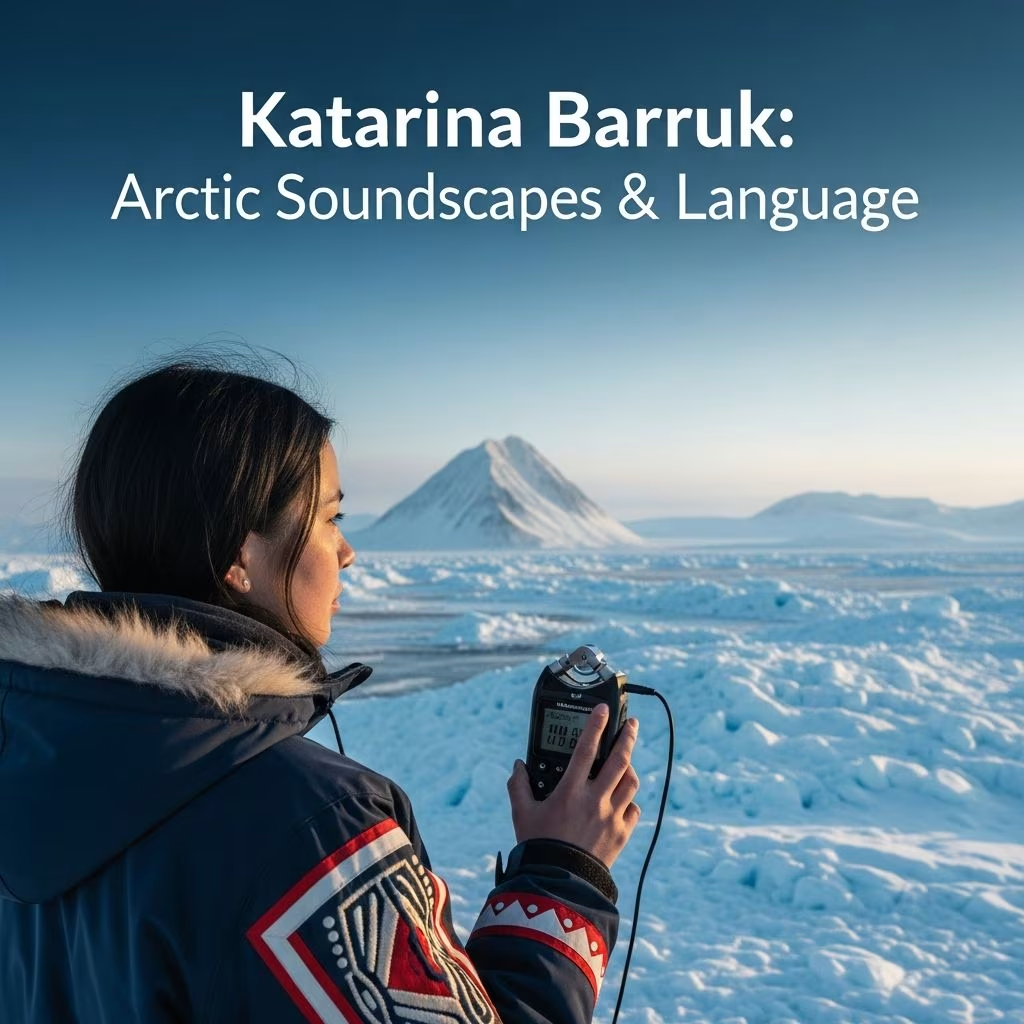
Explore how Ume Sámi musician Katarina Barruk combines traditional Arctic soundscapes with modern production to revitalize one of the world's critically endangered languages.
 Travel Essentials
In the vast Nordic landscape where Arctic winds shape both geography and culture, one artist has emerged as a guardian of linguistic heritage through an unconventional medium—contemporary music. Katarina Barruk, an Ume Sámi singer and songwriter, represents a vital intersection between ancestral tradition and modern artistic expression, using her distinctive voice to breathe life into one of humanity’s most endangered languages.
The Ume Sámi language, spoken by a dwindling community of approximately 100 speakers worldwide, has been designated by UNESCO as critically endangered. Yet rather than allowing this linguistic treasure to fade into silence, Barruk has transformed her music into an act of cultural defiance and preservation, performing across international festivals and collaborating with acclaimed electronic producers to introduce indigenous Arctic soundscapes to global audiences.
Katarina Barruk’s artistic journey illuminates the complex relationship between maintaining cultural authenticity and engaging with contemporary music production. Hailing from the Swedish side of the Sábi region, known as Sábmie, Barruk belongs to the Sámi indigenous population whose heritage spans the Arctic territories of Northern Europe. Her work transcends the conventional boundaries of what indigenous music typically represents—rather than creating museum-piece recreations of historical traditions, she merges traditional joik singing with electronic production, pop sensibilities, and experimental soundscapes.
Her artistic approach demonstrates that cultural preservation need not mean cultural stasis. By collaborating with producers such as Bicep, renowned electronic music creators, Barruk has introduced Ume Sámi language and joik traditions to audiences who might never encounter these art forms through conventional channels. This strategic blending has allowed her performances at prestigious venues including the Royal Albert Hall’s The Proms festival and international music events such as Iceland Airwaves and Reeperbahn to resonate with listeners across diverse musical backgrounds.
The precarious status of Ume Sámi represents a broader global crisis affecting indigenous languages worldwide. With fewer than 100 native speakers remaining, the language exists in a critical state where intergenerational transmission—the primary mechanism through which languages survive—has become increasingly fragmented. UNESCO’s designation of Ume Sámi on its red list of critically endangered languages signals international recognition of this urgent cultural threat.
The factors contributing to language endangerment are multifaceted and interconnected. Historical policies of cultural assimilation in Nordic countries discouraged Sámi language use in favor of national languages, creating generations of speakers who prioritized Swedish or Norwegian over their indigenous tongue. Economic pressures, urbanization, and the dominance of global languages have further accelerated the linguistic erosion. The limited number of speakers creates a concerning demographic bottleneck—without active intervention and cultural investment, the language risks extinction within decades.
However, the presence of artists like Barruk signals a significant shift in how indigenous communities approach language survival. Rather than passively accepting linguistic decline, contemporary Sámi creators are strategically deploying their artistic platforms to make their language audible, relevant, and culturally significant to younger generations and international audiences alike.
Barruk’s approach to using music as a preservation tool extends beyond mere documentation. While recorded archives and academic collections serve important functions, they often create the impression that indigenous languages belong to the past. Living, breathing artistic practice demonstrates that endangered languages remain vital for emotional expression, creative vision, and contemporary cultural production.
When Barruk releases songs like “Dárbasjub duv” (“I need you”), sung entirely in Ume Sámi, she accomplishes multiple objectives simultaneously. The track functions as a work of contemporary art that can compete aesthetically with mainstream music production. Simultaneously, it serves as a linguistic archive, capturing the phonetic qualities and nuanced emotional expressiveness of Ume Sámi. It also operates as a cultural statement, asserting the legitimacy and vitality of Sámi identity in the modern world.
The emotional directness of songs addressing themes of longing, identity, and resilience demonstrates that indigenous languages are not relics of anthropological interest but living mediums through which artists articulate deeply personal and universal human experiences. This distinction is crucial—it transforms audience perception from one of historical curiosity to contemporary artistic relevance.
One of the most significant aspects of Barruk’s career involves her strategic collaborations with internationally recognized producers and visual artists. Her work with Bicep on the TAKKUUK installation represents a particularly noteworthy example of how indigenous Arctic artists are reimagining their creative presence through multimedia platforms.
TAKKUUK functions as an immersive installation that explores the lived experiences of Arctic indigenous artists, incorporating visual art by Zak Norman and filmmaking by Charlie Miller alongside Barruk’s soundscapes. This multidisciplinary approach creates layered narratives about indigenous identity, cultural challenges, and artistic resilience. By situating Ume Sámi music within contemporary art contexts rather than ethnographic or cultural heritage frameworks, such collaborations legitimize indigenous expression as part of the cutting edge of contemporary artistic practice.
The international festival circuit where Barruk performs—from Iceland Airwaves to prestigious European music venues—represents another avenue through which endangered languages gain global visibility. Each performance before audiences unfamiliar with Ume Sámi introduces the language aurally, creates emotional connection to its speakers, and challenges assumptions about which languages “matter” in global cultural contexts.
An essential component of Barruk’s artistic approach involves the deliberate integration of improvisation into her performances. Rather than treating her music as fixed, reproducible recordings, she frequently incorporates spontaneous vocal elements, experimentation with phonetic possibilities, and responsiveness to audience energy.
This improvisational methodology reflects both contemporary avant-garde music practices and traditional joik singing approaches. Joik, the traditional Sámi vocal art form, has historically emphasized personal expression, emotional authenticity, and adaptation to specific moments and listeners. By merging joik’s improvisational ethos with electronic music’s technological possibilities, Barruk creates performances where the Ume Sámi language becomes a flexible, dynamic medium for artistic expression rather than a static historical artifact.
Improvisation also serves a practical function in language preservation. When musicians experiment with language sounds, push phonetic boundaries, and incorporate linguistic elements into new contexts, they expand the functional possibilities of endangered languages. This prevents languages from becoming confined to narrow registers or historical contexts, instead demonstrating their capacity for ongoing creative adaptation.
The Sámi indigenous population speaks multiple languages including North Sámi, South Sámi, and Ume Sámi, among others. Ume Sámi is distinct from these dialects, with its own unique phonetic characteristics, vocabulary, and grammatical structures. Its extreme endangerment—with fewer speakers than other Sámi languages—makes it particularly vulnerable to extinction.
Approximately 100 native speakers of Ume Sámi remain, representing one of the world’s most critically endangered indigenous languages. This small speaker population creates significant challenges for intergenerational transmission and language vitality.
Joik is a traditional Sámi vocal art form characterized by improvisation, emotional expression, and the use of natural sounds. Rather than narrative songwriting, joik emphasizes the singer’s personal relationship to subjects, emotions, or landscapes. Joik remains integral to Sámi cultural identity and contemporary artists like Barruk incorporate joik elements into modern music production.
Yes—music provides an accessible, emotionally engaging medium through which endangered languages can be transmitted, practiced, and celebrated. By associating languages with contemporary artistic expression and cultural prestige, music can influence younger community members to engage with their heritage language.
Supporting indigenous artists through concert attendance, streaming platform engagement, and collaborative opportunities provides economic incentives for continued cultural work. Additionally, amplifying indigenous voices through social media and recommending their work to others increases visibility and cultural recognition.
Barruk’s work exists within a broader movement of Arctic indigenous artists reclaiming creative control over their cultural narratives. Rather than allowing external institutions or historical frameworks to define indigenous identity, contemporary Sámi, Inuit, and other Arctic peoples are actively shaping how their cultures are represented, experienced, and understood globally.
This cultural moment reflects hard-won victories in indigenous rights movements, increased recognition of historical injustices, and growing international commitments to supporting linguistic and cultural diversity. However, it also reflects the determination and creativity of indigenous communities themselves, who recognize that cultural survival requires active, strategic engagement with contemporary cultural platforms and technologies.
The work of artists like Katarina Barruk demonstrates that language preservation need not occur exclusively through academic linguistics programs, formal educational institutions, or archival projects—though these certainly remain valuable. Instead, indigenous communities are increasingly leveraging artistic expression, multimedia production, and cultural participation in mainstream artistic spheres as primary mechanisms for language transmission and revitalization.
As Barruk continues to release music, perform internationally, and collaborate with producers across genres, she establishes new precedents for how endangered languages can remain audible, relevant, and vital within contemporary global culture. Her artistic choices transform potential audiences—those who might never encounter Ume Sámi in classroom settings or academic contexts—into participants in an ongoing cultural preservation effort simply by listening to emotionally resonant music sung in their language.
The future of Ume Sámi, like many endangered languages, depends on whether speakers and non-speakers alike recognize its cultural value and support the artists and communities dedicated to its survival. Through her distinctive artistic vision, Katarina Barruk invites listeners worldwide to become participants in this vital preservation effort, proving that the most endangered languages can still find powerful contemporary expression.
