

 Travel Essentials
 Travel Essentials

Explore Kathmandu's legendary origins, architectural marvels from Licchavi to Malla eras, UNESCO sites, festivals, Newar innovations, and modern evolution in Nepal's valley capital.
 Travel Essentials
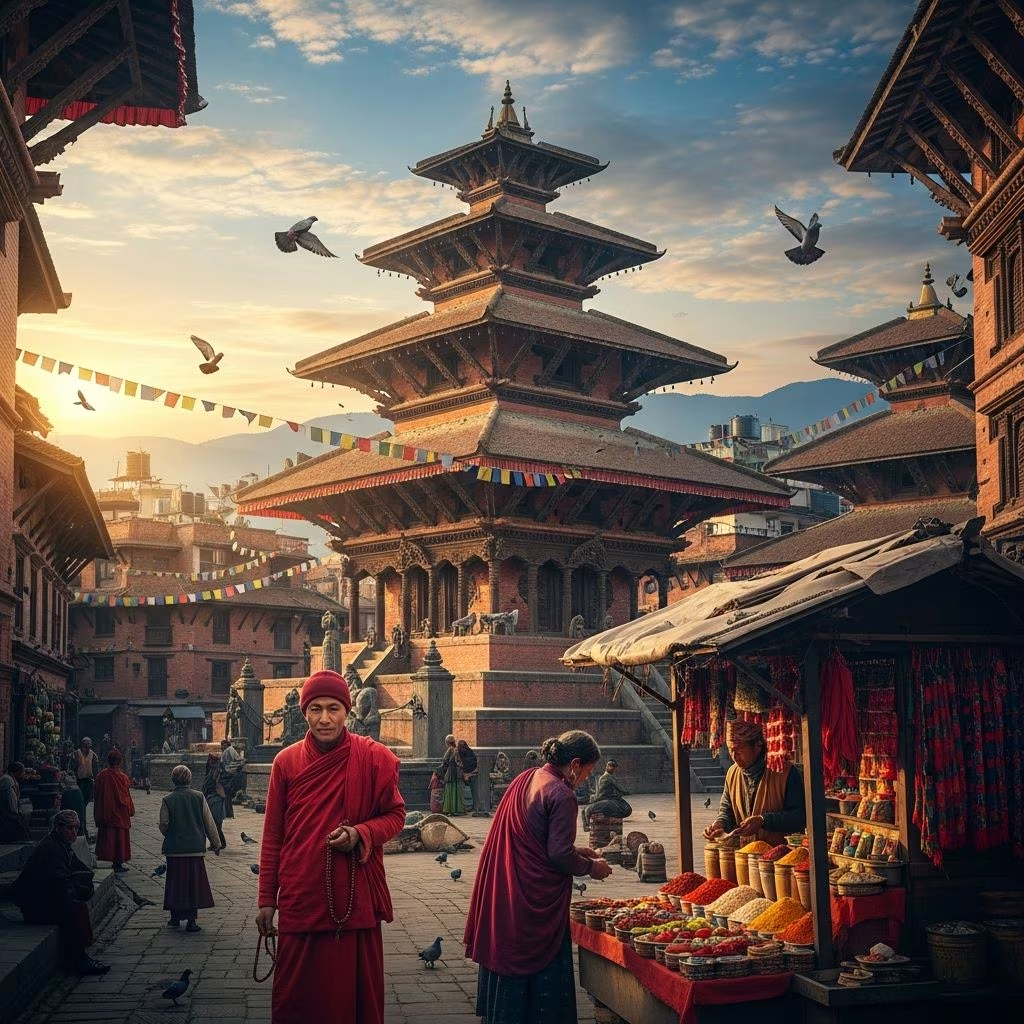
Kathmandu, Nepal’s bustling capital nestled in a fertile valley at 1,324 meters elevation, embodies over two millennia of human ingenuity, spiritual devotion, and artistic brilliance. Founded amid legendary tales of divine intervention, it evolved into a trade nexus and cultural powerhouse under dynasties like the Licchavi and Malla, leaving behind a landscape of pagodas, stupas, and palaces that blend Hinduism, Buddhism, and indigenous Newar traditions.
The story of Kathmandu begins with profound myths that intertwine nature, divinity, and creation. Ancient lore describes the Kathmandu Valley as Nagdaha, a primordial lake teeming with serpents and celestial beings. The Buddhist sage Manjushri, arriving from distant lands, cleaved the southern ridge at Chobhar Gorge with his sword, draining the waters and revealing lush plains ideal for settlement. Where a lotus flower rested in the lake’s heart rose the Swayambhunath Stupa, a beacon of enlightenment atop a hill.
Historical records trace human presence to prehistoric times, with archaeological finds confirming continuous habitation for over 2,000 years. By the 4th century CE, the Licchavi dynasty formalized governance, fostering Gupta-inspired art and architecture that laid foundational stones—literally—for the valley’s urban core. Stone inscriptions and early temples from this classical period (500–900 CE) highlight a society advanced in governance, trade, and religious syncretism.
Kathmandu’s ascent to prominence accelerated during the Malla era (12th–18th centuries), often hailed as the city’s golden age. Malla kings, devout patrons of the arts, commissioned an explosion of pagoda-style temples, intricately carved palaces, and monastic courtyards. Their rule transformed the valley into Asia’s wealthiest urban centers, fueled by trans-Himalayan trade in silk, spices, and crafts.
Key landmarks emerged: the Hanuman Dhoka Durbar Square in Kathmandu, with its Taleju Temple (1549) and Hanuman guardian statue, exemplifies Malla grandeur. Nearby, Patan and Bhaktapur Durbar Squares boast similar opulence—multi-tiered roofs, lattice windows, and bronze sculptures reflecting tantric influences and Tibetan demonology motifs.
Prior rulers like Raja Gunakamadeva founded the city in 723 CE, naming it after a wooden temple (kath mandir) built from a single tree by Raja Lachmina Singh in 1596. The Shah dynasty, Gurkha conquerors from 1768, unified Nepal with Kathmandu as capital until 2008, blending Parbatiya customs into the Newari mosaic.
| Dynasty | Period | Key Contributions |
|---|---|---|
| Licchavi | 4th–8th CE | Gupta-style art, early temples, trade foundations |
| Malla | 12th–18th CE | Pagodas, Durbar Squares, cultural peak |
| Shah/Gorkha | 1768–2008 | National unification, cultural amalgamation |
Kathmandu’s moniker “City of Temples” stems from over 2,000 religious sites, seven UNESCO-listed clusters symbolizing the valley’s artistic zenith. Swayambhunath (Monkey Temple) and Bauddhanath Stupas anchor Buddhist devotion, their eyes gazing omnisciently over the valley. Pashupatinath Temple, Shiva’s riverside abode on the Baghmati, draws Hindu pilgrims for cremations and rituals, while Changu Narayan honors Vishnu with Licchavi-era carvings.
This fusion—Hindu-Buddhist with Newar animism and Tantrism—creates a unique ethos, where deities share spaces and festivals unite communities.
The Newars, valley indigenes, crafted Kathmandu’s cultural DNA through urban planning, guilds (guthi), and sustainable tech. Their 106 bahas/bahis (monastic courtyards) pulse with piety and art. Hitis—stone spouts fed by ancient aquifers, canals, and ponds—managed water for 1,500 years, blending utility with ritual.
Woodcarving, metalwork, and paubha paintings reached pinnacles in Malla times, adorning doors, struts (tunala), and toranas. Phalchas (communal platforms) fostered social ties, while chaityas marked spiritual nodes. UNESCO praises this as “outstanding craftsmanship in brick, stone, timber, and bronze.”
Malla-originated festivals infuse the calendar with color. Dashain honors Durga with animal sacrifices and tika blessings; Tihar (Deepawali) lights diyas for Lakshmi and crows. Indra Jatra kicks off the rainy season with masked dances at Hanuman Dhoka, featuring the living goddess Kumari.
Newari rites like Ihi (girl-beloved marriage to Suasta) and Kwah lhu (final farewell) preserve caste-specific customs. Post-Gorkha, Parbatiya influences enriched urban celebrations, from Teej fasts to Gai Jatra’s satirical parades mocking death.
Trade via India-Tibet routes amassed wealth in textiles, spices, and crafts, but 1934’s earthquake razed swathes, birthing modern buildings amid old quarters’ narrow lanes and carved brick homes.
Prithvi Narayan Shah’s 1768 conquest shifted power dynamics, yet Kathmandu retained spiritual primacy. Today, amid traffic and tourism, it balances preservation—post-2015 quake restorations—with globalization, its core retaining Malla-era allure.
Manjushri drained the serpentine lake Nagdaha at Chobhar, birthing Swayambhunath from a lotus.
Hosting thousands of shrines, including seven UNESCO ensembles blending Hindu-Buddhist architecture.
Innovative crafts, hitis water systems, guthi guilds, and syncretic festivals.
September-October for Dashain/Indra Jatra; November for clear Himalayan views.
Many sites restored; check updates, avoid risky structures.
