

 Travel Essentials
 Travel Essentials

Explore Katmai’s famous brown bears, Brooks Falls salmon runs, Fat Bear Week, and how this remote Alaska park became a wildlife spectacle.
 Travel Essentials
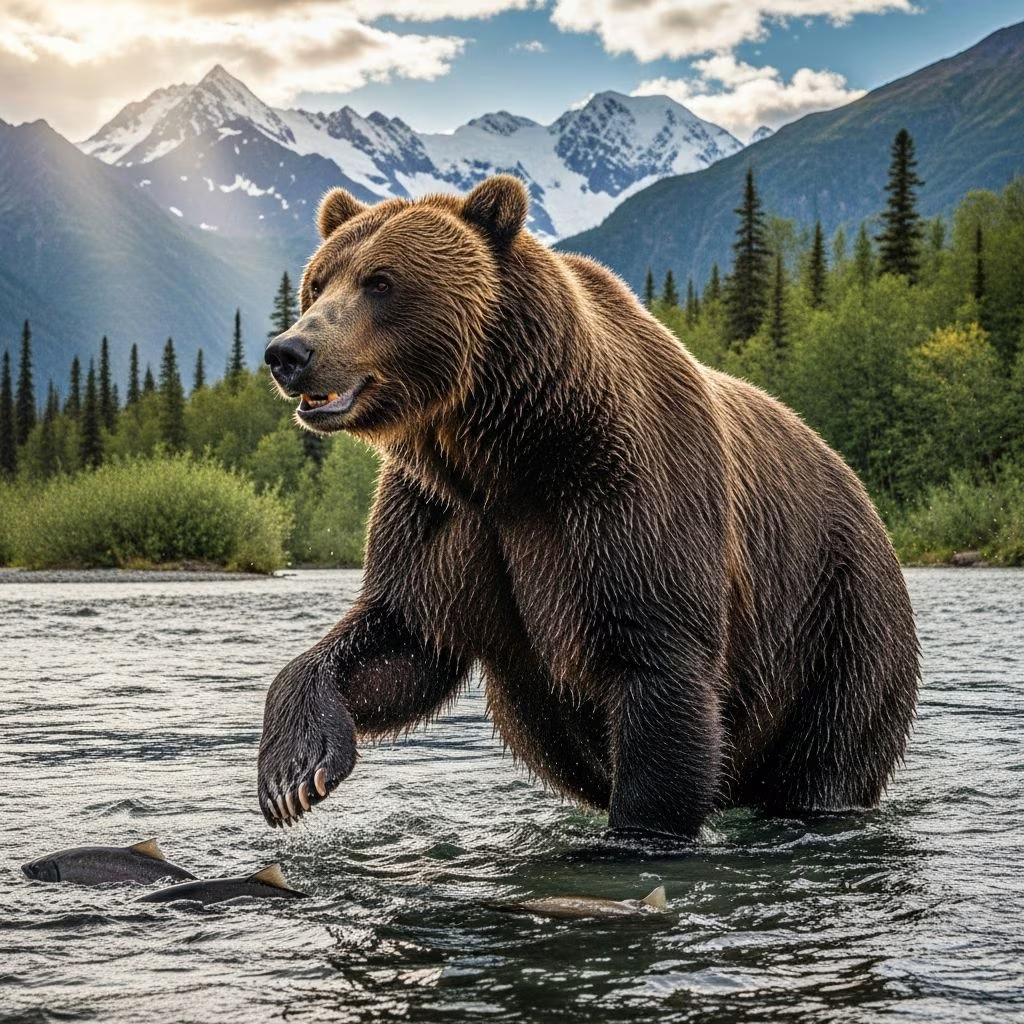
Deep in the Alaskan wilderness lies Katmai National Park and Preserve, a rugged paradise cradled by volcanoes and glaciers, renowned for hosting one of the world’s largest concentrations of brown bears. Each summer, these massive creatures converge on rivers teeming with salmon, transforming the landscape into a living feast that captivates millions worldwide. This phenomenon, often highlighted during the famous Fat Bear Week, showcases bears bulking up dramatically for hibernation, offering a raw glimpse into nature’s survival strategies.
Brown bears, also known as grizzlies in inland areas, thrive in Katmai due to its abundant food sources and minimal human interference. The park supports over 2,000 individuals, making it a critical stronghold for the species. During the peak salmon run from late June to early October, bears line the Brooks River, employing clever techniques to snatch sockeye salmon mid-leap at iconic spots like Brooks Falls.
These bears aren’t just survivors; they’re spectacles of power and agility. Males can weigh up to 1,500 pounds, standing 10 feet tall on hind legs, while females are smaller but fiercely protective of cubs. Watching a 600-pound bear snatch a 6-pound salmon in a single paw swipe is a testament to their prowess, fueling viral moments captured on live cams.
Brooks Falls stands as Katmai’s crown jewel, a 6-foot waterfall where hundreds of bears gather annually to intercept the world’s largest sockeye salmon run—millions of fish battling upstream. The falls create dramatic ‘bear jams,’ with animals jostling for prime fishing positions in a hierarchy dictated by size, experience, and boldness.
This natural theater has drawn filmmakers and photographers for decades, with live streams from explore.org allowing global audiences to witness it unfold in real time.
Established in 1918 as a national monument following the cataclysmic 1912 eruption of Novarupta volcano—the largest in the 20th century—Katmai was initially protected for its geothermal wonders like the Valley of Ten Thousand Smokes. Over a century later, it has evolved into a premier bear-viewing destination, preserving 4 million acres of untouched wilderness.
The park’s volcanic soils enrich rivers with nutrients, sustaining massive salmon populations that, in turn, fatten the bears. Glaciers feed crystal-clear streams, creating a biodiversity hotspot amid stark lava fields—a true rebirth from ash.
Not everyone can brave Alaska’s remoteness, but technology bridges the gap. The National Park Service partners with explore.org for round-the-clock cams at Brooks Falls, capturing everything from dawn fishing frenzies to twilight bear brawls. These streams have amassed billions of views, turning Katmai into a household name.
The highlight is Fat Bear Week, an annual online bracket-style tournament in October where fans vote for the bear that gains the most weight—sometimes doubling from 600 to 1,200 pounds. Past champions like 480 Otis, a beloved patriarch, embody the event’s charm, blending education with entertainment to promote conservation.
| Bear | Weight Gain Example | Notable Trait |
|---|---|---|
| 480 Otis | 600 to 1,000+ lbs | Laid-back fishing style |
| 435 Holly | 400 to 800 lbs | Prolific mother of many cubs |
| 747 | 800 to 1,400 lbs | Aggressive dominant male |
Visiting requires preparation, as Katmai is accessible only by floatplane or boat from Anchorage or Homer—expect a 1.5-hour flight over breathtaking terrain. Permits are mandatory for Brooks Camp, limited to 40 day-use and 12 overnight visitors daily during peak season.
Safety is paramount around 1,000-pound wild animals. Maintain 100 yards from bears on land, 300 yards from sows with cubs, and follow ranger directives. Food storage in bear-proof containers prevents attracting unwanted guests.
Best times: June for fewer crowds, July for peak falls action, September for fattening frenzy. Pack layers for unpredictable weather—rain gear, sturdy boots, and binoculars are must-haves.
Bears in Katmai exhibit fascinating adaptations. During hyperphagia, the pre-hibernation binge, they consume 20,000-30,000 calories daily, mostly from salmon rich in fat. Cubs learn from mothers over 2-3 years, mastering techniques like the ‘snorkel swim’ or ‘jaw pop’ to stun fish.
Social structure is fluid: subadults play-fight, adults establish dominance with bluff charges. Conflicts are rare, resolved by posturing rather than full fights, preserving energy for the feast.
Katmai exemplifies successful wildlife management. NPS monitoring tracks bear numbers, health, and salmon runs, informing broader grizzly conservation. Climate change poses threats—warming waters stress salmon, but the park’s intact ecosystem builds resilience.
Visitor fees and Fat Bear Week engagement fund protections, ensuring future generations witness this spectacle. Low-impact tourism minimizes disturbance, with rangers educating on coexistence.
Peak season is mid-July for the famous ‘falls action,’ but bears are present June through October.
Rarely, if guidelines are followed. Attacks are extremely uncommon due to ample food reducing human interest.
Tune into explore.org’s live cams or join Fat Bear Week voting online.
$15 per person for 7 days; covers bear basin viewing platforms.
Yes, but regulated to avoid bear conflicts; check NPS for sockeye limits.
Beyond Brooks, Katmai offers Hallo Bay for coastal bear viewing and Geographic Harbor for sows with cubs. Guided tours provide expert insights into behaviors unique to each area.
