

 Travel Essentials
 Travel Essentials

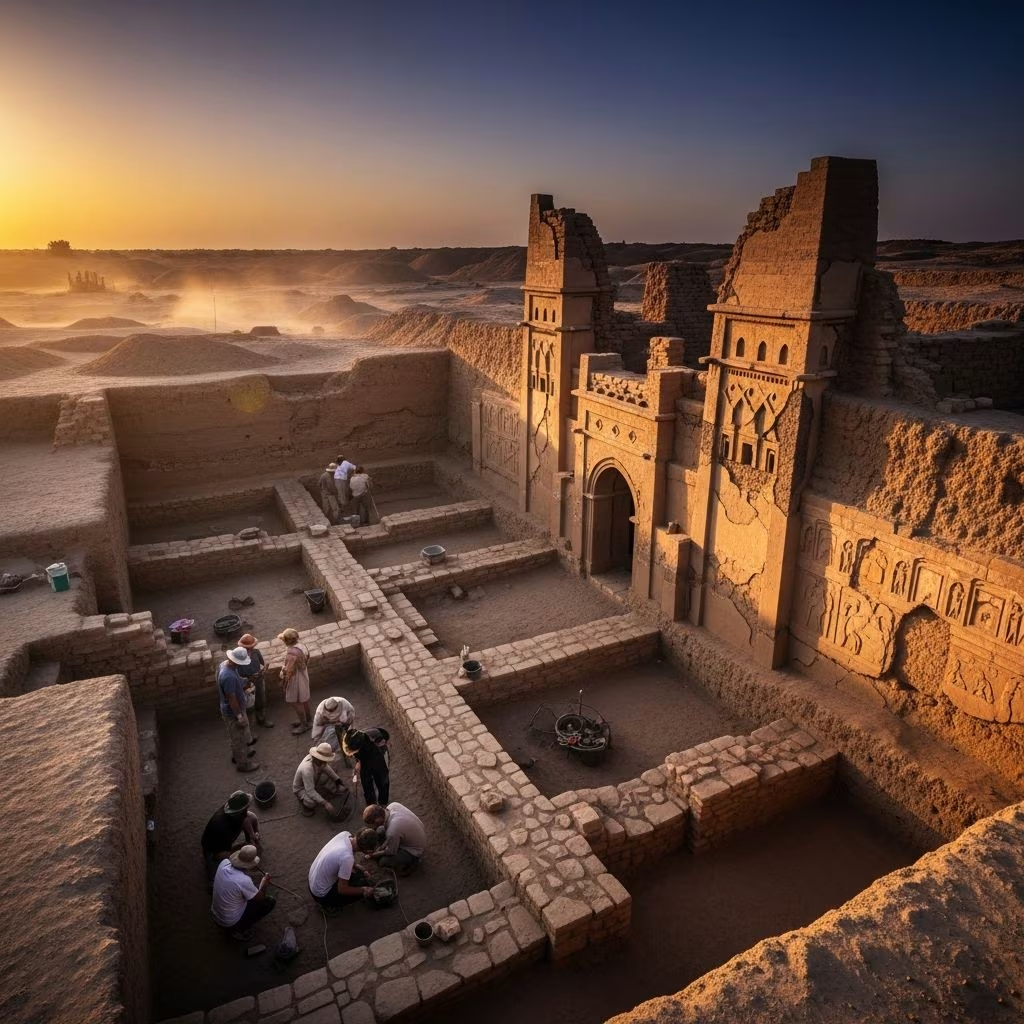
Archaeologists uncover the ruins of Kemune Palace, a Mitanni-era structure emerging from a reservoir, complete with murals, tablets, and evidence of a thriving ancient city.
 Travel Essentials
The discovery of Kemune Palace stands as a monumental achievement in modern archaeology, bringing to light a long-lost structure from the Bronze Age Mitanni Empire. Nestled in the Kurdistan region of Iraq, this palace emerged dramatically from the receding waters of a reservoir, revealing intricate mud-brick architecture and artifacts that illuminate a shadowy chapter of ancient history.
In recent years, prolonged droughts have lowered water levels behind the Mosul Dam, exposing archaeological treasures otherwise submerged. Kemune first came into view during low water periods as early as 2010, when initial surveys spotted remnants of wall paintings and a cuneiform tablet. However, it was not until autumn 2018 that a collaborative team from Germany’s University of Tübingen and the Kurdistan Archaeology Organization could conduct a full rescue excavation.
The site, perched on a terrace just 20 meters from the ancient eastern bank of the Tigris River, features a monumental mud-brick retaining wall that once stabilized the sloping terrain. This engineering feat preserved the palace ruins up to 7 meters high, showcasing two distinct phases of use that suggest prolonged occupation over centuries.
Kemune Palace exemplifies sophisticated Bronze Age construction techniques tailored to its riverside environment. The structure boasts massive interior walls, some plastered and standing over 2 meters tall, with fired brick slabs serving as durable flooring in select rooms.
Excavators partially uncovered eight out of an estimated ten rooms, revealing a carefully planned layout indicative of administrative or royal functions. A standout feature is the terrace wall on the western facade, built to counter the natural incline and protect against erosion from the Tigris.
| Feature | Description | Significance |
|---|---|---|
| Mud-brick walls | Up to 2m thick, 2m+ high | Structural stability and insulation |
| Fired brick floors | Large slabs in key rooms | Durability against wear |
| Terrace wall | Monumental mud-brick support | Land stabilization near river |
| Plastered interiors | Smooth surfaces in rooms | Aesthetic and functional finishing |
These elements point to a building designed for longevity and prestige, fitting for the heartland of the Mitanni realm.
Among the most thrilling finds are traces of wall murals in striking red and blue pigments, adorning plastered surfaces within the palace chambers. Ivana Puljiz, co-leader of the excavations from the University of Tübingen, described this as an “archaeological sensation” due to the rarity of preserved murals from the 2nd millennium BCE.
In the Ancient Near East, such colorful decorations were likely standard in elite structures, symbolizing wealth, power, and cultural sophistication. The survival of these hues at Kemune, despite millennia of burial and flooding, offers invaluable data on artistic practices during the Mitanni period.
The excavation yielded at least ten clay tablets inscribed in Mitanni cuneiform, with Akkadian script featuring Hurrian names reflective of the local elite. One tablet explicitly links the site to Zakhiku, an ancient city referenced in Middle Bronze Age texts around 1800 BCE, implying a history spanning at least 400 years.
Further digs in 2022 uncovered around 100 additional tablets from the early Middle Assyrian period, post-dating an earthquake that destroyed the city circa 1350 BCE. These artifacts, now under study by experts like Dr. Betina Faist at the University of Heidelberg, promise revelations about Mitanni administration, trade, and diplomacy.
The Mitanni Empire, flourishing from the 15th to 14th centuries BCE, controlled swathes of northern Mesopotamia and Syria but remains one of the least understood ancient powers. Unlike peripheral sites, Kemune provides a rare glimpse into the empire’s core, potentially reshaping timelines and narratives of its politics and economy.
Zakhiku likely served as a vital caravan hub and trade nexus, peaking in the Mitanni era before Assyrian conquest. The palace’s central role underscores its strategic riverside position, facilitating commerce along the Tigris.
Excavations at Kemune were urgent “rescue” operations, racing against rising reservoir waters. Teams mapped the site extensively and prioritized high-value areas before submergence resumed. Climate-driven droughts, while destructive, inadvertently preserved and revealed such sites by desiccating mud bricks.
Hasan Ahmed Qasim of the Kurdistan Archaeology Organization hailed it as one of the region’s most significant finds in decades, emphasizing the need for ongoing monitoring amid fluctuating water levels.
This discovery enriches our understanding of Hurrian-influenced cultures, bridging Mitanni and Assyrian eras. Surveys nearby indicate a larger urban settlement to the north, hinting at a bustling cityscape.
Future analyses of tablets and murals could decode administrative practices, artistic motifs, and socio-economic structures, filling gaps in Near Eastern history.
Kemune is a 3,400-year-old palace from the Mitanni Empire, uncovered in Iraq’s Kurdistan region.
Droughts lowered Mosul Dam reservoir levels, exposing the ruins in 2018 and 2022.
Rare preserved red and blue murals from the 2nd millennium BCE, typical of elite Ancient Near East palaces.
They identify the site as ancient Zakhiku and provide Mitanni-era administrative insights.
No, it is submerged again, but artifacts are preserved for study.
Though reflooded, Kemune’s legacy endures through documented findings and conserved artifacts. Collaborative efforts between Iraqi and German teams exemplify international archaeology’s role in safeguarding heritage amid environmental challenges. Ongoing tablet translations may unlock further secrets of this pivotal empire.
