


 Food & Culture
Food & Culture
Kensington Market Toronto: History, Food, and Culture
Discover Kensington Market's evolution from 19th-century estates to a bustling hub of immigrant cultures, street art, and unique dining in downtown Toronto.
 Food & Culture
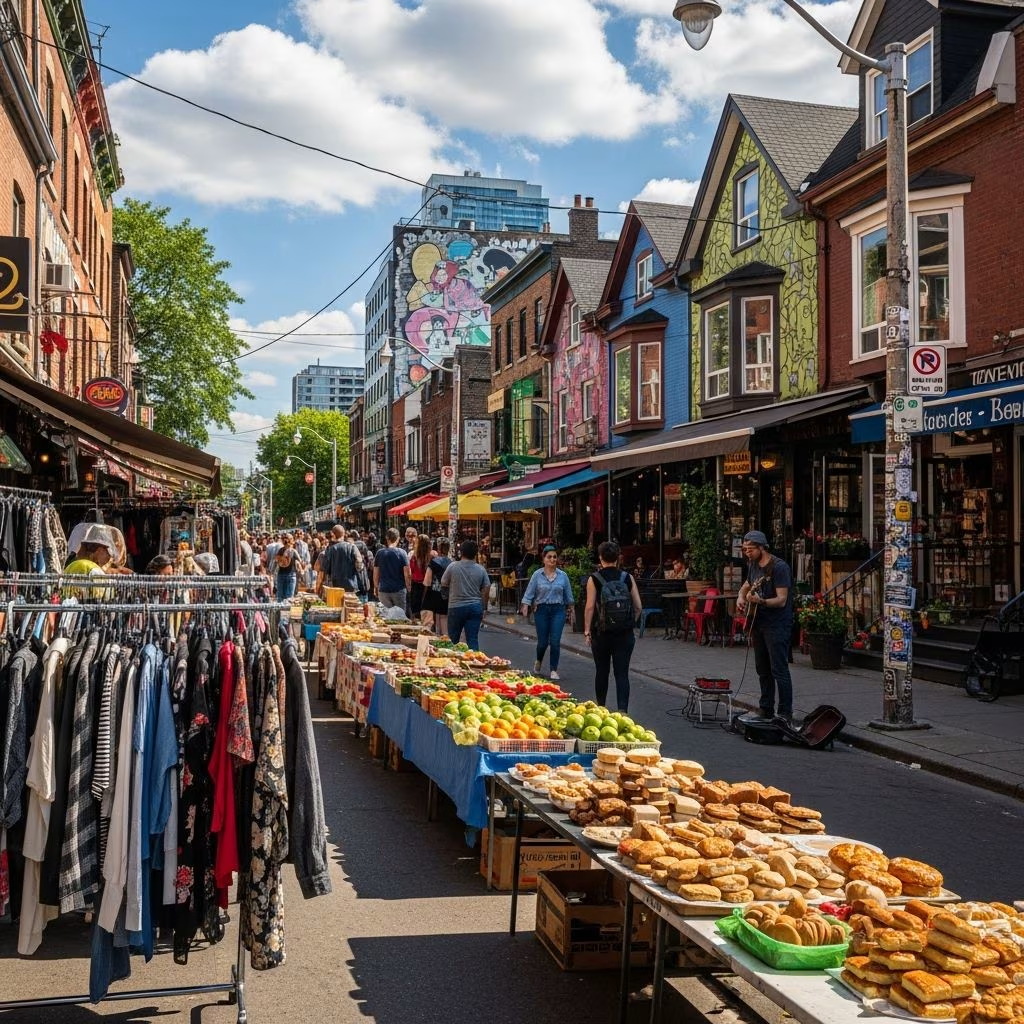
Kensington Market stands as one of Toronto’s most dynamic and beloved neighborhoods, a living tapestry of cultures woven together over two centuries. Nestled in the heart of downtown, this pedestrian-friendly area pulses with energy from its colorful row houses, bustling street stalls, and eclectic mix of shops and eateries. Once envisioned as grand estates, it transformed through waves of immigration into a National Historic Site celebrated for its preserved authenticity and multicultural spirit.
The Foundations: From Estates to Immigrant Haven
The story of Kensington Market begins in the early 19th century, rooted in land acquired around 1815 by George Taylor Dennison, a former militia member. Initially called Belle Vue Square, the property served as a training ground for the Canadian Cavalry before urban expansion reshaped it. By the mid-1800s, British and Irish settlers subdivided the large plots, erecting Victorian brick homes that still define the skyline today. These sturdy structures, often with added ground-floor storefronts by later residents, laid the groundwork for the market’s commercial vibe.
As Toronto grew, the area west of Spadina Avenue shifted from farmland to a residential enclave. Immigrants from the British Isles constructed places of worship like St. Stephen-in-the-Fields Anglican Church, blending community life with architectural charm. This era marked the first layer of Kensington’s multicultural foundation, setting a pattern of adaptation that would continue for generations.
Waves of Change: Jewish and Italian Influences
The early 20th century brought profound shifts as Eastern European Jewish immigrants arrived, fleeing pogroms and persecution. By the 1920s and 1930s, Kensington had become home to about 80% of Toronto’s Jewish population, earning its nickname as the ‘Jewish Market.’ Affordable housing and job opportunities at nearby T. Eaton Company drew families here, who innovated by converting home fronts into bustling shops selling pickles, fish, and baked goods.
Parallel to this, Italian communities added their flair in the same period, introducing delis and cafes that infused the streets with Mediterranean aromas. These groups not only shaped the physical landscape but also fostered a resilient community spirit, turning narrow alleys into thriving commercial arteries. Today, echoes of this heritage linger in preserved signage and family-run businesses.
Mid-Century Shifts: Caribbean, Portuguese, and Beyond
Post-World War II immigration policies opened doors wider. In the 1960s, changes eliminating overt racial barriers encouraged Caribbean newcomers, particularly Jamaicans, to settle in Kensington. This era sparked cultural battles, like the 1985 fight by Kensington Patty Palace against federal regulators over labeling Jamaican beef patties as ‘pies’—a standoff that highlighted the neighborhood’s defiant spirit. Vibrant patty shops and jerk stands became staples, blending savory spices with Toronto’s evolving palate.
The 1970s saw Portuguese residents establishing roots before shifting westward to Little Portugal, while Asian and Latin American influences gained traction through the 1980s and 1990s. Chinese communities expanded alongside Central and South American vendors, stocking markets with plantains, empanadas, and fresh produce. This diversity created a sensory feast, where alleyways brim with global flavors.
Modern Kensington: Art, Activism, and Preservation
By the 2000s, Kensington Market had evolved into a bohemian haven for artists, writers, and musicians, designated a National Historic Site in 2006 to safeguard its unique character until at least 2026. Residents fiercely resisted gentrification threats, like a 2002 Nike proposal, rallying to maintain its working-class market ethos. Street art murals, vintage clothing racks, and live music patios now define the scene, drawing tourists and locals alike.
The neighborhood’s laid-back vibe thrives amid colorful facades and pop-up events. Cyclists weave through car-free Sundays (Pedestrian Sundays), where vendors spill onto streets with crafts and food trucks. It’s a place where history meets contemporary creativity, embodying Toronto’s cosmopolitan ethos.
Iconic Streets and What to Explore
Kensington’s charm unfolds along its main arteries. Start at Baldwin Street, the market’s beating heart, lined with fruit stands overflowing with tropical fruits, cheese shops, and tattoo parlors. Augusta Avenue offers vintage boutiques and record stores, perfect for treasure hunters. Nearby, Kensington Avenue buzzes with cafes serving peameal bacon sandwiches—a Toronto classic rooted in the area’s pork-barrel past.
- Baldwin Street: Fresh produce, Caribbean patties, and eclectic eats.
- Augusta Avenue: Thrift shops, streetwear, and artisanal goods.
- Nassau Street: Hidden murals and cozy pubs.
- St. Andrew’s Market: A covered spot for meats and spices.
Don’t miss the cluster of galleries and studios tucked into basements, showcasing local talent. For a breather, head to the small park ringed by patios, ideal for people-watching.
Culinary Delights: A Global Feast
Food is Kensington’s superpower. Sample Jamaican jerk chicken from roadside grills, Portuguese custard tarts, or Mexican tacos from food trucks. Health food stores peddle organic elixirs, while bakeries churn out rye breads nodding to Jewish roots. Vegan spots and Latin fusion joints cater to modern tastes, all amid affordable street eats.
| Dish | Influence | Must-Try Spot Type |
|---|---|---|
| Beef Patties | Caribbean | Street Vendor |
| Peameal Sandwich | Canadian | Market Butcher |
| Empanadas | Latin American | Café Patio |
| Pastéis de Nata | Portuguese | Bakery |
| Smoked Fish | Jewish | Specialty Deli |
This table highlights standout flavors, reflecting the market’s edible history.
Practical Tips for Your Visit
Reach Kensington via the 506 College streetcar to Borden Street, then walk east. It’s compact, so sneakers suffice. Sundays feature car-free streets with live bands—arrive early for prime seating. Budget $20-50 for a meal and souvenirs. Respect the residential feel: no littering, support local shops.
Best times: Weekday mornings for quiet shopping, weekends for vibrancy. In summer, festivals amplify the energy; winter brings cozy indoor markets. Photography is welcome, but ask permission in shops.
FAQs
Is Kensington Market safe to visit?
Yes, it’s generally safe, especially during daylight and events. Stick to main streets at night, like any urban area.
What are Pedestrian Sundays?
Monthly car-free events (third Sunday) with street performers, vendors, and closure of Kensington Avenue to vehicles.
Can I find parking?
Limited; use TTC streetcar or bike. Paid lots nearby on Spadina.
Is it family-friendly?
Absolutely—kids love the colors, fruits, and music, though some shops sell adult items.
How to avoid crowds?
Visit mid-week or early morning for a serene experience.
Why Kensington Captures Hearts
Kensington Market isn’t just a destination; it’s an immersive story of resilience and reinvention. From Dennison’s cavalry grounds to today’s Latin-infused patios, it mirrors Toronto’s soul: diverse, defiant, and delicious. Whether hunting bargains, savoring global bites, or admiring street art, it offers endless discoveries for repeat visitors. Plan your stroll and let its layers unfold.
References
- Discovering Kensington Market: A Blend of History and Culture — Country White Jamaican. 2023. https://countrywhitejamaican.com/discovering-kensington-market/
- Toronto’s Kensington Market and Chinatown — The Royal Tour Blog. 2024-07-03. https://theroyaltourblog.com/2024/07/03/torontos-kensington-market-and-chinatown/
- Kensington Market — Wikipedia. N/A. https://en.wikipedia.org/wiki/Kensington_Market
- Take a Self-Guided Walking Tour of Kensington Market’s History — Destination Toronto. N/A. https://www.destinationtoronto.com/leisure-blog/post/kensington-market-history/
- Kensington Market — Project for Public Spaces. N/A. https://www.pps.org/places/kensington-market
- The History of Kensington Market — YouTube (ACO Toronto). N/A. https://www.youtube.com/watch?v=hr-tMJ37oDg
On This Page
The Foundations: From Estates to Immigrant Haven Waves of Change: Jewish and Italian Influences Mid-Century Shifts: Caribbean, Portuguese, and Beyond Modern Kensington: Art, Activism, and Preservation Iconic Streets and What to Explore Culinary Delights: A Global Feast Practical Tips for Your Visit FAQs Why Kensington Captures Hearts← Previous
Paquetá Island, Rio de Janeiro: Best Car-Free Day Trip Guide
Next →
Best Lesser-Known Greek Islands for an Authentic Escape
Related Reading
More in Food & Culture
Food & Culture Food & Culture
 Food & Culture
Best Places to Eat in Rome: Neighborhood Dining Guide
 Food & Culture
 Food & Culture