

 Travel Essentials
 Travel Essentials

Discover Spain’s Kings’ Day traditions, from colorful Epiphany parades and gift-giving to Roscón de Reyes and regional celebrations.
 Travel Essentials
Throughout Spain, the arrival of winter and the post-Christmas period brings one of the most cherished celebrations in the Spanish calendar: Kings’ Day, known locally as Día de los Reyes. Occurring on January 6th, this ancient tradition marks the final significant event of the extended Christmas season, transforming cities and towns across the nation into vibrant festivities filled with pageantry, community gatherings, and heartfelt customs. Unlike many Western nations that concentrate their holiday excitement around December 25th, Spain has maintained a distinctive cultural practice that elevates the Epiphany to paramount importance, rivaling Christmas itself in terms of celebration scope and family involvement.
The celebration centers on a biblical narrative chronicled in the Gospel of Matthew, documenting the journey of the Magi—often referred to as the Three Wise Men or Wise Kings. These venerated figures traveled from distant lands following a celestial guide to present symbolic gifts to the newborn Jesus Christ in Bethlehem. Christian tradition has attributed specific names to these travelers: Melchior, Caspar, and Balthazar, though historical biblical accounts remain less definitive about these particular details. Each king carried gifts laden with profound spiritual meaning: gold symbolizing royal status and kingship, frankincense representing worship and divinity, and myrrh signifying embalming and mortality.
The theological significance of this event has resonated through centuries of Christian observance, but Spain has particularly elevated the celebration to a cornerstone of national identity and family tradition. Rather than treating Epiphany as a secondary religious observation, Spanish culture has woven it into the fabric of seasonal festivities, creating a parallel structure to Christmas celebrations found in many Anglo-Saxon cultures.
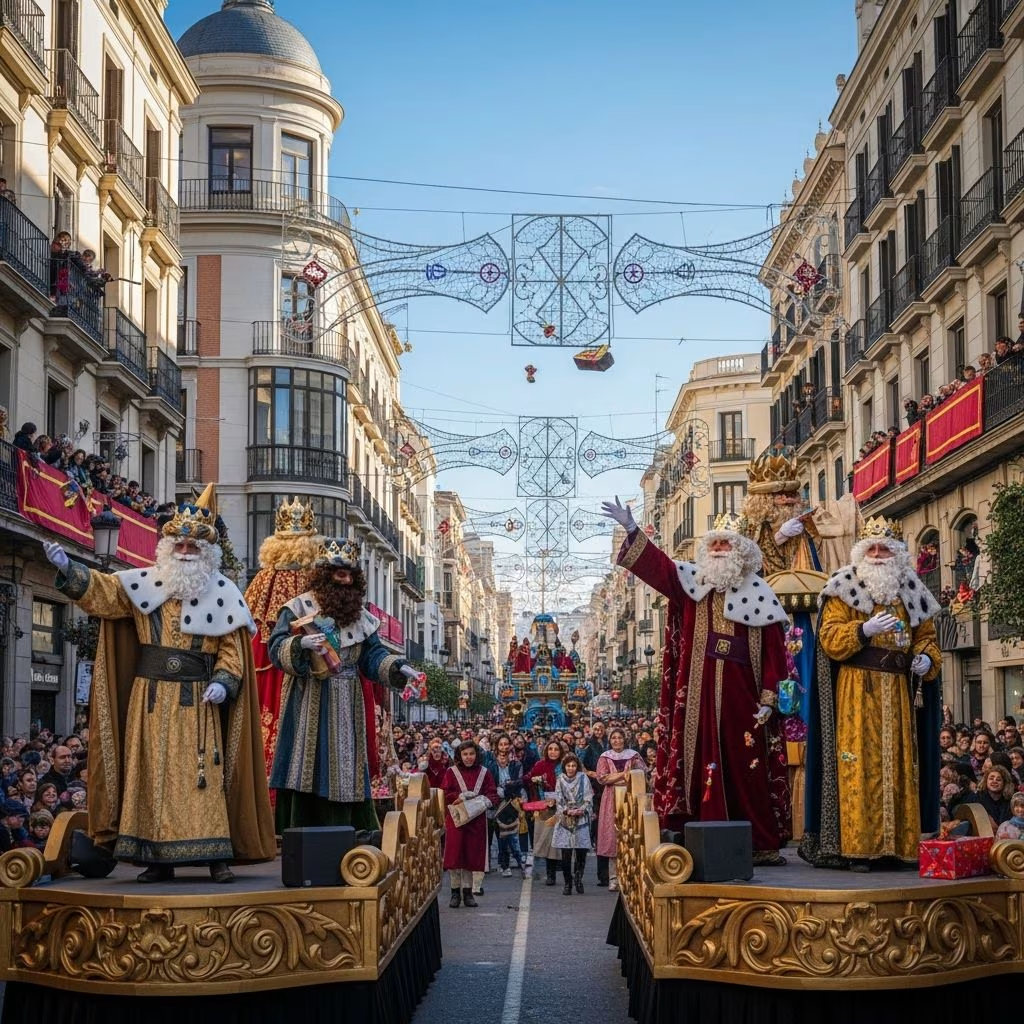
The most visually spectacular component of Kings’ Day observance involves the elaborate processions occurring on January 5th, known as Cabalgata de los Reyes Magos. These processions represent the culmination of months of preparation, with cities coordinating intricate logistics to accommodate hundreds of thousands of spectators who line streets, rooftops, and any available vantage point.
Major metropolitan centers like Madrid orchestrate processions featuring approximately 30 organized groups and elaborate floats. These entries reflect diverse segments of Spanish society, from traditional civic organizations and emergency services to contemporary commercial entities including major retailers and entertainment franchises. The Three Kings themselves occupy the place of honor, typically appearing in the final sections of the parade, accompanied by their legendary modes of transportation—horses, camels, and occasionally elephants.
The thematic organization of parade participants often aligns with geographical and cultural associations. Melchior’s entourage typically represents European traditions, while Gaspar embodies Asian cultural elements, and Balthazar showcases African heritage through themed decorations, percussion instruments, and ceremonial dress. This geographical symbolism enriches the parade experience, transforming it from mere spectacle into a multicultural celebration honoring the diverse origins associated with the legendary journey.
Parade dynamics extend beyond passive observation. From decorated floats, parade participants distribute sweets, small toys, and confections to enthusiastic crowds. Resourceful attendees, particularly children, employ creative strategies—some bringing umbrellas specifically designed to catch candy showers rather than precipitation. This participatory element transforms the parade from performance into communal interaction, creating memorable moments across generations.
Regional variations reflect local creativity and cultural preferences. In Barcelona, the royal delegation dramatically arrives by sea at the port, while in San Sebastián, they surf onto the beach on surfboards. These distinctive arrivals showcase how individual cities have adapted traditional celebrations to reflect local geography and contemporary creativity.
Spanish Epiphany traditions extend beyond parades into gastronomic traditions. The Roscón de Reyes—a ring-shaped brioche cake—stands as the quintessential food associated with this celebration. This distinctive pastry, often adorned with candied fruits, nuts, and delicate icing work, occupies a revered position in Spanish holiday cuisine.
The cake’s charm extends beyond its taste and appearance through an embedded tradition. Bakers traditionally conceal two objects within: a small figurine and a dried fava bean. This practice transforms cake consumption into a game of chance and consequence. The person discovering the figurine assumes royal status for the day, earning the right to wear a decorative cardboard crown. Conversely, the individual finding the bean faces a humorous financial obligation—traditionally paying for the cake in subsequent years.
This centuries-old practice has remained remarkably consistent across generations and regions, with families preparing homemade versions alongside commercial bakery offerings. The tradition encapsulates Spanish cultural values of communal celebration, playful surprise, and inclusive participation.
Spain’s approach to gift-giving during Kings’ Day deserves recognition as a distinctive cultural characteristic. Rather than concentrated gift exchanges on a single morning as observed in many English-speaking countries, Spanish families participate in an extended celebration cycle. The evening of January 5th involves children preparing shoes or leaving them outside their bedrooms, anticipating that the Three Kings—or their designated representatives—will deliver gifts during the night, similar to Santa Claus traditions in other cultures.
In contemporary urban centers, an additional custom has emerged. Children visit makeshift booths positioned outside department stores and shopping centers, presenting their gift wishlists directly to costumed representatives of the Three Kings. This modern adaptation maintains the spirit of personal communication and request-making while accommodating urban retail environments.
The gift-giving philosophy underlying Kings’ Day differs fundamentally from commercial Christmas traditions prevalent in some Western cultures. Traditional Spanish values emphasize moral comportment—gifts theoretically reward virtuous behavior throughout the year. This moral dimension adds depth to the celebration beyond mere material exchange.
While Kings’ Day maintains fundamental consistency across Spain as a national public holiday, regional expressions reflect local character and historical traditions.
| Region/City | Distinctive Features |
|---|---|
| Madrid | Hosts one of Spain’s largest and most famous parades, with extensive municipal organization and numerous commercial participants |
| Barcelona | Unique waterfront arrival by boat at the port, maritime procession through city streets |
| San Sebastián | Distinctive beach surfboard arrival of the Three Kings, incorporating coastal geography into celebration |
| Smaller Towns | Maintain traditions with local civic organizations, community groups, and traditional performances despite smaller scale |
Spain’s Kings’ Day celebrations have undergone evolutionary adaptations reflecting twenty-first century realities. Major urban centers increasingly feature international commercial brands alongside traditional civic organizations in parades. Entertainment franchises and sports teams now sponsor parade entries, introducing contemporary cultural references alongside historical religious observance.
Simultaneously, Spain has witnessed subtle shifts in observance patterns in highly urbanized areas. The gradual influence of Northern European and North American Christmas commercialism has begun competing with traditional Spanish practices, particularly among younger generations in metropolitan regions. Yet the fundamental structure and significance of Kings’ Day celebration remains remarkably resilient, suggesting deep cultural entrenchment transcending generational shifts.
The status of Epiphany as a national public holiday underscores governmental and societal commitment to preserving the celebration. Unlike many secular holidays that gradually lose public participation over decades, Kings’ Day maintains visible, organized observance across diverse demographic groups.
The scale of Kings’ Day celebrations requires extensive preparation extending months prior to January 5th. Municipal governments coordinate traffic management, security services, and infrastructure requirements to accommodate massive crowds. Parade participants—both volunteer civic groups and commercial entities—prepare elaborate floats, costumes, and performances.
Local businesses extend celebrations into commercial spaces through special holiday hours, themed window displays, and culinary promotions centered on Roscón de Reyes. Bakeries initiate production schedules well in advance to meet demand during the crucial final week before January 6th.
Kings’ Day transcends function as merely festive occasion, functioning instead as cultural marker of Spanish national identity and continuity. The celebration maintains visibility in secular and religious communities alike, indicating successful integration into Spanish cultural consciousness independent of personal religious conviction. Multi-generational participation perpetuates traditions, establishing Kings’ Day as annual touchstone connecting past and present, younger and older citizens.
The parade structure—featuring representation from civic, commercial, emergency, and military sectors—reflects Spain’s self-conception as unified national community participating in shared tradition. This inclusive participation contrasts with some Western celebrations concentrated primarily in private family settings.
The primary celebration occurs on January 6th, though the most visible events—particularly the grand parades—occur on the evening of January 5th. The night of January 5th represents Noche de Reyes (Kings’ Night), when gift-giving traditionally occurs.
The person discovering the figurine becomes king or queen for the day, earning the right to wear a decorative cardboard crown throughout celebrations.
While traditional accounts identified them as Melchior, Caspar, and Balthazar, contemporary parade representations have evolved. Modern symbolism designates Melchior representing Europe, Gaspar representing Asia, and Balthazar representing Africa, with visual representations reflecting these geographical associations.
Children leave shoes outside their bedrooms on the evening of January 5th, anticipating overnight delivery by the Three Kings. In urban centers, children may visit special booths to present wishlists to costumed king representatives.
Yes, January 6th is recognized as a national public holiday across Spain, meaning most businesses, government offices, and schools close for the day.
Visitors wishing to experience Spanish Kings’ Day celebrations should anticipate significant crowds in major cities, particularly during parade hours. Arriving early to secure viewing positions proves essential in popular locations. Many cities offer designated spectator areas, though spontaneous street-side watching remains common.
Travelers should sample traditional Roscón de Reyes from established bakeries rather than commercial supermarkets to appreciate authentic preparation methods and flavors. Many Spanish restaurants feature special holiday menus emphasizing traditional celebration foods during the first week of January.
Participating in community celebrations—whether parade attendance or shared cake consumption—provides authentic cultural engagement beyond typical tourism experiences. The inclusive, participatory nature of Kings’ Day celebrations welcomes both Spanish citizens and international visitors into the festive atmosphere.
