

 Travel Essentials
 Travel Essentials

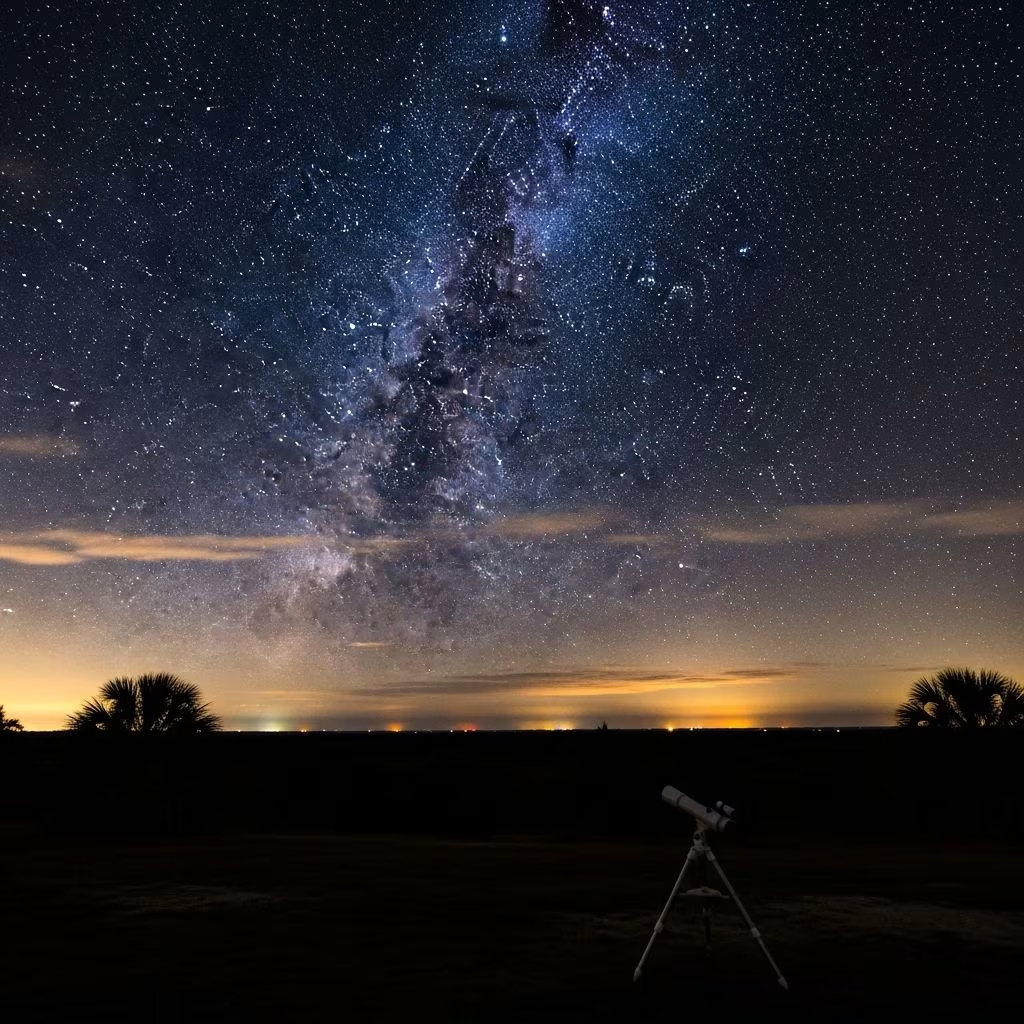
Explore Kissimmee Prairie Preserve State Park, Florida's first International Dark Sky Park offering exceptional conditions for observing the Milky Way, planets, and celestial phenomena without light pollution.
 Travel Essentials
For those seeking to reconnect with the cosmos and escape the pervasive glow of modern urban landscapes, Florida presents a paradox. The Sunshine State, known for its bustling cities and tourist destinations, conceals one of the most exceptional venues for astronomical observation on the eastern seaboard. Kissimmee Prairie Preserve State Park stands as a sanctuary for stargazers, astronomers, and nature enthusiasts who wish to experience the night sky in its full, unobstructed splendor.
This remarkable facility represents more than just a recreational destination—it embodies a commitment to preserving pristine natural conditions and advancing public understanding of our place in the universe. Unlike the majority of state parks and natural areas across Florida, Kissimmee Prairie has earned international recognition for maintaining exceptionally dark skies, making it an invaluable resource for both amateur and professional astronomical endeavors.
In 2016, Kissimmee Prairie Preserve achieved a distinction that few locations in Florida have attained: recognition as an International Dark Sky Park by the International Dark Sky Association. This certification represents rigorous evaluation of atmospheric conditions, light pollution levels, and management practices designed to protect the night sky environment. The park holds the distinction of being Florida’s first location to receive this designation, underscoring the exceptional quality of its dark sky conditions.
The International Dark Sky Association establishes standards for certified locations, requiring not only minimal ambient light pollution but also demonstrated commitment to maintaining these conditions through policy implementation and public education. For Kissimmee Prairie, this means carefully managing park lighting, establishing visitor protocols, and maintaining the natural landscape that contributes to ideal viewing conditions.
What makes this recognition particularly noteworthy is its rarity within Florida. The state’s population density, development patterns, and tourist infrastructure typically result in significant light pollution across most regions. Kissimmee Prairie’s location—approximately 100 miles from Orlando’s significant light sources—combined with its expansive 54,000-acre landmass, creates a unique pocket of astronomical opportunity.
Light pollution represents one of the most significant obstacles to astronomical observation in contemporary society. Unlike air or water pollution, which have visible physical manifestations, light pollution operates more subtly, yet its impact on the night sky is profound. The glow from streetlights, commercial establishments, residential areas, and transportation infrastructure scatters light into the atmosphere, creating what astronomers term “sky glow.”
This phenomenon has increased exponentially over the past century, with artificial nighttime lighting becoming ubiquitous across developed regions. According to astronomical research, approximately one-third of humanity cannot see the Milky Way from their homes due to light pollution. In urban and suburban areas, the night sky becomes progressively washed out, reducing the contrast between stars and the background atmospheric glow.
At Kissimmee Prairie, the situation differs dramatically. The expansive prairie landscape, combined with careful light management and distance from major urban centers, creates conditions where the night sky achieves what scientists describe as “exceptional darkness.” This darkness threshold enables observers to perceive celestial objects that remain invisible from light-polluted regions, transforming the viewing experience into something genuinely transformative.
The superior dark sky conditions at Kissimmee Prairie enable observation of astronomical phenomena that simply cannot be seen from typical viewing locations. The primary draw for most visitors remains the Milky Way, our galaxy viewed edge-on from Earth. Under ideal conditions—particularly during new moon periods—the Milky Way becomes visible as a luminous band stretching across the sky, revealing the incomprehensible vastness of our cosmic neighborhood.
Beyond the Milky Way, several significant celestial objects remain consistently visible at the preserve:
While Kissimmee Prairie offers exceptional stargazing opportunities year-round, temporal variations significantly influence the quality of observation experiences. Seasonal weather patterns, atmospheric conditions, and the position of celestial objects relative to the observer create distinct advantages during particular periods.
Fall and winter months present optimal conditions for Milky Way photography and observation. The crisp nights, reduced atmospheric moisture, and typically clearer skies create what photographers and astronomers describe as superior “transparency”—the degree to which the atmosphere permits light from distant celestial objects to reach the observer’s eye. During these months, the Milky Way’s galactic core reaches its highest elevation above the southern horizon, maximizing visibility of its central regions.
Late spring and summer months, while less ideal for Milky Way observation, offer compensatory advantages. Towering cumulus clouds and thunderstorm development create dramatic atmospheric displays. These conditions transform the sky into a dynamic canvas, producing spectacular cloud formations and occasional lightning displays that create their own form of natural illumination and visual drama.
The lunar cycle profoundly influences stargazing success. New moon periods—when the lunar disk remains invisible—provide maximum darkness, enabling observation of faint celestial objects and detailed Milky Way structure. Conversely, full moon periods produce significant atmospheric brightening, reducing the visibility of fainter objects. Astronomers consistently recommend timing visits to coincide with new moon windows.
Kissimmee Prairie Preserve State Park accommodates various visitor preferences through diverse accommodation options and activity infrastructure. The park operates multiple campground areas designed to serve different visitor populations and experience levels.
Camping Infrastructure: The preserve offers family campgrounds suitable for traditional tent camping and RV camping. Equestrian campgrounds serve visitors who wish to explore the park’s extensive trail network on horseback. Recent additions include glamping accommodations—furnished tent structures that combine camping experiences with enhanced comfort. Each accommodation tier provides access to the park’s dark sky resources, though campers benefit from assured after-dark access.
Astronomical Facilities: The park maintains a dedicated astronomy pad—a specialized facility specifically designed for night sky observation. This area implements strict lighting protocols, permitting only red light sources that minimize impact on human night vision and astronomical observation. Visitors can access this facility to experience optimal viewing conditions without competing illumination sources.
Trail System: The park features an extensive network of walking and biking trails, enabling visitors to explore the preserve’s 54,000 acres. This trail infrastructure allows visitors to relocate to different vantage points, experiment with various viewing locations, and integrate physical exploration with astronomical observation.
Practical considerations regarding park access merit attention for potential visitors. The preserve maintains specific entry protocols designed to preserve dark sky conditions and manage visitor flow.
Day-use facilities close 15 minutes after sunset each day. This closure prevents introduction of vehicle headlights and day-use area lighting during prime observation hours. Non-camping visitors cannot access the preserve after dark except through special arrangements.
Registered campers and those holding after-hours permits enjoy continued access to common use areas after the day-use closure. Florida State Parks Annual Pass holders can obtain after-hours permits through the preserve’s office during regular operating hours, enabling evening and night-time visits for astronomical observation.
While Kissimmee Prairie Preserve holds Florida’s primary International Dark Sky Park designation, the state maintains one additional certified location. Big Cypress National Preserve, located further south near the Everglades ecosystem, also receives International Dark Sky recognition. This geographic separation means that visitors can select between two distinct environments: the prairie ecosystem of Kissimmee Prairie versus the wetland forest ecosystem of Big Cypress.
The distinction underscores the rarity of truly dark skies within Florida. With a state population exceeding 22 million and significant tourist development, certified dark sky locations remain exceptional resources rather than commonplace recreational features.
Several factors warrant consideration when planning a visit to maximize astronomical observation success:
| Planning Factor | Recommendation | Rationale |
|---|---|---|
| Booking Timeline | Reserve accommodations 2-3 months in advance | Popular periods, especially during new moons and winter months, fill rapidly |
| Lunar Phase | Schedule visits during new moon periods | Moonlight dramatically reduces faint object visibility and Milky Way detail |
| Season | Prioritize October through March | Clear skies, low atmospheric moisture, optimal Milky Way positioning |
| Equipment | Bring binoculars or modest telescope if desired; naked eye observation remains primary | The dark sky conditions enable significant observation without optical aid |
| Accommodation Type | Select based on comfort preferences and experience level | All accommodation types provide dark sky access; glamping suits first-time visitors |
Yes. Under new moon conditions at Kissimmee Prairie, the Milky Way becomes visible as a luminous band stretching across the night sky—one of the most profound observational experiences available to amateur astronomers.
No. The exceptional dark sky conditions enable significant observation with unaided vision. Binoculars enhance the experience for those who have them, but they are not necessary.
October through March provides the clearest skies and optimal atmospheric conditions. Within this period, new moon phases offer the darkest skies.
Not without special arrangements. After-hours permits are available to Florida State Parks Annual Pass holders through the preserve’s office.
The preserve is located approximately 100 miles from Orlando, FL, positioning it far enough from significant urban light sources to maintain exceptional dark sky conditions.
The park offers family campgrounds, equestrian campgrounds, RV facilities, and glamping accommodations, enabling visitors to select based on comfort preferences and experience levels.
Kissimmee Prairie Preserve’s recognition and management as an International Dark Sky Park represents something extending beyond recreational opportunity. The preservation of truly dark skies constitutes conservation of a rapidly disappearing environmental resource. As light pollution intensifies across developed regions, locations maintaining pristine night sky conditions become increasingly valuable for scientific research, public education, and personal experience of the cosmos.
The park demonstrates that intentional management practices can preserve dark sky conditions even within regions experiencing significant development. This model offers guidance for other jurisdictions seeking to balance recreational development with environmental preservation.
