

 Travel Essentials
 Travel Essentials

Explore South Korea's captivating gardens that emphasize natural harmony, walking experiences, and landscape artistry rooted in over 2,000 years of history.
 Travel Essentials
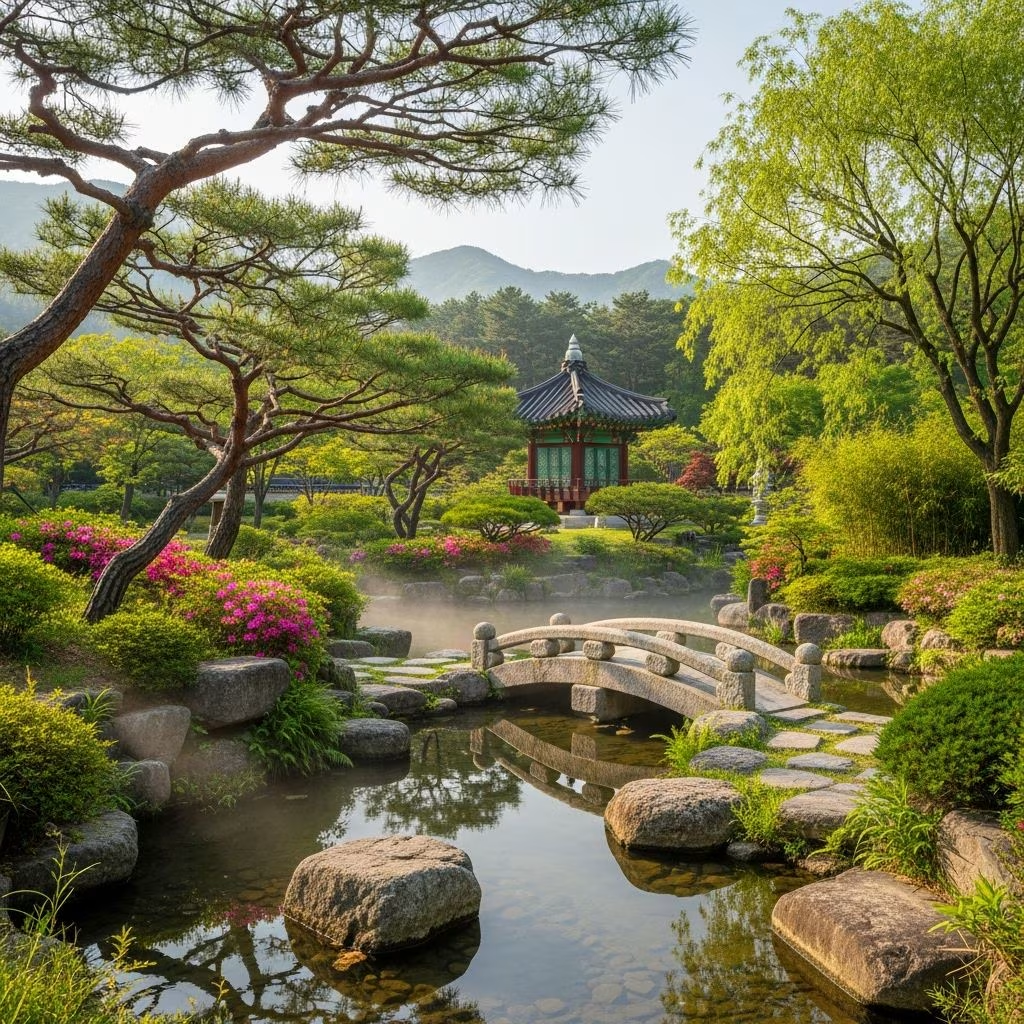
Korean gardens represent a profound fusion of art, philosophy, and the natural world, developed over millennia to create spaces of profound peace and contemplation. These landscapes prioritize blending human design with existing terrain, using elements like rocks, water, and native plants to evoke serenity and balance.
The tradition of crafting gardens in Korea stretches back more than 2,000 years, beginning in the Three Kingdoms period (57 BCE–668 CE). During this era, influences from China mingled with local preferences, leading to designs that stressed unity with the surrounding environment rather than rigid imposition of form.
Early gardens around palaces and temples featured ponds, artificial islands, and pavilions that seemed to emerge organically from the land. Archaeological evidence shows these spaces were selected based on pungsu, or geomancy, to harness positive energy flows for health and prosperity.
This evolution produced gardens that feel alive and unforced, distinct from the more structured Chinese or Japanese styles.
At the heart of Korean landscaping lies a commitment to simplicity, harmony, and symbolism. Designs aim to mimic nature’s irregularity, inviting visitors to wander and absorb the scenery gradually.
| Principle | Description | Symbolic Meaning |
|---|---|---|
| Harmony with Nature | Minimal disruption to existing landscapes; borrow views from distant mountains. | Unity between human and cosmos. |
| Simplicity (Geongang) | Understated elements without ornate excess. | Inner peace and tranquility. |
| Symbolism (Jisim) | Rocks for stability, water for life’s flow. | Philosophical depth from Confucianism, Buddhism, Taoism. |
| Walking Focus | Paths encourage slow exploration over static viewing. | Mindful engagement with seasons. |
These tenets ensure gardens evolve with seasons, offering varied beauty year-round—from spring blossoms to autumn foliage.
Korean gardens masterfully combine hard and soft features to craft immersive experiences. Rocks form the backbone, arranged to suggest mountains or ancient forms, while water adds fluidity and life.
Unlike Western gardens’ symmetry, these elements prioritize irregularity to mirror wild nature.
South Korea boasts diverse gardens, from royal retreats to contemporary innovations, spanning 970,000 square kilometers of varied terrain.
Hidden within Gyeongbokgung Palace, Huwon (Secret Garden) spans 78 acres with a central pond, pavilions, and lotus blooms. Built for Joseon kings, it served as a scholarly haven for poetry amid nature’s embrace.
Seoullo 7017, a transformed highway overpass, features elevated walkways lined with circular planters of perennials and herbs. This ‘sky garden’ promotes strolling amid city skyscrapers, proving traditional principles adapt to urban life.
Everland’s Garden of Morning Calm in Gapyeong dazzles with themed zones, light displays, and massive rock gardens illustrating hardscape’s role alongside flora.
In the countryside, spaces like those evoking seonbi (scholar) aesthetics feature square ponds and traditional hanok houses, capturing rural nostalgia.
These sites highlight how gardens scale from intimate nooks to vast parks, always centering human-nature connection.
Recreate Korean serenity at home with these adaptable ideas, drawing from ancient wisdom for modern backyards.
Scale to your lot size— even balcony planters in round pots echo Seoullo’s style.
Korean gardens transform quarterly, each phase offering unique allure. Spring brings cherry blossoms and azaleas; summer lotus pads float on ponds; autumn paints fiery reds; winter bares rocks’ stark beauty under snow.
Culturally, they embody han (subtle emotion) and Confucian balance, serving as mental refuges. Today, they attract global visitors, boosting eco-tourism.
Korean designs emphasize natural irregularity and walking paths over structured formality, with less emphasis on borrowed scenery enclosures.
Yes, each season reveals different charms, though spring and autumn peak for colors.
Absolutely—Seoullo 7017 exemplifies urban adaptation of traditions.
Focus on rocks, water, native plants, and meandering paths for harmony.
Rocks symbolize mountains and eternity, forming the garden’s skeletal structure.
