

 Travel Essentials
 Travel Essentials

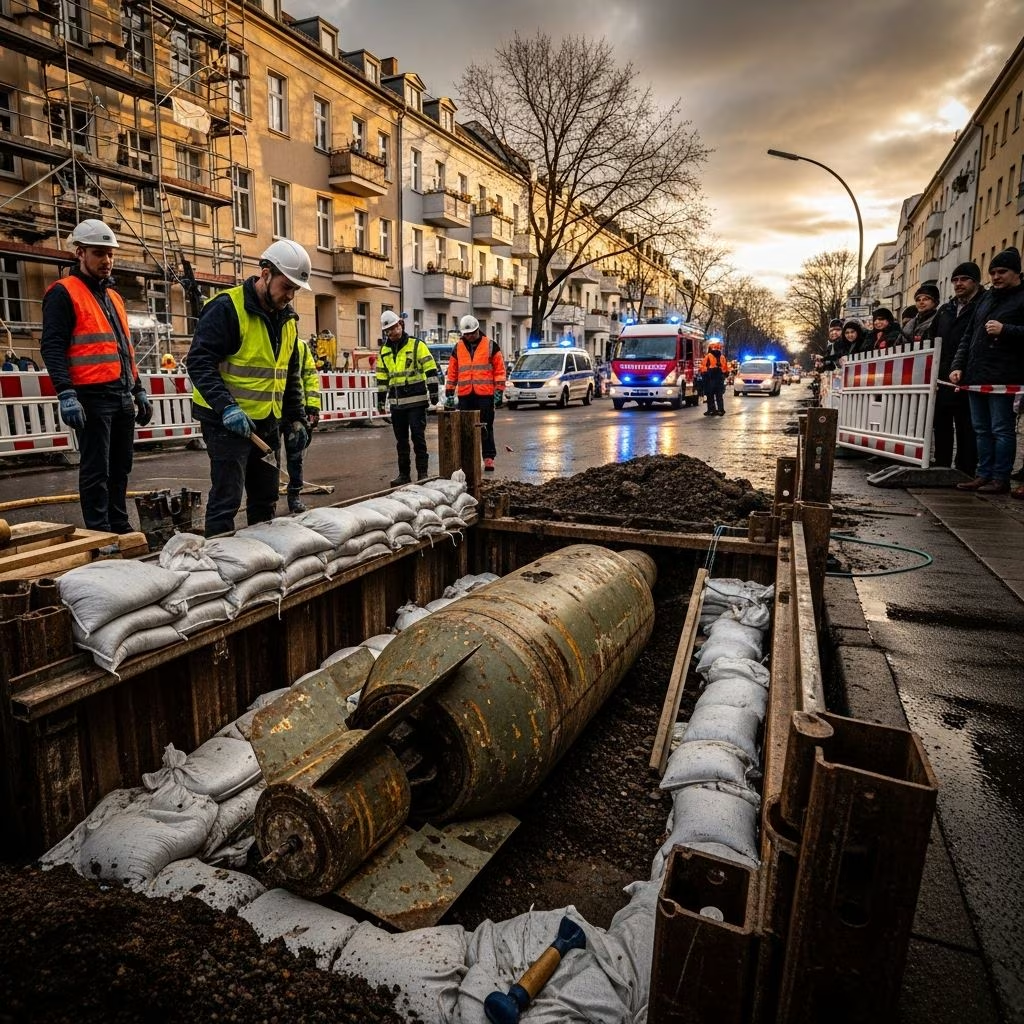
A WWII bomb discovery in Berlin's Kreuzberg district led to the evacuation of 11,000 residents, highlighting ongoing risks from unexploded ordnance in Germany's capital.
 Travel Essentials
Berlin’s bustling Kreuzberg district, known for its vibrant street art, multicultural markets, and alternative scene, faced an unexpected disruption when construction workers unearthed a World War II bomb. This incident prompted the evacuation of approximately 11,000 residents and visitors, marking one of the largest such operations in the city’s recent history. Such discoveries are not rare in Germany, where thousands of unexploded bombs from the intense Allied air campaigns still lurk beneath urban landscapes.
During routine construction work in Kreuzberg, a team of workers stumbled upon a sizable unexploded aerial bomb from the Second World War. The device, weighing several hundred kilograms, was in a precarious state after decades buried underground. Authorities were alerted immediately, initiating a swift response protocol that has become all too familiar in postwar Germany.
Kreuzberg, with its dense population and mix of historic buildings and modern developments, amplified the scale of the operation. The bomb’s location near key infrastructure necessitated a wide evacuation radius, affecting homes, businesses, and public spaces alike. Residents received urgent notices to vacate by a specific morning hour, leaving behind pets, valuables, and daily routines.
Berlin endured over 363 air raids during World War II, transforming the Nazi capital into a scarred battlefield. The Royal Air Force and United States Army Air Forces targeted the city relentlessly from 1940 onward, dropping thousands of tons of explosives. The first significant RAF raid hit on the night of August 28-29, 1940, with bombs falling heavily on eastern districts like Kreuzberg around Kottbusser Tor. High-explosive bombs shattered pavements, tram lines, and rooftops, while incendiaries sparked widespread fires.
Many bombs failed to detonate—known as ‘duds’—due to design flaws, malfunctions, or ground conditions. Estimates suggest up to 15% of dropped ordnance remained intact, leaving a lethal legacy. In Kreuzberg alone, areas like Kottbusser Straße and Mariannenstraße bore the brunt, with unexploded bombs reported right next to tram tracks.
| Date | Target Area | Damage Type | Unexploded Reports |
|---|---|---|---|
| Aug 28-29, 1940 | Kottbusser Tor, Kreuzberg | High-explosive & incendiary | Two duds on Kottbusser Str. |
| 1940-1945 | Berlin-wide | 363 raids total | Thousands buried |
The response to the Kreuzberg find exemplified Germany’s well-oiled bomb disposal machinery. Police and bomb squads assessed the device, determining it required controlled detonation rather than transport. An exclusion zone spanning several blocks was established, encompassing residential towers, trendy cafes, and the iconic Turkish market.
Similar incidents occur frequently; for instance, a 500kg bomb near Berlin Hauptbahnhof led to evacuations of government buildings and embassies, suspending train services. These operations minimize risks through precise planning, often involving robots for initial inspections.
Once a working-class enclave pummeled by bombs, Kreuzberg evolved into Berlin’s edgiest borough. Its above-ground U-Bahn tracks signal its historically poorer status, spared the cost of tunneling seen in wealthier areas. Görlitzer Bahnhof, a grand prewar station, was crippled by WWII damage and later the Berlin Wall, now reduced to a modest U-Bahn stop amid Görlitzer Park—where bomb craters still dent the landscape.
Today, the neighborhood pulses with graffiti murals, kebab stands, and techno clubs. Yet, wartime scars persist: parks hide craters, and construction routinely unearths relics. This blend of history and hipness makes Kreuzberg a magnet for travelers seeking authentic Berlin.
Germany grapples with an estimated 2,000 tons of unexploded ordnance yearly, concentrated in cities like Berlin, Hamburg, and Munich. Since 1945, over 40,000 bombs have been neutralized, with hundreds defused annually. Berlin authorities handle dozens of alerts per year, often during building projects.
Advanced techniques include X-ray scanning, water-jet cutting, and robotic arms. Public awareness campaigns educate on reporting suspicions, preventing tragic accidents. A notable case involved a bomb mere meters from a busy rail line, dormant for 70 years.
For Kreuzberg’s diverse community—home to Turkish immigrants, artists, and young professionals—the evacuation disrupted lives. Families with children faced hotel stays, while shop owners tallied losses from closures. Yet, community spirit shone through, with neighbors aiding the vulnerable.
Long-term, these events spur infrastructure checks, enhancing safety. Tourism dips briefly, but Berlin’s resilience draws visitors back, intrigued by the drama.
Travelers to Berlin should stay informed via official apps and news. If near an evacuation:
Explore safely by noting Kreuzberg’s WWII traces, like park depressions from blasts.
Bomb finds compel reflection on Berlin’s past. Museums and tours highlight the Blitz, fostering peace education. Urban renewal must balance growth with historical caution, ensuring these relics inform rather than endanger.
A WWII bomb discovered during construction required defusal, prompting mass evacuation for safety.
Very common; dozens yearly, due to intense wartime bombing leaving thousands undetonated.
Yes, authorities handle threats expertly; the area returned to normal quickly.
Evacuate and call emergency services immediately—do not touch.
From bombed streets to a counterculture haven, with physical scars in parks and infrastructure.
