

 Travel Essentials
 Travel Essentials

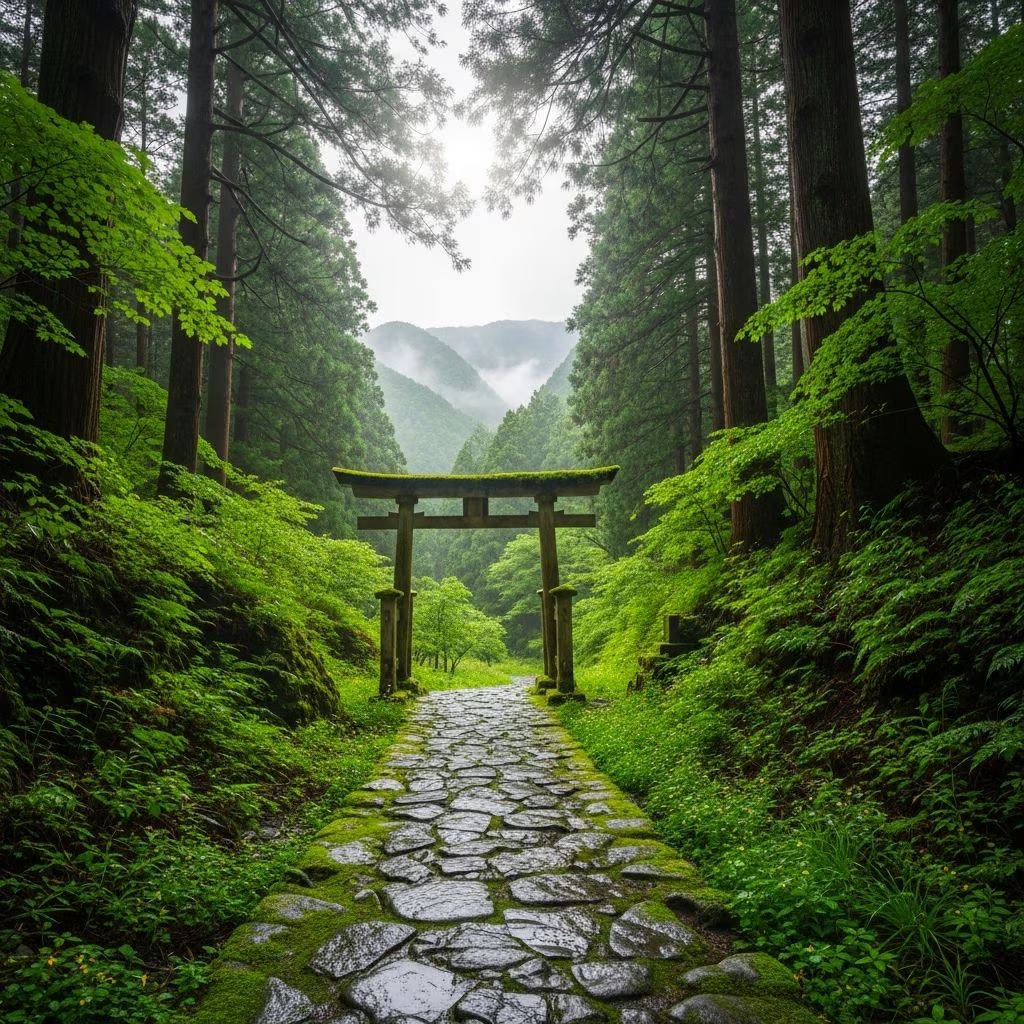
Explore Japan's Kumano Kodo, a 300-mile network of ancient trails on the Kii Peninsula leading to sacred shrines. Hike historic paths used by emperors for over 1,000 years.
 Travel Essentials
Japan’s Kumano Kodo represents one of the world’s most profound walking journeys, a sprawling 300-mile (approximately 500 km) web of ancient paths weaving through the rugged Kii Peninsula. These trails, etched into the landscape over a millennium ago, draw hikers seeking physical challenge, spiritual depth, and immersion in Japan’s Shinto-Buddhist heritage. Designated a UNESCO World Heritage site in 2004 as part of the “Sacred Sites and Pilgrimage Routes in the Kii Mountain Range,” the routes converge on the Kumano Sanzan—the three grand shrines: Kumano Hongu Taisha, Kumano Hayatama Taisha, and Kumano Nachi Taisha.
For more than 1,000 years, the Kumano Kodo has served as a conduit for spiritual seekers from all walks of life, including peasants, nobles, and even retired emperors. Beginning in the 10th century, imperial pilgrims from Kyoto traversed these mountainous trails in grand processions, guided by yamabushi mountain ascetics who led purification rituals amid the dense forests and steep passes. The journey itself was a rite of rebirth, symbolizing passage to Kumano’s “Pure Land,” a mythical realm of divine presence.
Unlike modern hikes, these pilgrimages blended Shugendo practices— a syncretic faith merging Shinto, Buddhism, and animism—with grueling ascents over passes exceeding 1,000 meters. Historical records note over 100 imperial visits between 907 and 1281, elevating the paths’ prestige. Today, the trails preserve stone-paved sections, weathered oji shrines (way stations for prayer), and remote villages offering minshuku lodgings, allowing contemporary trekkers to echo this timeless tradition.
The Kumano Kodo comprises five main interconnected routes, each offering distinct challenges and rewards. Total traversal could span a month, but most opt for 4-7 day segments. Well-marked with signage in Japanese and English, the paths feature rest houses, tea spots, and bus access for flexibility.
The Nakahechi, or “Middle River Route,” stands as the pilgrimage’s backbone, favored by Kyoto’s elite. Spanning four stages plus a rest day, it demands moderate fitness: expect 4-8 hours daily on uneven stone paths, cedar forests, and river valleys. Total elevation: about 2,500 meters ascent.
| Stage | Distance | Highlights | Difficulty |
|---|---|---|---|
| 1: Takijiri-oji to Tsugizakura-oji | 11 miles (18 km) | Forest cedars, stone steps, first oji shrine | Moderate |
| 2: Tsugizakura-oji to Kumano Hongu Taisha | 12 miles (20 km) | Kobiro-toge pass, Hongu shrine arrival | Challenging |
| Rest: Hongu | – | Explore grand torii in riverbed, onsen soak | Easy |
| 3: Hongu to Tsunoyama-oji via Kumano-gawa river | 9 miles (14 km) | Boat option or riverside walk to Hayatama | Easy-Moderate |
| 4: Koguchi to Kumano Nachi Taisha | 9 miles (14 km) | Dogiri-zaka ‘backbreaker’ slope, Nachi Falls | Very Challenging |
Post-Nakahechi, pilgrims historically boated the Kumano-gawa river—a 40 km UNESCO-listed waterway—to Shingu’s Hayatama Taisha, then looped to Nachi.
Best Seasons: Spring (cherry blossoms, April-May) or autumn (foliage, October-November). Summers are humid; winters snowy on highlands. Check closures via official apps.
Preparation: Sturdy boots for rocky terrain; trekking poles essential. Fitness: Train for 1,000m daily climbs. Luggage forwarding services (takkyubin) lighten loads between minshuku.
Accommodations: Ryokan inns serve kaiseki meals; book via Walk Japan or Japanican. Budget: $100-200/night including dinner/breakfast.
Access: Fly to Kansai Airport (Osaka), bus to Tanabe (2.5 hrs). JR Pass covers trains; trail buses ~$10-20.
Costs: 7-day self-guided: $800-1,500 (lodging, food, transport). Guided tours: $2,500+.
At the routes’ core lie the Kumano Sanzan, syncretic power spots embodying kami gods and Buddhist mandalas. Kumano Hongu Taisha, inland amid rivers, hosts the principal deity; its massive torii strides a gravel bed. Hayatama Taisha in Shingu guards Hayatama River’s mouth. Nachi Taisha crowns a cliff beside Japan’s tallest waterfall (133m), paired with Seiganto-ji pagoda. Visiting all three grants spiritual completion, echoing ancient mandates.
Today’s Kumano Kodo blends solitude with accessibility: apps like ‘Kumano Kodo Map’ provide GPS; English signage aids foreigners. Events include annual festivals at shrines. Sustainable tourism preserves paths—stick to trails to protect fragile ecosystems. Compare to Spain’s Camino de Santiago, Kumano offers denser forests, fewer crowds, and deeper Shinto roots.
Partial routes like Nakahechi Stage 1 suit novices; full treks require experience. Guided options ease logistics.
Entire network: 3-4 weeks. Popular 70km Nakahechi: 5-7 days.
Yes, operators like Much Better Adventures offer inn-to-inn packages from Koyasan.
Cedar groves, monkeys, deer, waterfalls, Pacific vistas. UNESCO biodiversity hotspot.
90-day visa-free for many; basic Japanese helps, but trails are English-friendly.
Beyond physical demands, Kumano fosters introspection amid timeless landscapes. Pilgrims report profound renewal, mirroring imperial quests for purity. As globalization accelerates, these paths offer anchor in nature’s rhythm—a 1,000-year-old invitation to slow, reflect, and reconnect.
