

 Travel Essentials
 Travel Essentials

Explore how shark nets protect KwaZulu-Natal's beaches while examining the environmental and conservation concerns surrounding these safety systems.
 Travel Essentials
The coastline of KwaZulu-Natal represents one of South Africa’s most cherished recreational destinations, attracting thousands of visitors annually to its pristine beaches. However, this scenic paradise exists alongside a legitimate concern that has shaped coastal management practices for over seven decades: the risk of shark encounters. The response to this challenge has been the implementation of a comprehensive shark net program that now spans multiple beaches along the province’s coast. This protective infrastructure represents a complex intersection of public safety, marine conservation, and environmental stewardship that continues to generate discussion among stakeholders.
The history of shark nets in KwaZulu-Natal began in the early 1950s when municipal authorities in Durban recognized the need for systematic measures to reduce shark-related incidents. The initial deployment occurred in 1952, marking the beginning of what would become one of the world’s longest-running shark mitigation programs. This pioneering approach emerged from a series of shark incidents that prompted local officials to seek innovative solutions to protect bathers without resorting to indiscriminate culling programs.
During the 1960s, following continued reports of shark encounters at unprotected beaches, the program underwent significant expansion. Municipal authorities recognized that the problem extended beyond Durban’s urban beaches to encompass numerous popular swimming destinations throughout the province. This expansion reflected growing tourism and increased recreational beach usage across the entire KwaZulu-Natal coast.
By the early 1990s, the program had grown substantially. At its peak in 1992, authorities had installed protective netting across 44 beaches, with approximately 44.6 kilometers of nets stretching from Richards Bay in the north to Mzamba in the south. This expansion represented an ambitious commitment to coastal safety that positioned KwaZulu-Natal as a leader in shark mitigation technology.
Today, the shark net program operates as a carefully managed system overseen by the KwaZulu-Natal Sharks Board (KZNSB), an organization dedicated to balancing public safety with environmental considerations. The current network protects 37 beaches along the KwaZulu-Natal coastline, providing comprehensive coverage of the province’s most popular swimming destinations.
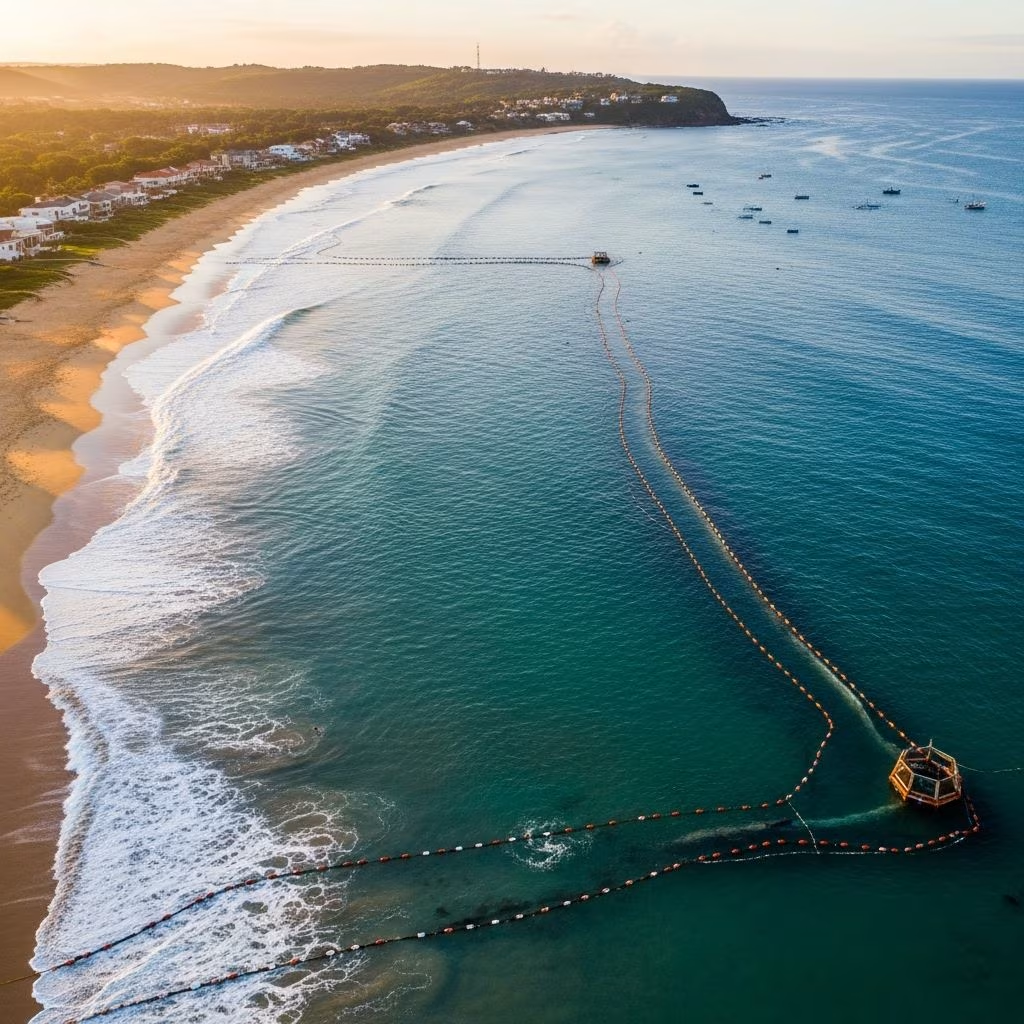
The physical infrastructure supporting this program consists of two primary components: stationary nets and supplementary drum lines equipped with baited hooks. Currently deployed across protected beaches are approximately 14.8 kilometers of netting paired with 177 drum lines. At individual locations, such as the recently proposed installation at Tinley Manor Beach, the specifications reflect careful engineering standards designed to maximize effectiveness while considering practical constraints. A typical new installation might comprise a net measuring 214 meters in length and 6 meters in depth, anchored securely to the seabed with additional drum lines positioned strategically nearby.
The fundamental purpose of KwaZulu-Natal’s shark net system centers on identifying and removing potentially dangerous species before they can encounter bathers. Rather than functioning as a complete barrier, the nets serve as a selective catching mechanism that targets specific shark species considered most likely to pose risks to swimmers.
Research and historical data have identified three shark species as responsible for the majority of recorded incidents: the bull shark (also known as the Zambezi shark), the tiger shark, and the great white shark. These species, distinguished by their size, feeding behavior, and coastal habitat preferences, are the primary targets of the mitigation program. The strategy recognizes that not all shark species pose equivalent risks; many smaller species and non-predatory varieties coexist peacefully with human recreational activities.
Supporters of the program cite substantial evidence of its effectiveness. According to KZNSB data, the deployment of nets and drum lines has eliminated fatal shark attacks across protected beaches over a 73-year operational period. This statistic represents a remarkable safety achievement that authorities frequently reference when defending the program against criticism.
Recent years have witnessed renewed discussion about the shark net program, particularly following the announcement of new resort development adjacent to Tinley Manor Beach. This proposed expansion of visitor infrastructure sparked municipal authorities to request safety recommendations from KZNSB, resulting in proposals to install additional nets and drum lines at previously unprotected swimming areas.
The Tinley Manor proposal exemplifies the ongoing tension between economic development, visitor safety, and environmental conservation. Located approximately one-and-a-half hours north of Richards Bay, this area represents a growing tourism destination that will see dramatically increased recreational beach usage upon completion of nearby resort facilities. Municipal planners, concerned about their responsibility to protect the anticipated influx of visitors, initiated consultations with KZNSB regarding appropriate safety measures.
The proposed shark net infrastructure at Tinley Manor would consist of specific installations: a 214-meter net anchored with precise specifications and six drum lines positioned for maximum effectiveness. These specifications follow established protocols developed over decades of operational experience at existing protected beaches.
Despite the safety record and apparent effectiveness of shark nets in preventing human fatalities, significant environmental concerns have emerged regarding the broader ecological consequences of this technology. Critics of the program argue that nets and drum lines represent outdated methodology that indiscriminately kills non-target marine species alongside the intended shark catch.
One particularly troubling incident highlighted these concerns: in February 2026, a juvenile humpback dolphin became entangled and died in one of the nets near Richards Bay. This incident exemplified broader worries about endangered species being inadvertently killed through the shark mitigation infrastructure. The endangered status of humpback dolphins in South African waters lends particular urgency to these concerns, as the population cannot sustain significant mortality from human-created hazards.
Recent data reveals the magnitude of this unintended mortality. During 2025 alone, shark nets and drum lines killed 416 sharks off the KwaZulu-Natal coast, along with numerous non-target species, many of which possess protected legal status under South African environmental law. This casualty figure raises important questions about whether the environmental cost of the program justifies continued implementation in its current form.
Beyond operational questions, environmental advocates and legal specialists have begun challenging the regulatory framework supporting the shark net program. Concerns have emerged regarding whether KZNSB installations ever underwent proper environmental impact assessments as required under South African environmental legislation.
Specifically, legal experts question the validity of historical permits issued by South Africa’s Department of Forestry, Fisheries and the Environment (DFFE) to KZNSB. The argument centers on whether comprehensive environmental impact assessments were conducted before installations were authorized, particularly for the extensive networks deployed during the program’s expansion phases. This legal scrutiny suggests that some existing shark net installations may operate under questionable regulatory authority.
Recognizing the validity of these concerns, the DFFE initiated a comprehensive review of the Tinley Manor proposal and the broader regulatory framework governing shark nets across KwaZulu-Natal. This governmental review process represents an opportunity to establish clearer environmental standards for future installations and potentially revisit the authorization status of existing infrastructure.
As environmental concerns gain prominence in regulatory discussions, attention has increasingly focused on alternative shark mitigation approaches. Emerging technologies promise similar or superior safety outcomes while reducing unintended ecological damage. These alternatives range from electronic deterrent systems to innovative behavioral barriers that exploit shark sensory capabilities without physical capture or killing.
Proponents of the current shark net system argue that comparative environmental impacts remain minimal when considered against other human pressures on marine ecosystems, particularly industrial fishing operations. However, this argument increasingly appears insufficient to satisfy environmental regulatory authorities and conservation-minded stakeholders seeking genuinely sustainable solutions.
| Metric | Current Status |
|---|---|
| Protected Beaches | 37 locations along KwaZulu-Natal coast |
| Total Net Coverage | 14.8 kilometers of netting |
| Drum Lines Deployed | 177 individual units |
| Program Inception | 1952 (Durban) |
| Major Expansion Period | 1960s (provincial extension) |
| 2025 Unintended Casualties | 416 sharks plus other species |
| Fatal Attacks (73 years) | Zero at protected beaches |
Shark nets do not create complete barriers but rather function as catching mechanisms. Fish and sharks become entangled when they attempt to swim through the mesh, immobilizing them. Coupled with drum lines—baited hooks anchored to the seabed—this system targets specific dangerous species while they move through designated swimming areas.
According to KZNSB data, protected beaches have experienced zero fatal shark attacks over the program’s 73-year operational history, suggesting the system effectively prevents lethal incidents. However, critics note that historical shark attack rates in KwaZulu-Natal were never extremely high compared to other global locations.
Dolphins, sea turtles, rays, and various fish species become entangled in shark nets despite not representing safety threats to bathers. Protected species such as humpback dolphins face particular conservation concerns, with documented deaths during recent years.
Yes, emerging systems including electronic deterrents, acoustic barriers, and specialized exclusion technologies show promise for preventing shark encounters without lethal consequences. However, KZNSB currently relies exclusively on traditional nets and drum lines.
As of 2026, the South African Department of Forestry, Fisheries and the Environment was conducting a regulatory review to determine whether an environmental impact assessment should be required before authorizing the proposed installation.
The KwaZulu-Natal shark net program exemplifies the complex challenges facing modern coastal management. While undoubtedly effective at preventing shark-related fatalities, the system’s significant environmental costs merit serious consideration by policymakers. The tension between protecting human beachgoers and preserving marine ecosystems reflects broader questions about how societies manage risks while respecting environmental limits.
Recent years have witnessed growing recognition that traditional approaches may require reassessment. New technologies, heightened environmental consciousness, and legal scrutiny of existing permits suggest that KwaZulu-Natal’s shark mitigation strategy may be evolving toward more sustainable methodologies. Future developments at locations like Tinley Manor will likely establish important precedents for how the province balances competing priorities in coastal management.
For visitors planning beach activities in KwaZulu-Natal, understanding this complex system provides valuable context for appreciating both the safety measures protecting recreational areas and the environmental dimensions of that protection. The provincial government’s ongoing regulatory review process may ultimately reshape how shark mitigation occurs along these cherished coastlines, determining whether future protection mechanisms can achieve safety objectives through methods that minimize ecological harm.
