

 Travel Essentials
 Travel Essentials

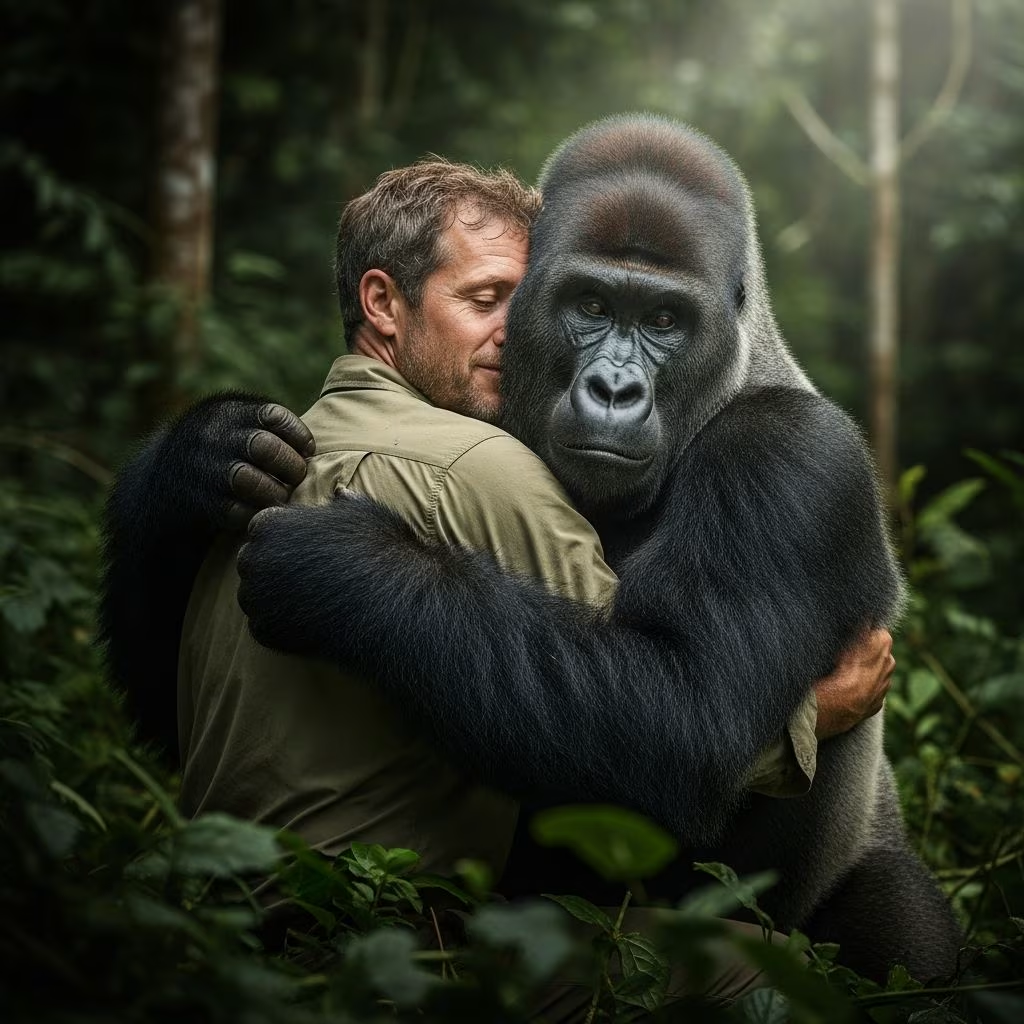
Discover how Damian Aspinall reunited with Kwibi, a gorilla he raised and released into the wild, in a touching encounter that demonstrates animal memory and conservation success.
 Travel Essentials
The bond between humans and animals has captivated storytellers and scientists alike for centuries. Yet few encounters capture the depth of this connection quite like the remarkable reunion that unfolded along a riverside in the heart of Gabon. This is the story of Damian Aspinall, a millionaire entrepreneur turned dedicated conservationist, and Kwibi, a male gorilla who would challenge everything we believe about animal memory and emotional intelligence.
Damian Aspinall’s journey into wildlife conservation began not in the pristine forests of Africa, but in the controlled environment of his wildlife park nestled in the English countryside. Here, among carefully maintained habitats and dedicated care routines, Aspinall devoted himself to raising young gorillas with a singular purpose: preparing them for eventual release into their natural environment. This vision represented a departure from traditional zoo practices, focusing instead on rehabilitation and reintegration rather than permanent captivity.
Among the young gorillas in his care was Kwibi, a male who would become central to Aspinall’s conservation philosophy. From his earliest days, Kwibi received individualized attention and socialization designed to maintain his natural behaviors while allowing him to develop the skills necessary for survival in the wild. The relationship that formed during these formative years would prove to be more profound than anyone anticipated.
The pivotal moment in Aspinall’s conservation work came when he made the decision to release Kwibi and six other young gorillas into the forests of Gabon. This represented a significant milestone in wildlife rehabilitation efforts, demonstrating a commitment to allowing captive-bred animals to reclaim their place in their native ecosystems. The release was carefully orchestrated, with teams monitoring the gorillas’ adaptation to their new environment and their integration with existing wild populations.
The emotional weight of this decision cannot be overstated. Aspinall had invested years developing a relationship with Kwibi, and releasing him into the African wilderness meant accepting the uncertainty of whether the gorilla would survive, thrive, or ever be encountered again. For most people, this would represent a final goodbye. Yet Aspinall harbored a different hope—that perhaps, one day, he might return to check on his former charge.
Five years passed between Kwibi’s release and Aspinall’s planned return to Gabon. During this period, the conservationist could only speculate about Kwibi’s fate. Had the gorilla successfully integrated into wild groups? Had he found suitable food sources? Had he grown into a healthy adult male? These questions remained unanswered, creating a peculiar sense of longing for a man who had dedicated his career to precisely this outcome—the successful independence of once-captive animals.
When Aspinall finally organized his return expedition to Gabon, expectations were carefully tempered. He harbored no illusions that Kwibi would remember him after such an extended separation. Five years represents an eternity in an animal’s life—a period encompassing dramatic physical and behavioral development. The adult Kwibi would bear little resemblance to the younger gorilla Aspinall had known. Furthermore, the gorilla would have experienced thousands of interactions with his natural family groups and the broader gorilla community, potentially overshadowing any memories of human contact.
The search for Kwibi along the riverbanks of Gabon commenced with patient tracking and careful observation. Aspinall’s team navigated the dense vegetation and challenging terrain, hoping to locate not just any gorilla, but one specific individual among a population of wild creatures. The odds seemed decidedly against them, yet the journey continued with determined purpose.
What transpired when Aspinall and Kwibi finally encountered each other defied rational expectation. Rather than displaying fear or indifference toward this human who had suddenly appeared in his world, Kwibi demonstrated unmistakable recognition. The gorilla’s behavior shifted dramatically upon seeing Aspinall, suggesting that despite five years of separation and complete immersion in wild life, some aspect of their relationship remained embedded in Kwibi’s memory.
The reunion itself became a remarkable display of emotional connection. Kwibi exhibited behaviors that clearly indicated familiarity and affection toward Aspinall. The gorilla did not treat this human as a threat or an intruder, but rather as someone significant to his personal history. This interaction provided powerful evidence challenging conventional assumptions about animal cognition and the persistence of social bonds formed in captivity.
Perhaps the most poignant element of their reunion involved Kwibi’s response to the moment of separation. When Aspinall prepared to depart and return to the expedition’s camp, the gorilla demonstrated visible distress at the prospect of another separation. Rather than allowing his former caretaker to leave without protest, Kwibi followed the boat carrying Aspinall back toward the camp. The gorilla then positioned himself on the opposite bank of the river, in close proximity to where Aspinall would rest.
Throughout the night, Kwibi remained vigil near Aspinall’s location, calling out to the man who had raised him. His vocalizations—distinctive gorilla communications—punctuated the darkness, suggesting emotional distress at the reunion’s brevity. The following morning, Kwibi remained in the same location, demonstrating a persistence in seeking contact that spoke volumes about the strength of their bond.
Kwibi’s response to Aspinall’s return provides compelling evidence for advanced cognitive abilities in gorillas. The capacity to recognize and respond emotionally to an individual after a five-year separation demonstrates memory systems far more sophisticated than many people realize. Gorillas, like other great apes, possess complex social structures and individual relationships that persist over extended time periods. This reunion exemplifies how personal bonds, once formed, can remain encoded in an animal’s psychological framework.
Beyond simple recognition, Kwibi’s behavior during and after the reunion—including his apparent distress at separation and his nocturnal vocalizations—suggests genuine emotional responses comparable to those observed in human relationships. The gorilla did not merely tolerate Aspinall’s presence; he actively sought continued contact and expressed what could reasonably be interpreted as sadness at the reunion’s brevity. This emotional dimension adds important context to discussions about animal consciousness and subjective experience.
From a conservation perspective, Kwibi’s apparent thriving in the wild suggested that Aspinall’s rehabilitation approach had succeeded. The gorilla was not merely surviving in his natural environment; he was healthy, strong, and integrated into wild gorilla populations. This outcome validated the investment in careful preparation and gradual introduction to wilderness conditions. Kwibi represented tangible proof that captive-bred animals, when properly prepared and supported, can successfully transition to independent wild life.
Aspinall’s work with Kwibi and other gorillas reflects a broader philosophical approach to wildlife conservation that prioritizes species reintegration over perpetual captive management. Rather than viewing zoos and wildlife parks as permanent residences for animals, this approach treats them as transitional spaces where animals receive preparation for eventual release. This philosophy requires substantial long-term commitment, as successful reintegration involves monitoring released animals, managing wild populations, and addressing habitat preservation challenges.
The emotional weight of such work cannot be understated. Conservationists who invest years developing relationships with animals they will eventually release must reconcile the joy of successful reintegration with the bittersweet reality of permanent separation. Aspinall’s reunion with Kwibi transformed this abstract principle into a lived reality, demonstrating both the rewards and emotional complexities of dedication to wildlife conservation.
Kwibi’s story unfolds within the larger context of gorilla conservation efforts across Africa. Mountain and western lowland gorillas face threats from habitat loss, poaching, and disease. Conservation initiatives that include rehabilitation and reintegration programs contribute meaningfully to maintaining genetic diversity and population resilience. Programs like Aspinall’s work in Gabon represent important components of comprehensive conservation strategies aimed at ensuring long-term gorilla survival.
Beyond its conservation significance, Kwibi’s story offers broader lessons about the nature of relationships between humans and animals. The reunion demonstrates that meaningful connections can transcend species barriers and survive extended separations. It challenges assumptions that animals cannot form lasting attachments or retain memories of significant individuals. Most importantly, it illustrates the possibility of relationships characterized by mutual respect—where humans facilitate animals’ return to independence while maintaining genuine affection and recognition.
Damian Aspinall’s work with Kwibi represents more than a single heartwarming story; it embodies a commitment to reimagining humanity’s relationship with wildlife. Rather than viewing animals as possessions to be permanently managed in captivity, this approach recognizes their intrinsic value as independent beings deserving of freedom and autonomy. The reunion in Gabon stands as testament to the possibility of conservation approaches that honor both human emotional connections and animal independence.
