

 Travel Essentials
 Travel Essentials

Discover Kyoto Imperial Palace: its rich history from Heian era, stunning architecture like Shishinden Hall, serene gardens, and practical tips for tours and access.
 Travel Essentials
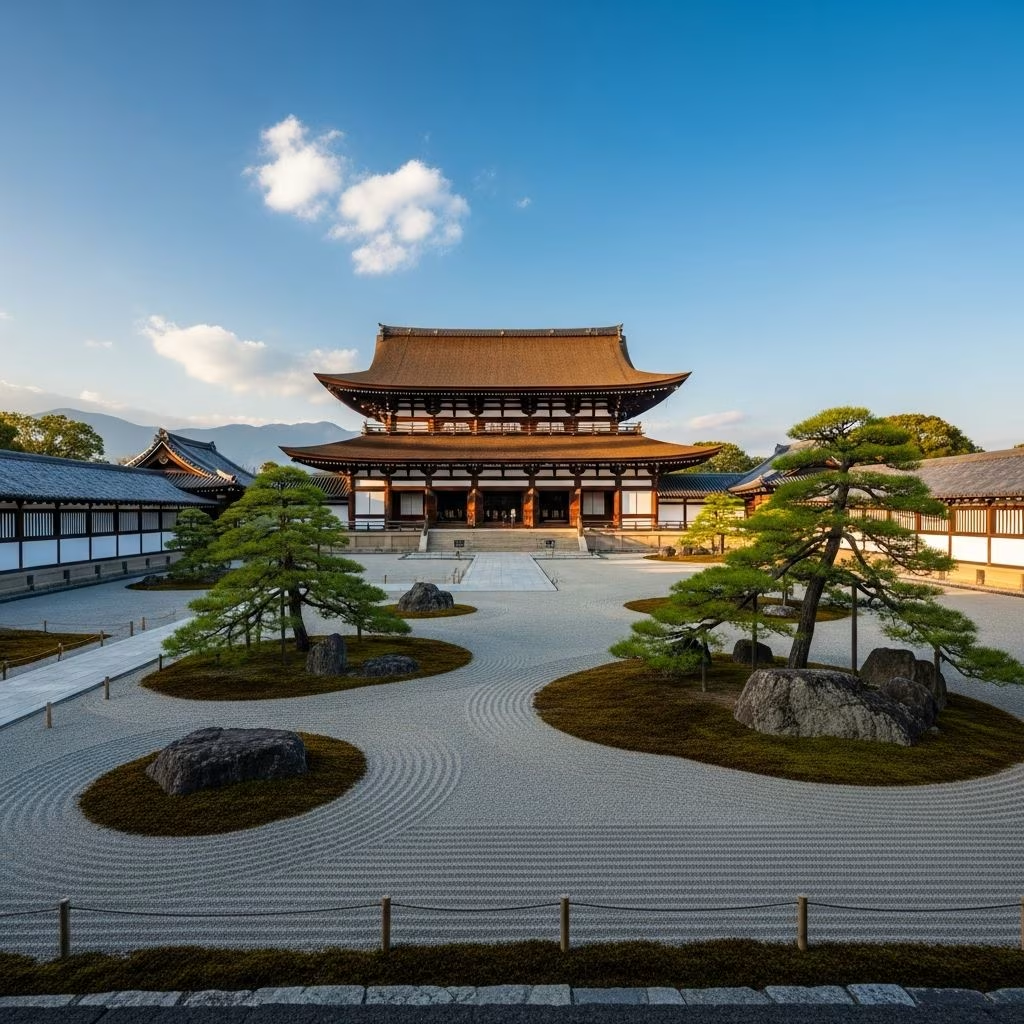
The Kyoto Imperial Palace stands as a profound emblem of Japan’s imperial legacy, captivating visitors with its blend of architectural splendor and historical depth. Nestled in the expansive Kyoto Imperial Park, this site served as the residence of emperors for over a millennium, from 794 until 1869, witnessing pivotal moments in the nation’s evolution.
Established during the Heian period when Emperor Kanmu relocated the capital from Nagaoka-kyo to Heian-kyo—modern-day Kyoto—the palace became the epicenter of political and cultural life. Completed around 804, it embodied the grandeur of wooden palace construction, though repeated fires necessitated multiple rebuilds, with the current iteration dating to 1855.
Throughout the centuries, the palace endured as the seat of imperial power, hosting enthronement ceremonies and scholarly pursuits. The Meiji Restoration in 1868 marked a turning point, as Emperor Meiji’s proclamation ended shogunate rule and shifted the capital to Tokyo, transforming the Kyoto site into a preserved relic managed by the Imperial Household Agency.
Key historical milestones include its role as the Northern Court palace in the 14th century and its post-Meiji preservation order in 1877, ensuring its architectural traditions from the ancient Daidairi endure.
Drawing inspiration from Heian-period designs and Tang Dynasty China, the palace showcases roofs that dominate the structures, often comprising half the building’s visual mass. Curved eaves extend dramatically over verandas, supported by intricate tokyō bracket systems that distribute weight with precision.
The layout mirrors the grand Heian Palace, prioritizing symmetry and open spaces for ceremonial flow. Wood construction, while vulnerable to fire, highlights masterful joinery techniques without nails, a hallmark of Japanese carpentry.
| Key Building | Style & Features | Historical Role |
|---|---|---|
| Shishinden (Hall of State Ceremonies) | Gabled hipped roof, vermillion pillars, white walls, hiwadabuki roofing | Enthronement ceremonies, state events |
| Seiryoden (Emperor’s Residence) | Simple elegance, hip-and-gable elements | Private imperial living quarters |
| Ogakumonjo (Imperial Study) | Shoin-zukuri style, scholarly retreat | Poetry, arts, intellectual pursuits |
| Kogosho (Small Palace) | Compact court design | Court meetings, official receptions |
These structures exemplify classical aesthetics, with Shishinden’s imposing form setting the tone for formality.
Beyond the halls, the palace grounds feature meticulously landscaped gardens that evoke seasonal beauty. Pebble paths wind through manicured pines and maples, offering tranquil views year-round. The adjacent Kyoto Imperial Park provides vast green spaces ideal for picnics, cycling, or cherry blossom viewing in spring.
These elements create a harmonious blend of nature and architecture, inviting quiet reflection on imperial traditions.
Access is free, with grounds open daily from 9 AM to 4:30 PM (last entry 4 PM), though building tours require advance reservations via the Imperial Household Agency website or on-site same-day slots when available.
Tours, lasting about 75 minutes, are guided in Japanese with English audio devices; English-speaking guides run select days. No photography inside buildings, and dress modestly—no shorts or sandals. Arrive early to secure spots, especially during peak seasons like spring hanami or autumn koyo.
Getting There:
Combine with nearby Kyoto Botanical Gardens or Nijo Castle for a full-day itinerary.
To maximize enjoyment:
Weather can vary—bring layers for Kyoto’s four distinct seasons.
The palace continues to host coronations, underscoring its living relevance. Emperors occasionally return for ceremonies, linking past to present. Explore how wabi-sabi aesthetics—incomplete beauty—influence designs, from weathered wood to asymmetrical gardens.
Adjacent sites like Sento Imperial Palace (retirement villa from 1630) offer complementary visits, though reservations are mandatory.
Each season unveils unique charms:
| Season | Must-See | Photo Opportunities |
|---|---|---|
| Spring (Mar-May) | Cherry blossoms around Shishinden | Moat reflections, park hanami |
| Summer (Jun-Aug) | Lush greenery, irises | Garden pavilions |
| Autumn (Sep-Nov) | Maple reds, ginkgo gold | Pond-side foliage |
| Winter (Dec-Feb) | Snow-dusted roofs | Serene minimalist scenes |
Prime spots include the Seiryoden veranda and park bridges for unobstructed views.
Yes, grounds are free; tours are complimentary but require reservation.
Standard tours last 75 minutes, covering major halls.
Grounds anytime; tours often have same-day availability, but book ahead.
Audio guides in English; limited live English tours.
Yes, main paths and select tours accommodate mobility needs.
Comfortable shoes, modest attire; avoid revealing clothing.
Nijo Castle, Kyoto Imperial Park, Heian Shrine.
Ongoing restoration by the Imperial Household Agency ensures the palace remains a vibrant testament to Japan’s past. Visitors contribute by following guidelines, helping sustain this UNESCO-recognized cultural treasure for years ahead.
