

 Travel Essentials
 Travel Essentials

Explore La Paz's multisensory wonders: stunning vistas, lively sounds, aromatic markets, bold flavors, and tactile landscapes for an immersive Bolivian experience.
 Travel Essentials
Perched at over 3,600 meters in the Andes, La Paz pulses with energy that captivates every sense. This Bolivian metropolis blends ancient traditions with modern hustle, offering travelers a profound, full-bodied encounter with culture and nature. Far from passive sightseeing, a visit here demands active engagement—eyes wide for panoramic vistas, ears tuned to rhythmic streets, noses alive with market scents, palates savoring local delicacies, and hands reaching out to textured landscapes. This guide charts a path to fully activate your senses, revealing why La Paz stands as one of South America’s most exhilarating destinations.
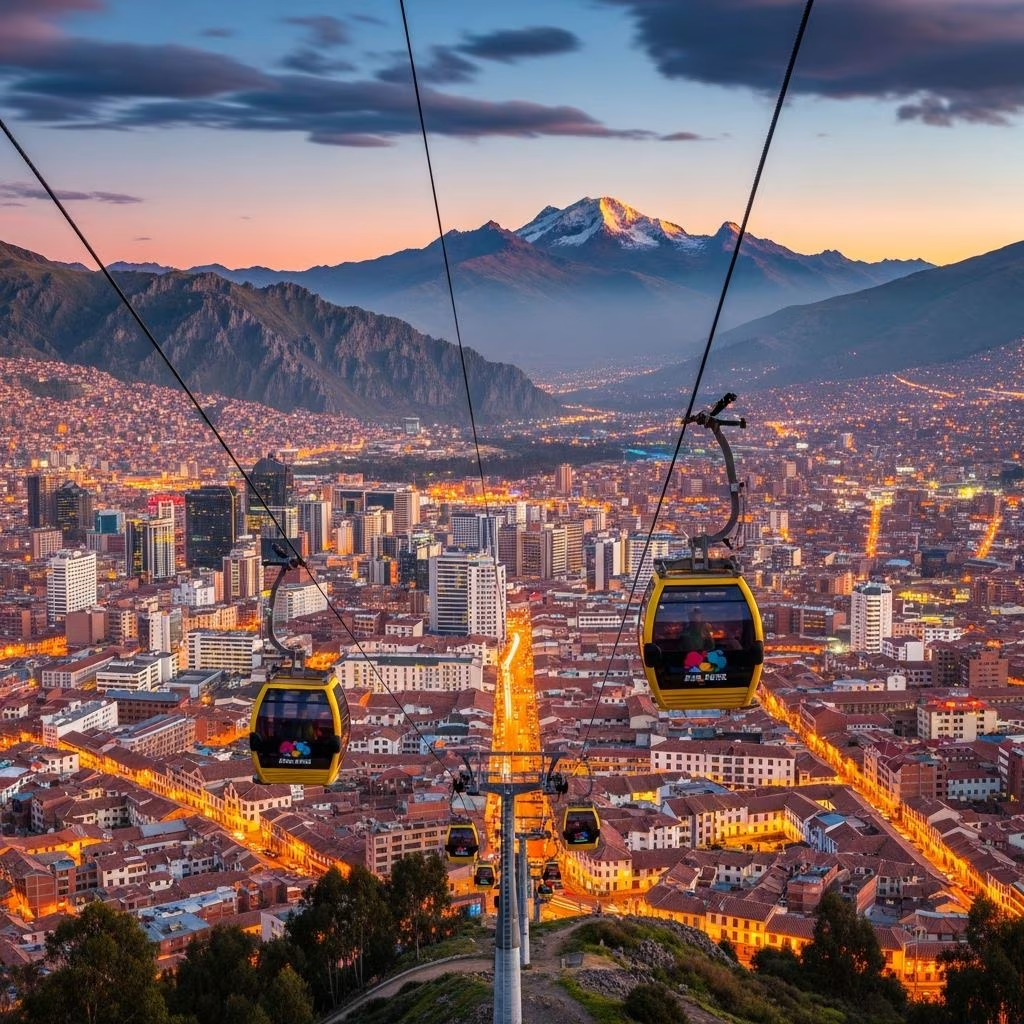
La Paz’s dramatic topography immediately seizes the gaze. Nestled in a vast canyon, the city climbs steeply from the Choqueyapu River valley, with skyscrapers and adobe homes stacking like colorful blocks against jagged peaks. At dusk, golden light bathes the sprawl, turning the urban chaos into a living painting.
The crown jewel for visual immersion is the Mi Teleférico cable car network, the world’s longest urban system. Boarding a gondola, you ascend from Zona Sur to El Alto, gliding over rooftops, ravines, and distant snowcaps. The aerial perspective reveals the city’s layered neighborhoods—red-tiled roofs in the south giving way to chaotic sprawl in the center, all framed by Illimani mountain’s icy silhouette. Riders often gasp at the bird’s-eye reveal of Mount Illimani, its glaciers gleaming like sentinels.
Beyond the cables, art spaces amplify visual delight. Salar Galería de Arte showcases Bolivian artists reinterpreting Andean motifs through abstract lenses—think vibrant acrylics of salt flats and indigenous weavers. Meanwhile, the Museo de Etnografía y Folklore houses over 50 ritual masks, their carved wood and feathers evoking diablada dances and ancient spirits. These displays blend horror and beauty, pulling viewers into Bolivia’s mystical folklore.
Sound defines La Paz’s rhythm, a cacophony that starts at dawn with vendors’ calls echoing off canyon walls. Street musicians strum charangos—ten-stringed Andean guitars—while minibus horns blare in perpetual traffic symphonies. This auditory tapestry reflects the city’s indigenous Aymara roots and mestizo vibrancy.
The witches’ market on Calles Jiménez and Linares delivers a sonic punch. Here, yatiris (shamans) chant incantations over llama fetuses and potions, their voices mingling with bubbling elixirs and haggling shoppers. The air hums with energy, from rustling herb bundles to the crackle of copal incense. It’s a portal to Bolivia’s syncretic spirituality, where Catholic saints coexist with Pachamama worship.
For a deeper dive, join cholet tours in El Alto. These gravity-defying, multi-story buildings—painted in psychedelic hues—host markets where Aymara traders shout prices for quinoa and alpaca wool. The roar of crowds and clatter of hooves from passing cholitas (women in traditional bowler hats and polleras skirts) create an immersive soundscape.
| Sound Hotspot | What to Listen For | Best Time |
|---|---|---|
| Witches’ Market | Shaman chants, market banter | Midday |
| Mi Teleférico | Cable hum, wind whispers | Sunset |
| El Alto Cholets | Vendor calls, crowd roar | Weekends |
La Paz assaults the nose with intoxicating aromas, from earthy coca leaves to sizzling street food. Markets are olfactory hubs, where scents layer like a perfumer’s palette—sweet api corn drink, pungent ispi fish, and tangy tumbo fruit wafting from stalls.
Mercado Lanza buzzes with these fragrances. Fresh cheeses mingle with fermenting chicha (corn beer), while piles of herbs promise herbal remedies. Nearby, the Museo de la Coca educates on the sacred leaf’s role in Bolivian life—from altitude sickness cures to Coca-Cola’s origins. Visitors inhale its fresh, minty aroma without consuming, learning its cultural weight.
Escape the urban frenzy at Jardin Botánico, a green lung amid concrete. Over 1,700 native species release floral nectars, pine resins, and medicinal vapors. Wander paths dictated by your nose: muña for minty relief, cantua for subtle sweetness. This botanical haven contrasts the city’s chaos, offering serene scent therapy.
La Paz’s food scene has exploded, blending indigenous ingredients with global flair. Gustu, opened in 2012 by Claus Meyer, ignited this revolution with hyper-local tasting menus—think Amazonian surubi fish or highland lichens in 20 courses.
Popular Cocina elevates market hauls into set lunches: quinoa soups, llama steaks, and seasonal veggies. For plant-based bliss, Ali Pacha crafts veggie anticuchos and seitan salteñas. Sweet tooths flock to Los Qñapés for cuñapé—chewy yuca cheese bread—and helados de canela ice cream.
Street eats amplify taste: anticuchos (grilled heart skewers), salteñas (juicy empanadas), and fresh juices from chirimoya fruit. Hb Bronze Coffeebar pairs charcuterie with Bolivia’s arabica coffees, a refined interlude.
La Paz invites touch through its raw landscapes. Valle de la Luna, southeast of downtown, features eroded clay towers and spiky cacti. Trails let fingers trace crumbly sandstone, feeling millennia of wind sculpting.
Muela del Diablo, an extinct volcanic plug, demands scrambling over rough basalt. Urban Rush offers building rappels, palms gripping ropes against glass facades. Cañón de Palca, 30km east, mirrors the Grand Canyon with dusty hikes amid red rock formations.
Markets add texture: fondle alpaca weaves, squeeze fresh produce, or handle silver jewelry at indigenous stalls.
Combine senses for full days: Morning cable ride (sight/sound), market lunch (smell/taste), afternoon hike (touch). Altitude acclimatize slowly; hydrate with coca tea. Best season: dry May-October.
Start with Mi Teleférico for views, hit markets for smells/tastes, end with Valle de la Luna for touch.
Stick to tourist areas; use registered guides for hikes. Petty theft is common—stay vigilant.
About 3,640m; combat soroche (altitude sickness) with coca leaves and rest.
Salteñas, anticuchos, cuñapé, and Gustu’s tasting menu.
Possible, but trails slick; dry season ideal for outdoors.
