

 Travel Essentials
 Travel Essentials

Lake Ohrid, a UNESCO World Heritage site shared by North Macedonia and Albania, faces severe threats from tourism growth, pollution, and climate change, risking its irreplaceable biodiversity.
 Travel Essentials
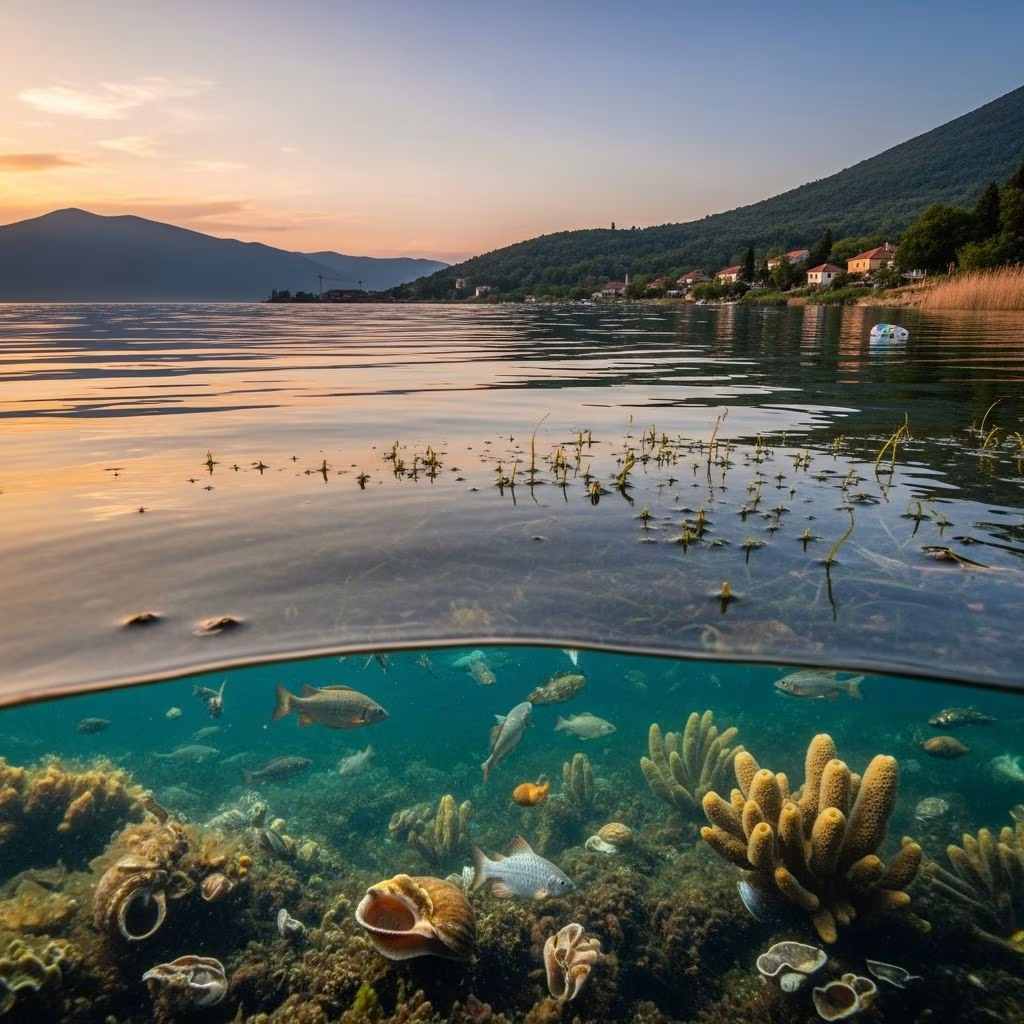
Lake Ohrid, one of the world’s oldest and deepest lakes, supports an extraordinary array of endemic species found nowhere else on Earth. Straddling the border between North Macedonia and Albania, this UNESCO World Heritage site is now confronting existential threats from explosive tourism growth, environmental pollution, and climate change. These pressures are eroding its crystal-clear waters and unique ecosystems, prompting international warnings and local activism.
Formed over 2-5 million years ago, Lake Ohrid is a tectonic lake of profound scientific value. Its stable environment has fostered remarkable evolutionary processes, resulting in over 200 endemic fish species and hundreds of unique invertebrates, algae, and plants. The lake’s clarity, once reaching depths of 54 feet, has been a hallmark attracting scientists and visitors alike.
The littoral zones—shallow, rocky shores—are critical habitats for these species. Reed beds and marshlands serve as nurseries for endemic trout and snails, while deeper waters host oxygen-dependent communities. This biodiversity hotspot is comparable to ancient lakes like Baikal and Tanganyika, but its proximity to population centers amplifies vulnerability.
Tourism has transformed Lake Ohrid into a major economic driver for both North Macedonia and Albania. Visitors flock to its shores for the pristine scenery, historic sites, and recreational opportunities. However, this boom has spurred unregulated construction of hotels, apartments, and marinas, often violating a 50-meter shoreline buffer zone.
New developments have paved over wetlands, destroyed reed beds, and increased boat traffic, fragmenting habitats. In Albania’s Pogradec area and North Macedonia’s populated coasts, these changes are most acute. Local studies reveal a shift in nearshore ecosystems from low-nutrient diatoms to algae blooms, signaling eutrophication.
| Region | Tourism Growth Impact | Specific Examples |
|---|---|---|
| North Macedonia | Illegal buildings, marinas | Grashnica, Radozda pollution hotspots |
| Albania | Urban expansion | Tushemisht five-storey complex, Lin Peninsula |
Residents often prioritize economic gains over environmental safeguards, perceiving tourism benefits as outweighing habitat loss. This attitude fuels unsustainable practices, with green areas sacrificed for visitor infrastructure.
Nutrient pollution, primarily phosphorus from sewage and agriculture, is fueling algal overgrowth on lake bottoms. Visibility has declined from 54 feet in 1920 to 43 feet by 2005, clouding waters and smothering native species.
Bacterial contamination from inland villages poses public health risks, while phosphorus levels threaten deep-water oxygenation.
Human activity introduces invasives like new snail species, with zebra and quagga mussels looming as catastrophic threats. These Black Sea natives could hitchhike on boats, devastating ecosystems as seen in North America’s Great Lakes.
Overfishing targets endemic trout, pushing populations toward extinction. Hybridization with non-native strains, as in nearby Lake Prespa, further dilutes genetic purity. Intense fishing in littoral zones destroys habitats and disrupts food webs.
Warming temperatures promote water column stratification, reducing oxygen mixing to deeper layers. Combined with nutrient pollution, this could render profundal zones uninhabitable for endemic deep-water species by century’s end. Scientists estimate phosphorus must halve to mitigate this.
Projections indicate hotter surface waters altering species distributions, favoring invasives over natives. Ancient lakes’ slow recovery potential makes prevention critical.
UNESCO’s 2024 report delivered a final warning to North Macedonia and Albania, citing deteriorating Outstanding Universal Value (OUV). Issues include unchecked urbanization, suspended projects like Drilon-Tushemisht, and Corridor VIII highway plans without assessments.
Progress like Sateska River redirection and wastewater upgrades is noted but deemed insufficient. Pollution hotspots persist, and cumulative impacts risk inscription on the World Heritage in Danger list.
Governments must halt developments, enforce buffers, and complete environmental impact assessments reviewed by UNESCO bodies.
Groups like Ohrid SOS spotlight illegal builds and wetland degradation. Activists, including tour guides like Katerina Vasileska, face risks but persist in raising awareness.
Despite low resident concern for environmental damage (prioritizing jobs), studies urge reshaping tourism strategies for sustainability. Education campaigns could shift perceptions toward eco-friendly models.
Experts advocate targeted protections:
Greater protection for high-biodiversity areas and representative zones could safeguard evolution’s showcase. International funding from bodies like the Council of Europe supports these efforts.
Unchecked threats could trigger a “creeping biodiversity crisis,” with endemic extinctions and cloudy, eutrophic waters repelling tourists. Economic reliance on the lake would backfire, mirroring degraded sites elsewhere.
Loss of UNESCO status would harm global reputation, while health risks from pollution escalate.
Its ancient age, depth, and over 200 endemic species distinguish it as a biodiversity treasure.
Unregulated building and boat traffic destroy habitats and increase pollution.
Ancient lakes recover slowly; prevention is key to avoiding irreversible loss.
Issuing warnings and demanding project halts with assessments.
Choose eco-friendly operators, avoid littering, and support local conservation.
