

 Travel Essentials
 Travel Essentials

Explore the devastating capsizing of a ferry on Lake Tanganyika that killed at least 129, amid ongoing rescue efforts and calls for better maritime safety in East Africa.
 Travel Essentials
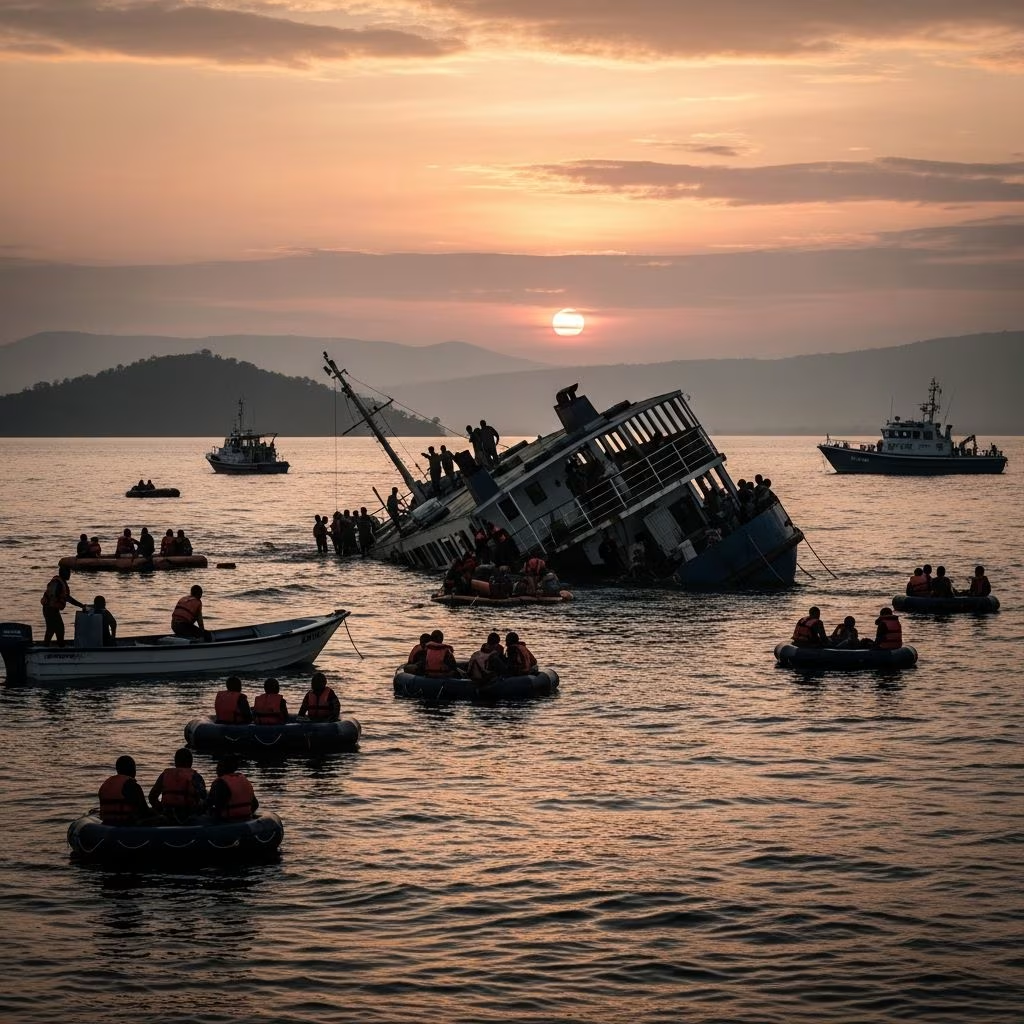
A catastrophic maritime incident unfolded on Lake Tanganyika, one of Africa’s largest and deepest lakes, when a passenger ferry capsized, leading to the confirmed recovery of at least 129 bodies. This tragedy underscores the perilous nature of water transport in the region, where overloaded vessels and inadequate safety protocols continue to endanger lives.
The ferry, operating a routine crossing between key ports in Tanzania and the Democratic Republic of Congo (DRC), departed from Kigoma port in Tanzania on a Saturday evening around 6:00 p.m. local time. Bound for Kalemie in the DRC, the vessel was expected to arrive early Sunday morning. However, disaster struck in the Kabimba area off the DRC coast, where the ship capsized, plunging passengers into the lake’s cold depths.
Initial reports from local fishermen alerted authorities, prompting immediate rescue operations. Survivors recounted chaotic scenes as the boat listed and sank rapidly, likely due to overcrowding and rough waters common on this expansive lake. While exact passenger numbers remain disputed, estimates suggest hundreds were aboard, amplifying the scale of the loss.
Rescue teams, bolstered by local fishermen, worked tirelessly through the night and into subsequent days. Among those saved were individuals from multiple nationalities, highlighting the international nature of lake travel. Reports indicate two Chinese nationals, three Tanzanians, and 12 Congolese were pulled from the water alive.
Tragically, at least 10 people remain missing, including two Chinese, two Tanzanians, four Congolese, one Kenyan, and an unidentified child. These figures come from official statements by Tanzania’s Shipping Agencies Corporation (TASAC), which coordinated cross-border efforts. Survivor testimonies describe desperate swims to shore amid darkness and panic, with many crediting nearby fishermen for their survival.
| Nationality | Rescued | Missing |
|---|---|---|
| Chinese | 2 | 2 |
| Tanzanian | 3 | 2 |
| Congolese | 12 | 4 |
| Kenyan | 0 | 1 |
| Unidentified | 0 | 1 (child) |
Lake Tanganyika, stretching over 670 kilometers between four countries—Tanzania, DRC, Burundi, and Zambia—serves as a critical artery for trade, travel, and commerce. Its ferries transport goods, passengers, and aid, but the lake’s geography poses inherent dangers: sudden storms, strong currents, and depths exceeding 1,400 meters make navigation treacherous.
Overloading is a persistent issue, with vessels often carrying far beyond capacity to maximize profits. Poor maintenance, lack of life jackets, and insufficient crew training exacerbate risks. This incident echoes previous disasters, including a 2008 sinking that claimed 17 lives due to similar overload issues, and others reporting dozens dead from collisions or capsizing.
Lake Tanganyika’s history is marred by repeated maritime mishaps. In one case, a boat struck a rock off the DRC coast, killing 11, including seven children. Another event saw over 25 feared dead on a Tanzania-DRC route, involving diverse nationalities much like the recent one. These patterns reveal systemic failures in regulation and enforcement across borders.
Experts point to inadequate international cooperation, as the lake spans multiple jurisdictions with varying safety standards. Tanzania’s TASAC has called for unified protocols, but implementation lags amid regional instability in eastern DRC.
The disaster ripples beyond immediate loss of life. Kigoma and Kalemie, bustling ports, rely on these ferries for daily livelihoods. Traders, families, and aid workers are disrupted, with supply chains halted. The multinational casualties strain diplomatic ties, prompting involvement from Chinese, Kenyan, and Tanzanian embassies.
Economically, the lake supports fishing industries worth millions, but public fear may reduce passenger traffic, hitting operators hard. Community mourning is palpable, with vigils held in affected ports.
In response, authorities pledge investigations into the MV Maman Benita’s seaworthiness and loading practices. TASAC emphasizes stricter manifests and capacity limits. Broader reforms could include mandatory life vests, weather monitoring tech, and joint patrols by lake-sharing nations.
Travelers are advised to verify vessel registrations, avoid night crossings, and choose operators with safety certifications. International bodies like the International Maritime Organization (IMO) could facilitate standards harmonization.
The lake’s unique ecology—home to over 250 endemic fish species—intersects with human activity. Strong winds from surrounding mountains can whip up waves quickly. Depths challenge salvage operations, as seen in prolonged searches for missing persons.
Behind statistics are personal tragedies: a Kenyan trader en route to markets, Chinese workers on assignment, families reuniting across borders. Survivors grapple with trauma, while communities rally for support funds and memorials.
Officials cite likely overloading and adverse weather, though full investigations continue.
At least 129 bodies recovered; 10 missing per latest reports.
Risks persist; heed advisories and safety tips.
Tanzania, DRC, China, Kenya.
Capacity enforcement, better equipment, cross-border coordination.
This disaster galvanizes calls for investment in modern fleets, training, and tech like GPS and radar. Regional summits could forge a ‘Lake Tanganyika Safety Pact.’ Until then, vigilance from passengers and operators is crucial to safeguarding this vital lifeline.
