

 Travel Essentials
 Travel Essentials

Explore the complex phenomenon of last-chance tourism, where visitors race to experience threatened ecosystems before they disappear, and learn how responsible travel can balance exploration with preservation.
 Travel Essentials
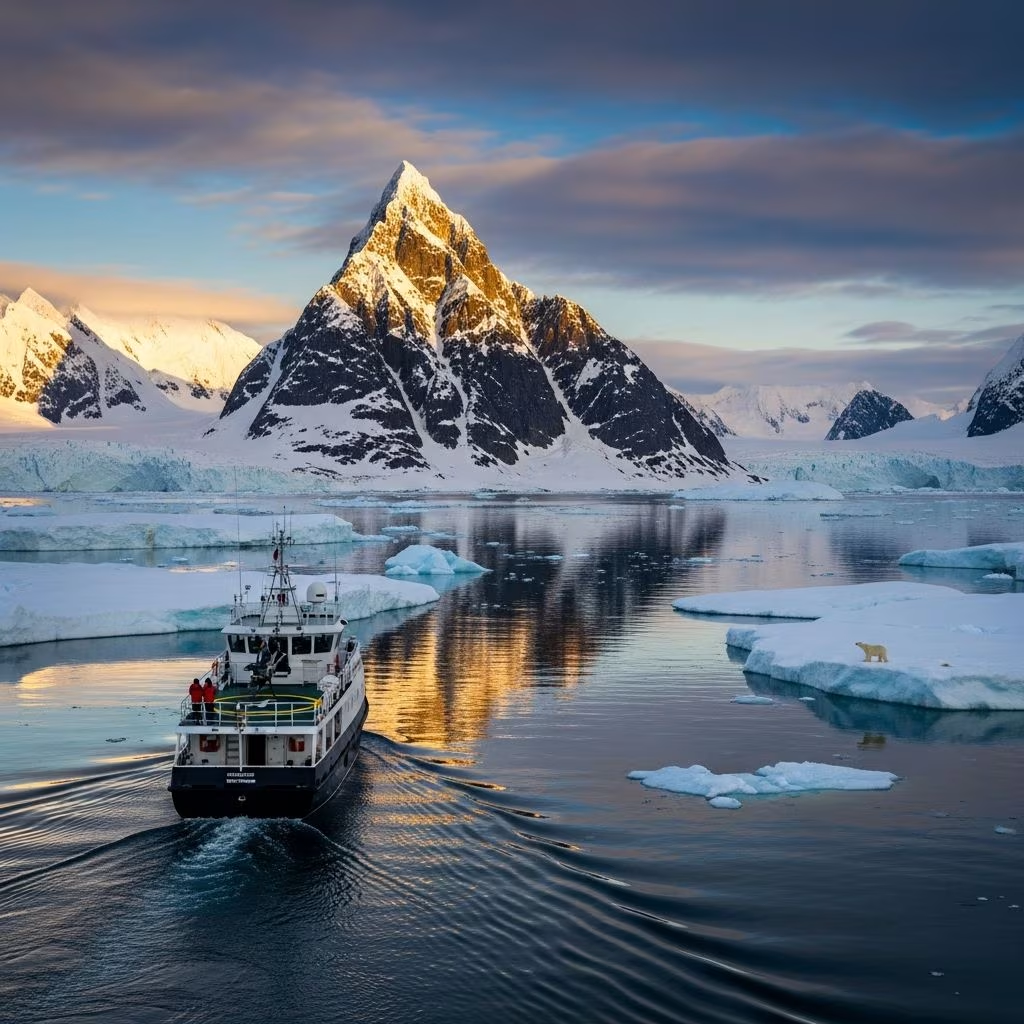
There exists a peculiar tension in modern travel: a desire to witness the world’s most extraordinary places colliding head-on with the knowledge that these very destinations are disappearing. From the crystalline ice sheets of polar regions to the vibrant coral ecosystems beneath tropical seas, travelers worldwide are gripped by an urgent compulsion to experience natural wonders before they vanish permanently. This phenomenon, emerging as a defining characteristic of contemporary tourism, reveals something troubling about how we relate to our changing planet.
What was once the domain of intrepid explorers seeking geographic firsts has transformed into a race against ecological time. The motivations are understandable, even poignant—a final pilgrimage to places our grandchildren may only know through photographs. Yet this surge in visitation to fragile environments presents a troubling contradiction: the act of traveling to these threatened destinations often accelerates the very damage that endangers them.
The shift in travel motivation over recent decades reflects broader changes in how humans perceive their relationship with the natural world. Where previous generations of adventurers competed to reach unexplored territories first, contemporary travelers are driven by an entirely different imperative: the fear of missing out on experiences that may cease to exist. This psychological driver operates at a fundamental level, tapping into what researchers identify as loss aversion—the tendency for humans to feel the pain of losing something more acutely than the pleasure of gaining something equivalent.
Climate change reporting, coupled with high-visibility documentaries and social media narratives, amplifies this sense of urgency. When individuals encounter repeated messages about melting glaciers, rising sea levels, and coral bleaching, the psychological effect is profound. The realization that iconic natural features—from the Great Barrier Reef to the Maldives to Mount Kilimanjaro—face existential threats creates a powerful motivational force. This isn’t merely curiosity; it’s a form of environmental grief that compels people to act before it’s too late.
The destinations that attract last-chance travelers tend to share common characteristics: they appear regularly in mainstream media coverage, possess inherent visual or cultural significance, and carry the narrative of environmental vulnerability. This selective attention means certain threatened locations become bucket-list destinations while equally endangered but less-publicized ecosystems remain relatively untouched by tourism surges.
The influx of travelers to environmentally fragile locations creates cascading problems for already vulnerable ecosystems. Unlike robust destinations with developed infrastructure capable of absorbing tourism pressure, many at-risk environments operate on the knife’s edge of ecological stability. Each additional visitor contributes to cumulative impacts that can trigger irreversible changes.
Tourism’s contribution to climate change extends far beyond individual trips to endangered destinations. The travel and tourism sector accounts for approximately 11% of global greenhouse gas emissions—a substantial proportion that continues growing as international travel becomes more accessible. This statistic becomes particularly troubling when considering that tourism to climate-threatened destinations represents visitors traveling specifically to witness the effects of the climate crisis they’re contributing to through their travel choices.
The irony cuts deeply: travelers motivated by concern for environmental destruction inadvertently accelerate the climate change phenomena driving their urgency. It’s a self-perpetuating cycle where increased awareness of environmental threats generates increased visitation, which generates increased emissions, which accelerates environmental threats, which generates additional awareness and visitation.
Beyond environmental concerns, last-chance tourism affects the cultural integrity of threatened destinations. When communities become defined primarily as tourism attractions—specifically as “last chances” to witness endangered ways of life—their cultural practices risk becoming commodified performances rather than living traditions. Residents may feel pressured to maintain or exaggerate cultural practices for tourist consumption rather than evolving naturally.
Additionally, the framing of communities as destinations facing extinction can create problematic power dynamics. Local populations may feel their futures are being decided by external observers viewing them as exhibits in a vanishing world rather than as dynamic societies capable of sustainable development. This perspective strips agency from communities and reduces complex social realities to tragic narratives.
Recognizing the contradictions inherent in last-chance tourism doesn’t necessarily mean abandoning travel to threatened destinations entirely. Complete avoidance isn’t a pragmatic solution, particularly when tourism revenue often provides crucial economic incentive for conservation efforts. Instead, the challenge involves developing frameworks for responsible visitation that balance the benefits of tourism-driven conservation awareness with minimization of negative impacts.
Travelers considering visits to environmentally vulnerable destinations can adopt several strategies:
Threatened destinations themselves can implement policies balancing tourism access with preservation objectives. Effective strategies include visitor limitations through permit systems or capacity restrictions, seasonal closures allowing ecosystem recovery, and infrastructure investments enabling sustainable tourism management. Some locations have begun implementing carbon offset requirements for visitors or charging fees specifically designated for conservation work.
Educational programming can transform passive sightseeing into meaningful environmental engagement. When visitors understand the ecological systems they’re experiencing and the specific threats they face, they’re more likely to adopt environmentally conscious behaviors and support conservation efforts beyond their travels. Quality interpretation transforms a visit from mere spectacle-consumption into genuine learning.
Media coverage significantly shapes travel decisions and tourism flows. Well-intentioned reporting about environmental threats, while raising awareness, simultaneously creates publicity that drives visitation. This presents a communication dilemma: raising awareness about threatened environments often inadvertently accelerates the tourism that harms them.
More thoughtful media framing might emphasize solutions and conservation success stories alongside environmental challenges. Rather than exclusively highlighting endangered destinations, coverage could spotlight sustainable tourism models, community-led conservation initiatives, and the long-term thinking required to protect fragile environments. This reframing could shift the narrative from urgency and scarcity toward agency and possibility.
Experts emphasize that protecting vulnerable destinations requires moving beyond short-term thinking. The current last-chance tourism model operates within a framework of temporal scarcity—visit now or miss forever. This urgency undermines the patient, sustained commitment necessary for genuine conservation. Transforming the relationship between tourism and environmental protection requires developing longer-term perspectives that value ongoing stewardship over final visits.
This involves recognizing that sustainable travel practices serve not as means to check destinations off bucket lists but as expressions of commitment to planetary wellbeing. Travelers can engage with threatened environments as partners in conservation rather than as consumers of endangered experiences.
The psychology underlying last-chance tourism reveals fundamental questions about what we seek from travel. Are destinations valuable primarily as objects to be experienced before they disappear, or as places deserving sustained protection and respectful engagement? Does meaningful travel require urgency and scarcity, or can it emerge from deeper connection and understanding?
A reframed approach to travel might emphasize qualities that sustain rather than consume: returning repeatedly to places to witness ecological recovery, supporting community resilience through sustained engagement, and measuring travel success not by experiences accumulated but by positive impacts generated.
Last-chance tourism refers to travel motivated by desire to visit destinations threatened by climate change and environmental degradation before they disappear or change fundamentally. It represents a shift from traditional exploration toward experiential urgency.
Visitation to fragile destinations contributes through carbon-intensive transportation, physical damage to sensitive ecosystems, waste accumulation, and infrastructure development. These impacts accelerate the environmental degradation that motivated the travel.
Yes—when managed responsibly, tourism generates economic incentives for conservation and creates constituencies supporting environmental protection. The challenge involves implementing systems that capture conservation benefits while minimizing environmental costs.
Sustainable approaches include reducing flight travel through regional trips, visiting during off-peak seasons, following local conservation guidelines, supporting local businesses, and engaging with educational programming.
Complete avoidance isn’t necessary or practical, but travelers should reconsider motivations rooted in urgency and scarcity, instead prioritizing genuinely sustainable engagement with vulnerable environments.
Last-chance tourism embodies the complex relationship between awareness and action, concern and consequences that characterizes modern environmental engagement. It represents genuine love for natural wonders combined with destructive travel practices. It demonstrates human capacity for concern while highlighting our difficulty translating concern into sustainable behavior.
Moving beyond this paradox requires honest examination of travel motivations and willingness to accept that genuine environmental commitment may sometimes mean not traveling. It requires recognizing that the most powerful support for threatened environments often comes from protecting them from excessive tourism rather than opening them to visitors racing against time.
The future of tourism in a climate-changed world depends on developing new frameworks that honor both the human desire for connection with nature and the ecological necessity for preservation. This balance won’t emerge from individual traveler choices alone but from systemic transformation in how communities, industries, and governance structures approach sustainable tourism development.
Ultimately, the most meaningful response to threatened environments isn’t the dramatic final visit but the quiet, sustained commitment to their protection—whether through direct conservation work, support for indigenous land stewardship, or the difficult choice to witness these wonders through the eyes and stories of others rather than accelerating their disappearance through personal visitation.
