

 Travel Essentials
 Travel Essentials

Explore iconic carnivals from Rio to Trinidad, blending indigenous, African, and European traditions in parades, dances, and music that define regional identity.
 Travel Essentials
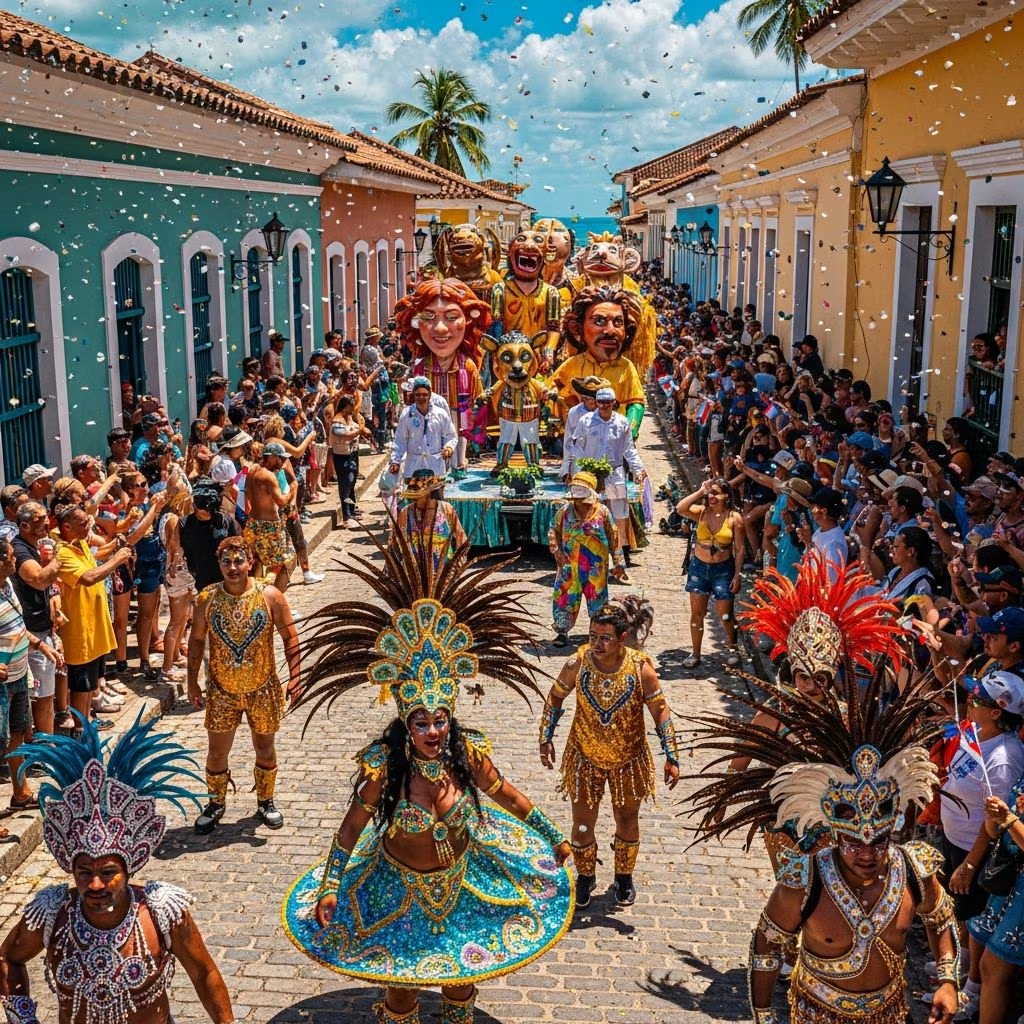
Across Latin America and the Caribbean, carnival seasons transform cities into kaleidoscopes of sound, color, and movement. These pre-Lenten festivities fuse ancient indigenous rituals, African rhythms brought by enslaved peoples, and European Catholic traditions into explosive displays of joy and rebellion. Millions participate each year, donning elaborate costumes and joining parades that pulse with samba, soca, and folk dances. Whether you’re swaying to drumbeats in Brazil or witnessing devil dances in the Andes, these events offer profound cultural immersion.
Carnival originated as a European Christian prelude to Lent, a time of feasting before fasting. In the Americas, it evolved uniquely through cultural syncretism. Indigenous groups contributed mythological elements, Africans infused polyrhythmic music and masquerades symbolizing freedom from bondage, and Spanish and Portuguese colonizers added parades and satire. Today, these festivals honor heritage while mocking authority through exaggerated costumes and performances.
UNESCO recognizes several as Intangible Cultural Heritage, underscoring their global significance. These events sustain local economies, with tourism surging during peak seasons.
Brazil hosts the world’s most famous carnival in Rio de Janeiro, where the Sambadrome—a purpose-built stadium—hosts competitions between 12 elite samba schools. Each February, over 70,000 performers parade with towering floats, feathered headdresses, and synchronized choreography telling historical tales. The event generates billions in revenue and broadcasts worldwide, cementing Brazil’s carnival supremacy.
| Aspect | Rio Carnival Highlights |
|---|---|
| Duration | 4 days, peaking on Fat Tuesday |
| Attendance | 2 million+ spectators |
| Signature Dance | Samba |
| Costumes | Beads, sequins, 10m+ wings |
Beyond Rio, Salvador’s carnival rivals it in scale, blending Afro-Brazilian axé music with street parties called blocos. Trios elétricos—massive trucks with sound systems—lead millions in all-night dances.
Barranquilla Carnival, Colombia’s crown jewel, spans four days in late February or early March and is the hemisphere’s second-largest. UNESCO-listed for its multiculturalism, it features the Batalla de Flores (Battle of Flowers), where flower-laden floats and beauty queens kick off festivities. Dancers perform cumbia, garabato, and mapalé, while satirical figures like the marimonda clown poke fun at politicians.
Expect open-air concerts, cumbia marcial (martial cumbia with toy rifles), and Congo dances tracing back to African roots. The event draws 2 million visitors, with streets alive from dawn till dusk.
At 3,700 meters in the Andes, Oruro Carnival is a 10-day pilgrimage blending devotion and devilry. Centered on the Sanctuary of the Virgin of Socavón, it honors Uru indigenous legends through the Diablada—dancers in horned masks and sequined suits portraying underworld battles between good and evil. Performers endure 20-hour marathons, accompanied by brass bands.
UNESCO proclaims it a Masterpiece of Oral Heritage. Over 50 dance troupes represent Bolivia’s ethnic diversity, culminating in a massive water fight symbolizing purification.
Trinidad and Tobago’s carnival, dubbed “the greatest show on earth,” ignites Port of Spain in February with soca blasts, steelpan drums, and king/queen costume competitions. J’ouvert—mud-caked dawn processions—evolve into daylight mas bands parading massive wire sculptures. It’s the Caribbean’s oldest, birthing global soca culture.
Grenada’s Spicemas in August features Jab Jabs—blackened, horned devils representing colonial rebellion. Barbados’ Crop Over (July-August) celebrates sugar harvest ends with tuk bands and calypso. Antigua’s late-July event marks slavery’s abolition with street jumps and steel orchestras.
Panama’s Las Tablas Carnival pits rival neighborhoods Calle Arriba and Abajo in foam-filled water wars and parade battles. Guatemala’s Mazatenango offers week-long indigenous-African fusions with giant puppets and marimba music.
Paraguay’s Encarnación Carnival, on the Paraná River, boasts a sambódromo rivaling Brazil’s, with competitive samba schools and neon-lit floats drawing South American crowds.
Book accommodations 6-12 months ahead, as hotels fill fast. Opt for central locations near parade routes. Costumes are optional but immerse you—rent or buy locally. Stay hydrated amid heat and crowds; use ride-shares for safety. Respect local customs: no photography of sacred dances without permission. Budget for entry fees to sambadromes (Rio: $50-500 USD).
Rio de Janeiro’s, with 2 million attendees and global TV audiences.
Daytime parades yes; nights feature adult partying. Choose kid-focused events like flower battles.
Rentals $20-100; custom designs $500+ for elaborate wings.
Barranquilla, Oruro, and others for cultural preservation.
Yes, via mas bands in Trinidad or samba schools in Brazil—register early.
In an era of globalization, carnivals preserve endangered languages, dances, and crafts. They foster unity amid diversity, boost artisan economies, and challenge social norms through satire. For travelers, they’re portals to authentic joy—raw, communal, unforgettable.
