


 Food & Culture
Food & Culture
Latin Quarter, Paris: A Complete Guide
Uncover the secrets of Paris's Latin Quarter: from medieval alleys and iconic landmarks to lively markets, jazz clubs, and scholarly haunts that define the city's intellectual soul.
 Food & Culture
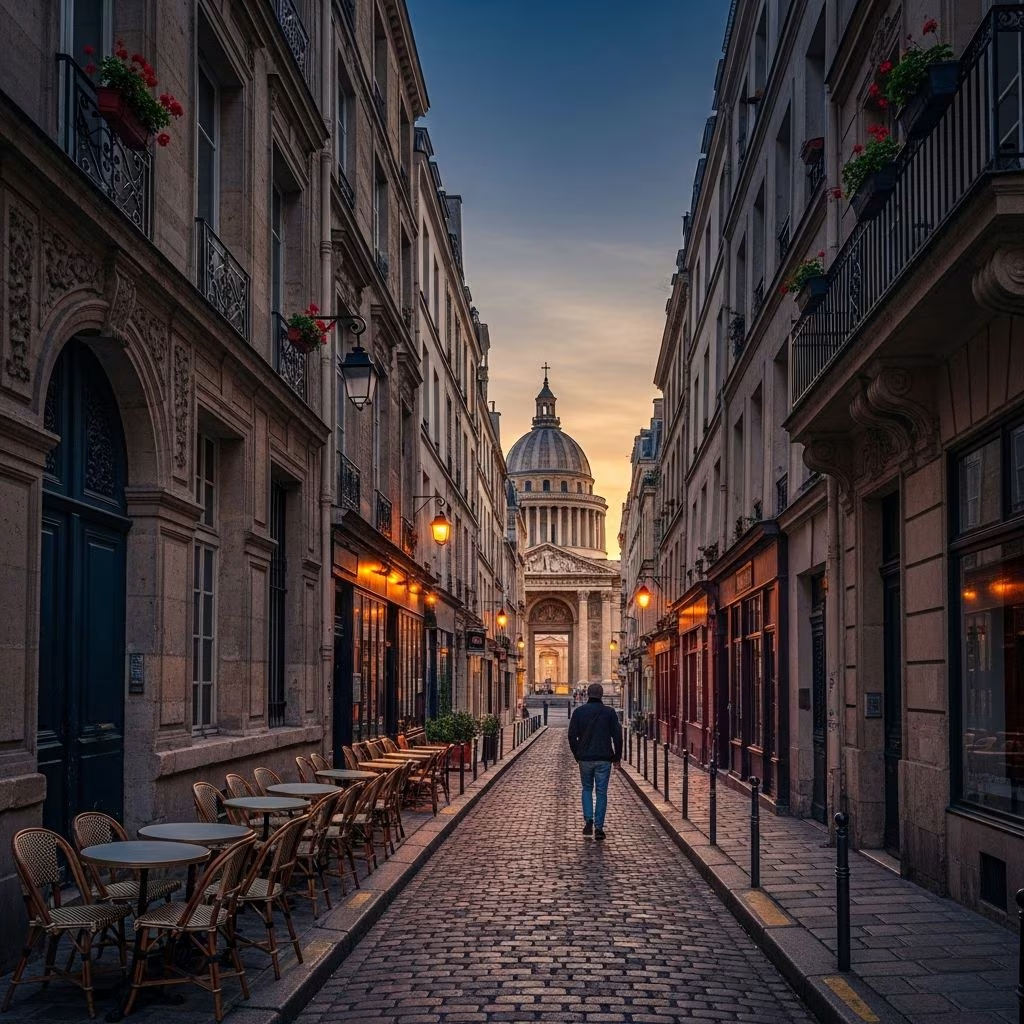
The Latin Quarter stands as one of Paris’s most captivating districts, a place where the echoes of ancient Rome mingle with the lively chatter of modern students. Nestled on the Left Bank of the Seine, this area has long been a magnet for thinkers, artists, and wanderers seeking the authentic pulse of the city.
A Journey Through Time in the Heart of Paris
Spanning primarily the 5th arrondissement and edging into the 6th, the Latin Quarter derives its name from the Latin spoken by scholars at the Sorbonne until the French Revolution. This hub of academic life centers around the Sorbonne’s campus, adorned with fountains and lime trees that create serene pockets amid the urban buzz.
Its boundaries are clearly defined: the Seine and Île de la Cité to the north, Luxembourg Gardens to the south, Saint-Germain-des-Prés to the west, and the 13th arrondissement to the east. This prime location offers easy access to central Paris, making it an ideal base for visitors.
Unlike much of Paris reshaped by 19th-century urban planner Baron Haussmann, the Latin Quarter retains its medieval character. Narrow cobblestone streets wind through the neighborhood, preserving a labyrinth of history that feels worlds away from the grand boulevards elsewhere.
Iconic Landmarks That Define the Quarter
No exploration is complete without visiting the Panthéon, a neoclassical masterpiece originally planned as a church but transformed into a mausoleum honoring France’s luminaries. Climb its dome for sweeping city views and descend to the crypt where Voltaire, Rousseau, Victor Hugo, Marie Curie, and others rest eternally.
- Panthéon Highlights: Tombs of philosophers, scientists, and writers; Foucault’s pendulum demonstrating Earth’s rotation.
- Proximity to the Luxembourg Gardens for a relaxing stroll post-visit.
The Sorbonne University, founded in the 13th century, remains the intellectual core. Though much is off-limits to the public, wandering its vicinity immerses you in centuries of learning.
Further east, the Institut du Monde Arabe showcases modern architecture with its iris-like apertures that adjust like traditional moucharabiyas. The rooftop offers free panoramic vistas, while inside, exhibits celebrate Arab culture.
Adjacent, the Grande Mosquée de Paris enchants with its Hispano-Moorish style: a 33-meter minaret, tiled courtyard, and hammam. Sip mint tea in its salon, a tranquil escape evoking North African riads.
Literary Treasures Along the Seine
The riverbanks come alive with the bouquinistes, 900 green stalls selling rare books, prints, and postcards since the 19th century. These UNESCO-recognized vendors offer a treasure hunt for literary gems.
Shakespeare and Company, the legendary English bookstore, draws book lovers worldwide. Opened in its current spot in 1951, it continues the spirit of the original shop frequented by Hemingway and Joyce. Browse new releases, used tomes, and join readings in this bohemian haven.
| Bookshop | Highlights | Location Tip |
|---|---|---|
| Shakespeare and Company | Historic readings, rare books, writer residencies | Across from Notre-Dame |
| Bouquinistes | Vintage postcards, first editions, maps | Along Quai de la Tournelle |
Markets and Culinary Delights
Rue Mouffetard, one of Paris’s oldest market streets, pulses with life on an ancient Roman road. Vendors hawk cheeses, olives, fresh produce, and patisseries. It’s a feast for the senses, perfect for picnics.
Place Monge market nearby features organic stalls, emphasizing local flavors. Sample falafel, crepes, or charcuterie while soaking in the neighborhood vibe.
For fine dining, Tour d’Argent, established in 1582, offers duck in its signature pressed style with Seine views. Casual spots abound too, from student bistros to North African eateries reflecting the area’s diversity.
Academic and Cultural Institutions
Beyond the Sorbonne, the Collège de France and Lycée Louis-le-Grand sustain the quarter’s scholarly legacy. The Cluny Museum (Musée National du Moyen Âge) houses medieval artifacts, including the famous Lady and the Unicorn tapestries, in a former abbey.
Jardin des Plantes, Paris’s botanic gardens, feature natural history museums and greenhouses. It’s a peaceful retreat with exotic plants and a small zoo.
Nightlife and Entertainment Vibes
As dusk falls, the Latin Quarter transforms. Caveau de la Huchette, in a 16th-century cellar, hosts swing jazz and dancing nightly.
Paradis Latin cabaret dazzles with can-can, acrobatics, and feathers in a family-friendly show. For drinks, speakeasy Castor Club mixes craft cocktails; Le Piano Vache pours pints amid rock posters; L’Antidote serves French pub fare.
Art deco Piscine Pontoise offers evening swims under spotlights with classical music—a surreal, cinematic experience.
Practical Tips for Visitors
Start at Place Saint-Michel, the quarter’s lively fountain square, and meander southward. A 2km self-guided walk covers highlights in 90 minutes, but allow more for detours.
- Best Time: Weekdays to avoid crowds; evenings for nightlife.
- Transport: Metro lines 4, 7, 10; highly walkable.
- Stay Here? Yes, for authentic immersion amid bakeries and markets.
European Heritage Days in September open private Sorbonne courtyards and Panthéon secrets—mark your calendar.
Why the Latin Quarter Captivates
This neighborhood balances antiquity and vitality: medieval paths untouched by modernization, student energy keeping it fresh, and cultural depth inspiring generations. It’s Paris distilled—intellectual, flavorful, and endlessly walkable.
Frequently Asked Questions
Is the Latin Quarter family-friendly?
Yes, with gardens, markets, and shows like Paradis Latin’s family version. Avoid late-night bars.
How long to spend here?
One full day for essentials; two for deeper dives into museums and walks.
Best season to visit?
Spring or fall for mild weather and fewer tourists; summer markets thrive.
Where to eat cheaply?
Rue Mouffetard stalls and student cafés around Boulevard Saint-Michel.
Safe at night?
Generally yes in main areas, but stick to lit streets like Rue de la Huchette.
References
- 3 days in Paris: the perfect itinerary for return visitors — Lonely Planet. 2023-10-01. https://www.lonelyplanet.com/articles/ultimate-weekend-paris
- Latin Quarter travel — Lonely Planet. 2024-05-15. https://www.lonelyplanet.com/destinations/france/paris/the-latin-quarter
- Latin Quarter Paris: A Local Guide for Americans — Paris Vacations Rentals. 2024-08-20. https://www.parisvacationsrentals.com/latin-quarter-paris-guide-for-americans
- A guide to Paris’ Latin Quarter — Lonely Planet. 2023-11-12. https://www.lonelyplanet.com/articles/lonely-planet-guide-to-paris-latin-quarter
- A guide to all 20 arrondissements in Paris — Lonely Planet. 2024-02-28. https://www.lonelyplanet.com/articles/guide-paris-arrondissements
On This Page
A Journey Through Time in the Heart of Paris Iconic Landmarks That Define the Quarter Literary Treasures Along the Seine Markets and Culinary Delights Academic and Cultural Institutions Nightlife and Entertainment Vibes Practical Tips for Visitors Why the Latin Quarter Captivates Frequently Asked Questions← Previous
Best Things to Do in Istria, Croatia
Next →
Best Things to Do in Punta Cana: Beaches, Tours & Adventures
Related Reading
More in Food & Culture
Food & Culture Food & Culture
 Food & Culture
Best Places to Eat in Rome: Neighborhood Dining Guide
 Food & Culture
 Food & Culture