


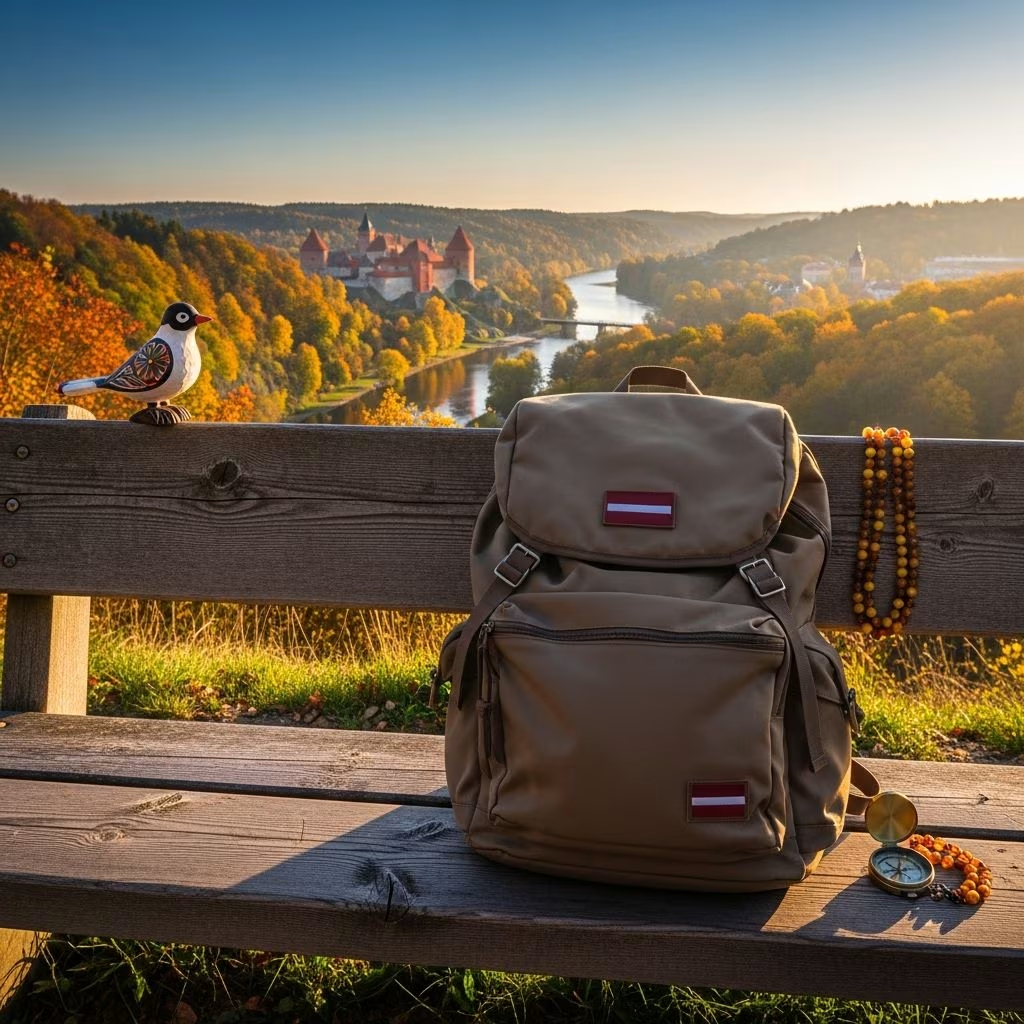
Nestled in the heart of the Baltic region, Latvia represents one of Europe’s most underappreciated travel destinations. Unlike its more frequently visited neighbors, this nation offers visitors an authentic experience characterized by unspoiled landscapes, remarkable architectural heritage, and a thriving cultural landscape that often escapes mainstream attention. Whether you’re embarking on a comprehensive Baltic exploration or seeking an economical European getaway, Latvia delivers compelling reasons to venture beyond the conventional tourist circuit.
Understanding Latvia’s Dual Character
Latvia presents two fundamentally different experiences that shape how travelers navigate the country. The nation’s geography and development patterns create a striking contrast between urban sophistication and rural tranquility. Rīga, the capital and sole major metropolitan center, houses more than half of the country’s population and dominates discussions of Latvian tourism. However, the broader landscape reveals an entirely different dimension of the nation’s appeal.
Beyond the capital, approximately 311 miles of coastline frame the Baltic Sea and the Gulf of Rīga, while dense forests and pristine waterways characterize the interior regions. Four distinct geographical zones showcase unique characteristics: the agricultural traditions of western Kurzeme, the forested hills of northern Vidzeme, the historically rich southern Zemgale, and the lake-dotted eastern Latgale. This regional diversity ensures that visitors can experience dramatically different aspects of Latvian culture, landscape, and heritage within relatively short distances.
Rīga: Where Medieval Heritage Meets Modern Culture
The Latvian capital warrants extended exploration that extends well beyond typical tourist routes. Rīga has accumulated centuries of cultural and architectural significance, with more than 800 years of documented history reflected in its streetscapes and monuments. The city’s capacity to blend historical preservation with contemporary vitality creates an unusually welcoming atmosphere for visitors seeking European charm without excessive commercialization.
Architectural Treasures and Historic Districts
The Old Town quarter, formally recognized as a UNESCO World Heritage Site, represents the physical manifestation of Rīga’s medieval legacy. Characterized by tall spires and cobblestone passages, this district reflects the architectural preferences of Baltic German and Swedish administrators who shaped the city during the Middle Ages. The Dome Square functions as the gravitational center of this historic area, dominated by the Rīgas Doms cathedral, which holds supreme importance in Latvian religious and cultural heritage.
The contemporary city center maintains separation from the Old Town through the Green Belt, an ingenious system of canals and interconnected parks. This landscaping approach preserves the historical district’s distinct character while facilitating movement between different temporal and cultural zones within the city. Exploration beyond the primary tourist attractions reveals numerous galleries, independent venues, and cultural spaces that contribute to Rīga’s reputation as an emerging center for contemporary artistic expression.
Culinary and Cultural Scene
Rīga’s gastronomic landscape reflects both traditional Latvian heritage and modern Nordic culinary innovation. The city’s food establishments range from casual venues serving authentic regional dishes to contemporary restaurants reinterpreting classic flavors through innovative techniques. This diversity accommodates various preferences and budgets while showcasing how Latvian culinary traditions remain vibrant and evolving.
The cultural calendar features consistent programming across multiple disciplines, from traditional performance arts to avant-garde installations. Museums, theaters, and independent cultural spaces collectively establish Rīga as a destination where medieval history and contemporary creativity coexist productively.
Natural Landscapes and Outdoor Recreation
Gauja National Park: Latvia’s Premier Natural Destination
Approximately 50 miles northeast of Rīga, Gauja National Park encompasses approximately 42,000 hectares of forested terrain and river valleys. The park derives its significance from the Gauja River, which winds through dramatically elevated hills that provide visual and recreational prominence in a nation characterized by relatively flat topography. These geographical features have earned the regional designation as Latvia’s “Alps,” accurately reflecting their importance to the country’s outdoor recreational culture.
The park infrastructure accommodates diverse visitor preferences through multiple access points and activity options. Cable car systems enable visitors without extensive hiking experience to access elevated vantage points. Camping facilities and cabin accommodations range from rustic to moderately comfortable, ensuring options for various comfort preferences and budgets. Train connections to the Estonian border position the park as an accessible stopover during broader Baltic region itineraries, enabling visitors to incorporate significant natural experiences into multi-country journeys.
Recreational activities within the park include hiking along established trails of varying difficulty, rafting on the Gauja River’s gentle rapids, and downhill skiing during winter months. This activity diversity ensures that the park appeals to visitors with different physical capabilities and seasonal interests.
Coastal Environments and Beach Experiences
The 500-kilometer coastline features distinctive characteristics shaped by glacial geological history. Pine-forested dunes create protective barriers between terrestrial and maritime environments, establishing visually compelling landscapes. The coast’s relatively low population density means that beach experiences often involve genuine solitude—a remarkable feature in contemporary European tourism.
Specific coastal communities, particularly in western regions, provide opportunities for extended stays within natural settings. Traditional wooden architecture, wild horse populations, and minimal infrastructure combine to create experiences of genuine disconnection from conventional tourism infrastructure. Camping in these locations, often with direct dune and beach access, represents an authentically Latvian way to experience the Baltic maritime environment.
Regional Explorations Beyond the Capital
Kuldīga: Historic Significance and Contemporary Recognition
In 2023, the western town of Kuldīga received UNESCO World Heritage designation, recognition reflecting its preserved medieval urban layout and historical importance during the Duchy of Courland and Semigallia period. The designation acknowledges centuries of accumulated cultural and architectural heritage that had previously escaped international recognition despite its genuine historical significance.
The Ventas Rumba waterfall, located adjacent to Kuldīga, holds continental distinction as Europe’s widest waterfall. This geographical feature, combined with the town’s preserved wooden architecture and accessible museums, creates a compelling destination for visitors interested in regional history and natural phenomena. The Kuldīga County Museum, housed in a traditional wooden residence representative of regional architectural practices, provides contextual information about the area’s evolution. Interactive exhibits and living history presentations offer engaging alternatives to conventional museum experiences.
Rural Heritage and Traditional Lifeways
Throughout the Latvian countryside, traditional homesteads and preserved 19th-century wooden structures provide tangible connections to pre-industrial cultural practices. The Vītolnieki museum operates as an open-air venue preserving examples of historical building types and settlement patterns that have largely disappeared from contemporary European landscapes. These installations function as experiential education spaces rather than merely static collections.
Rural accommodations, including farmstay experiences and traditional heritage sites, enable visitors to participate in contemporary versions of historical lifeways. These immersive experiences provide perspectives on agricultural traditions, food preparation methods, and seasonal rhythms that shaped Latvian culture across centuries.
Planning Your Latvian Journey
Seasonal Considerations
- Summer months (June through August) feature extended daylight hours, warm temperatures, and peak accessibility for outdoor activities and coastal experiences
- Spring and autumn offer moderate weather, reduced tourist density, and opportunities to observe seasonal landscape transformations
- Winter transforms the landscape through snow coverage and enables winter sports activities, though daylight hours contract significantly
Budget Planning
Latvia maintains relatively affordable pricing across accommodation, dining, and activity categories compared to western European destinations. This economic advantage enables extended stays and broader exploration within modest budgets. Budget-conscious travelers can experience quality dining, comfortable accommodation, and comprehensive activities without premium expenditures.
Practical Transportation
Rīga functions as the primary transportation hub with international flight connections and comprehensive domestic rail and bus networks. From the capital, day trips or overnight excursions to regional destinations remain feasible through established transportation infrastructure. The proximity of multiple destinations to Rīga enables flexible itinerary construction accommodating various time constraints and interests.
Frequently Asked Questions
How many days should I allocate for a Latvia visit?
A minimum three-day itinerary allows exploration of Rīga and one regional destination. Five to seven days enables comprehensive regional coverage, including coastal experiences, national park activities, and cultural exploration.
What are the primary languages spoken?
Latvian constitutes the official language. English proficiency among tourism-sector workers and younger urban residents facilitates communication for international visitors, though basic Latvian phrases enhance interactions.
Are there safety considerations for travelers?
Latvia maintains safety standards comparable to other European nations. Standard urban awareness practices and conventional travel precautions remain appropriate.
What currency should I use?
The Euro circulates as official currency. ATM access and card acceptance remain widespread throughout urban and tourist destinations.
How does Latvia compare to other Baltic destinations?
While Lithuania and Estonia attract comparable visitor numbers, Latvia’s relative obscurity in international tourism enables more authentic experiences and reduced crowding at major attractions.
Making Your Journey Memorable
Latvia’s emergence as a compelling travel destination reflects not dramatic marketing or manufactured experiences, but rather genuine authenticity. Medieval architecture weathered by centuries, forests that preserve ecological integrity, coastal landscapes unmarred by development, and cultural traditions maintained through community commitment collectively establish Latvia as a destination where travelers encounter authentic European experience rather than commercialized spectacle.
The country’s accessibility from other Baltic destinations positions it ideally within regional travel planning. Whether serving as a primary destination or component of broader Baltic exploration, Latvia rewards visitor time with experiences ranging from urban cultural engagement to wilderness immersion. The nation’s economic affordability ensures that extended exploration remains financially feasible for travelers with various budget constraints.
References
- A first-time guide to Latvia — Lonely Planet. Retrieved from https://www.lonelyplanet.com/articles/first-time-guide-to-latvia
- Latvia travel – Lonely Planet — Lonely Planet. Retrieved from https://www.lonelyplanet.com/destinations/latvia
- The 15 best things to do in Latvia – Lonely Planet — Lonely Planet. Retrieved from https://www.lonelyplanet.com/articles/the-top-things-to-do-in-latvia
- Guide to Rīga, Latvia – Lonely Planet — Lonely Planet. Retrieved from https://www.lonelyplanet.com/articles/guide-to-riga

