

 Travel Essentials
 Travel Essentials

Discover lava tubes worldwide and learn how to explore them safely, sustainably, and with respect for fragile underground ecosystems.
 Travel Essentials
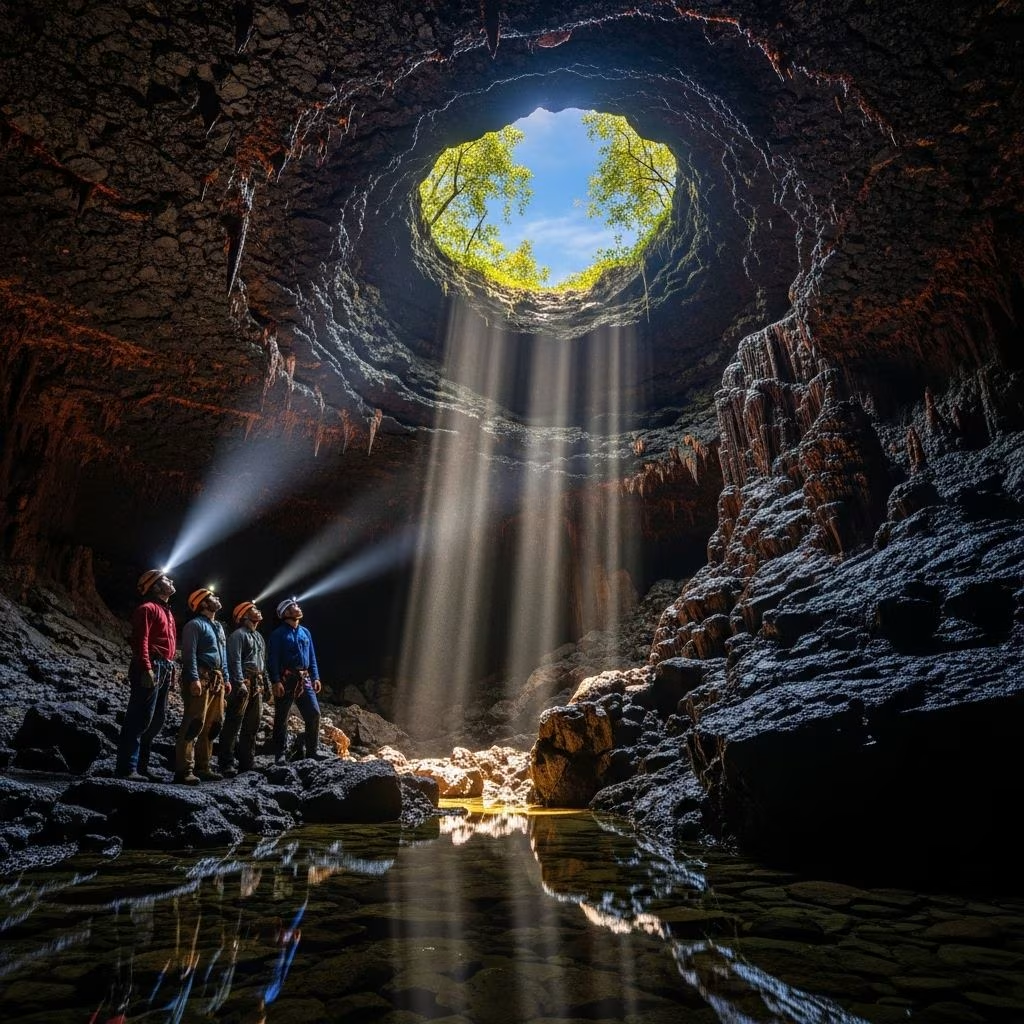
Beneath the surface of our planet lies a hidden world of geological wonder—vast networks of tunnels carved by ancient volcanic activity. These underground passages, known as lava tubes, represent some of Earth’s most dramatic natural formations. For adventurous travelers seeking an extraordinary experience, exploring these subterranean realms offers an unmatched opportunity to witness the raw power of our planet’s geological history. However, venturing into these environments demands careful preparation, respect for fragile ecosystems, and adherence to safety protocols that protect both explorers and the caves themselves.
Lava tubes form when fluid lava flows over the Earth’s surface and the outer layer cools while hot material continues flowing inside, leaving hollow tunnels behind. These formations are distributed across volcanic regions worldwide, with particularly impressive examples found in Iceland, Hawaii, and the western United States. The scale of these formations can be extraordinary—Hawaii’s Kazumura Cave extends over 40 miles from Kīlauea’s caldera eastward toward Puna, making it the longest known lava tube on Earth.
What makes lava tubes scientifically significant extends beyond their geological interest. Researchers have discovered that these caves maintain unique environmental conditions that support specialized microbial life forms and preserve geological evidence of ancient volcanic processes. Scientists studying lava tubes in Iceland found that certain tubes retain extreme heat for extended periods—some maintaining superheated conditions more than two years after formation—while others display fascinating mineral formations that only remain stable at specific temperature ranges.
Several locations worldwide offer opportunities to experience lava tubes with varying difficulty levels and accessibility features. Understanding the characteristics of different sites helps explorers choose experiences matching their fitness levels and comfort zones.
Boyd Cave, located near Bend, Oregon, provides an excellent introduction to lava tube exploration for visitors seeking moderate accessibility. The entrance descends approximately 20 feet via a steep steel staircase, leading to a tunnel maintaining a consistent 45-degree incline throughout most of its 1,800-foot length. The relatively dry conditions year-round make it more forgiving than many alternatives, though uneven ground with jagged rocks requires sturdy footwear. The cave’s single access point means explorers must return the way they entered, creating a straightforward out-and-back journey.
The National Park Service manages several lava tube experiences that showcase varied geological characteristics. Some formations require only 5-10 minute hikes from parking areas, while others involve moderate difficulty trails progressing uphill through boulder fields. Most require stooping or temporary crawling to navigate low ceiling sections before reaching larger chambers.
Hawaii’s volcanically active landscape creates ideal conditions for lava tube formation, with multiple accessible sites catering to different experience levels. Nāhuku represents one of the most beginner-friendly options, featuring dimensions generous enough for walking without crawling or body contact with cave walls. The paved, relatively even ground contrasts sharply with many other formations. LED illumination operates from 10am to 8pm, though unlit sections remain available for visitors preferring a more naturalistic underground experience. The 600-foot main passage connects separate entrances and exits leading to adjacent tropical rainforest.
More challenging Hawaiian tubes feature wet, uneven terrain with standing water and occasional dripping from ceilings, particularly following rainfall. These conditions demand appropriate clothing and heightened awareness during navigation.
Successful and responsible cave exploration begins with thorough preparation before entering any underground environment. Dave Nissen, founder of Wanderlust Tours and an experienced cave guide, emphasizes that knowledge acquisition forms the foundation of safe exploration.
| Equipment Type | Purpose | Why It Matters |
|---|---|---|
| Protective Helmet | Head protection | Guards against low-hanging rock formations and unexpected obstacles in uneven terrain |
| Headlamp or Handheld Light | Primary illumination | Headlamps offer hands-free operation crucial for navigating treacherous surfaces; handheld lights reduce visibility and increase fall risk |
| Sturdy Footwear | Foot protection and traction | Uneven ground, sharp rocks, and wet surfaces require excellent ankle support and slip-resistant soles |
| Temperature-Appropriate Clothing | Thermal regulation | Underground temperatures remain constant and often differ significantly from surface conditions; inappropriate clothing leads to dangerous hypothermia even in mild climates |
| Moisture-Resistant Layers | Protection from water | Many caves feature dripping water or standing pools; wet clothing accelerates heat loss and increases discomfort |
Beyond basic equipment, explorers should carry backup illumination sources and verify that all equipment functions properly before entering the cave. A headlamp proves superior to handheld lights in challenging conditions where both hands are needed for climbing or stabilizing yourself across loose rocks.
Acquiring detailed knowledge about specific caves before visiting cannot be overstated. Research accessibility requirements, difficulty ratings, and seasonal conditions that might affect your experience. Communicate your plans to someone outside the cave—specify which location you’re visiting, your expected return time, and the composition of your exploration group. This communication becomes critical if unexpected situations develop and rescue coordination becomes necessary.
Environmental monitoring proves equally important. If you observe significant rat or mouse droppings accumulating in a cave, leave the area immediately. Such signs indicate potential disease vectors and suggest environmental conditions have deteriorated. Similarly, recognize your physical limitations honestly; caves present environments unsuitable for individuals with claustrophobia or significant joint problems requiring extended time in confined positions.
Lava tubes represent fragile geological and biological systems that require respectful stewardship. Tourism and exploration activities impact these environments, making conscious visitor behavior essential for preservation.
The fundamental principle guiding responsible cave exploration is straightforward: leave caves exactly as you found them. This means removing all items brought into the cave and leaving nothing behind—including food waste, equipment pieces, or personal items. Even seemingly harmless items like snack packaging or discarded batteries introduce foreign materials that compromise cave systems.
Food consumption inside caves deserves particular attention. Eating inside caves introduces organic matter that feeds bacterial and fungal populations, altering the delicate microbial communities evolved over millennia within these isolated systems. Waste products attract rodents and insects, creating ecological disruption cascading through the localized cave ecosystem.
Lava tubes host specialized organisms including spiders, worms, bats, insects, and fungal species found nowhere else on Earth. These creatures have adapted to consistent darkness, specific temperature ranges, and limited food availability. Careless exploration disturbs hibernating bats, disrupts feeding patterns, and introduces pathogens from the surface world. Take every precaution to avoid touching, disturbing, or harming cave-dwelling organisms. Remain on designated pathways where available, avoid shining lights directly at roosting bats, and never collect specimens regardless of scientific interest.
Cave exploration demands physical capabilities and mental preparation varying considerably by location. Accurately assessing your fitness and comfort levels prevents dangerous situations underground.
Different tubes present distinct physical demands. Some require simple walking on paved paths, while others demand crawling, climbing over boulders, squeezing through tight passages, or navigating steep terrain. Claustrophobic individuals may experience anxiety in confined spaces, even with adequate oxygen and lighting. Recent studies documenting expeditions into newly formed Icelandic lava tubes reveal that exploration involves significant athleticism—one researcher recorded wall temperatures of 410°C (770°F), indicating that certain areas retain extreme heat and present burn hazards.
Psychological preparedness matters as much as physical capability. Understanding that one misstep could send you crashing through dried lava and plummeting into depths requires mental fortitude and unwavering focus on footing and handholds. Explorers must maintain composure when navigating unlit sections where visual disorientation proves common.
Lava tube conditions fluctuate seasonally and respond to weather patterns affecting surrounding regions. Understanding these variations informs timing decisions for your exploration.
Rain in volcanic regions infiltrates porous lava, creating interior moisture conditions inside tubes. Caves in high-rainfall areas like Hawaii experience frequent wet conditions with standing water and active dripping from ceilings. Dry seasons provide safer conditions with reduced slipping hazards. Check weather forecasts before visiting and consider postponing if heavy rainfall is predicted, as water levels can rise rapidly and trap explorers.
Underground temperatures remain remarkably consistent compared to surface fluctuations. However, newly formed tubes or those with active geothermal features maintain elevated temperatures requiring heat-resistant equipment and protective gear. Older, established tubes generally provide stable, cool environments year-round.
Serious cave exploration extends beyond casual visits to easily accessible formations. Scientists studying newly formed lava tubes employ sophisticated monitoring techniques, specialized equipment, and coordinated teams managing significant risks.
Academic researchers studying lava tubes conduct extensive preparatory work before entering caves, monitoring formations using remote imagery, temperature sensors, and geological surveys. Teams remain in continuous communication with volcanological centers and government agencies, ready to evacuate if seismic activity threatens imminent eruptions. Such expeditions represent the frontier of speleological research, revealing how life colonizes extreme environments and how geological processes create habitable spaces.
Lava tubes represent irreplaceable geological and biological heritage. Responsible exploration balances the human desire to experience these remarkable environments with essential preservation of their integrity for future generations. By following established safety protocols, respecting fragile ecosystems, and planning thoroughly, explorers can safely venture into Earth’s underground volcanic landscapes while ensuring these magnificent formations remain pristine for scientific research and continued discovery.
