

 Travel Essentials
 Travel Essentials

A comprehensive guide to exploring Lazio beyond Rome, featuring ancient archaeological sites, Renaissance villas, natural attractions, and charming medieval villages.
 Travel Essentials
While Rome commands much of Italy’s attention, the broader Lazio region encompasses far more than the Eternal City’s famous monuments and historic centers. This central Italian territory stretches from the Tyrrhenian coastline in the west to the Apennine Mountains in the east, offering an extraordinary diversity of experiences for travelers seeking to venture beyond Rome’s well-trodden paths. From archaeological wonders that predate the Roman Empire to Renaissance masterpieces nestled in hillside towns, Lazio presents an opportunity to experience multiple layers of Italian history, culture, and natural beauty within a relatively compact area.
The region’s geographic diversity creates distinct zones of interest, each offering unique attractions and experiences. Coastal areas provide opportunities for seaside relaxation and maritime heritage exploration, while inland regions showcase dramatic landscapes shaped by volcanic activity and human settlement spanning millennia. This guide explores the many dimensions of Lazio travel beyond Rome, helping visitors develop a comprehensive itinerary that captures the region’s authentic character.
Long before Rome became an imperial superpower, the lands of Lazio were inhabited by sophisticated cultures whose legacies remain visible today. The Etruscan civilization flourished in this region, leaving behind remarkable archaeological evidence in sites such as Cerveteri and Tarquinia. These ancient centers reveal sophisticated burial practices, artistic achievements, and social structures that influenced early Roman culture.
Cerveteri’s sprawling necropolis displays hundreds of Etruscan tombs carved into volcanic rock, many featuring intricate designs and chamber arrangements that provide insights into daily life and religious beliefs during antiquity. Similarly, Tarquinia’s museo contains exceptional frescoed wall paintings that once adorned aristocratic tombs, depicting banquets, athletic competitions, and mythological scenes. These artworks offer invaluable documentation of Etruscan society and artistic sensibilities.
Roman archaeology in Lazio extends far beyond Rome itself. Ostia Antica, located approximately 30 kilometers southwest of Rome, preserves an entire ancient port city frozen in time. Walking through its streets, visitors encounter multi-story apartment buildings, theaters, markets, and temples that illustrate how ordinary Romans lived and worked. The amphitheater, administrative buildings, and commercial structures provide context for understanding Roman urban organization and daily commerce.
Hadrian’s Villa in Tivoli represents one of the ancient world’s most ambitious private residential projects. This sprawling complex combines architectural styles from across the Roman Empire, featuring replicas of famous monuments the emperor admired during his travels. Visitors navigate through reconstructed Greek temples, Egyptian shrines, and elaborate water features while imagining the sophisticated leisure activities that occupied the imperial court.
The transition from classical antiquity to the Renaissance found striking expression in several Lazio communities. Villa d’Este in Tivoli showcases the Renaissance obsession with integrating architecture with elaborate water features and artistic sophistication. Commissioned by Cardinal Ippolito d’Este in the 16th century, this villa demonstrates the wealth and refined aesthetic sensibilities of the ecclesiastical elite. Hundreds of fountains, cascades, and water-operated automata demonstrate Renaissance engineering prowess while creating an environment of calculated luxury and intellectual refinement.
Villa Gregoriana, also located in Tivoli, provides a contrasting approach to Renaissance landscape design. Rather than imposing human order through structured gardens, this property embraces natural features by incorporating dramatic waterfalls, cliff formations, and dense woodland into its design. The resulting aesthetic celebrates the sublime power of nature while maintaining carefully constructed pathways and viewing platforms for organized exploration.
Frascati and Castel Gandolfo represent communities where Renaissance architecture integrated with landscape and local agriculture. Frascati developed as a retreat destination for Roman nobles and clergy, who constructed elaborate villas surrounded by vineyards that still produce the region’s famous white wines. Castel Gandolfo, perched above Lake Albano, served as a papal summer residence and maintains elegant architecture overlooking spectacular water views.
Lazio’s landscape bears the dramatic imprint of volcanic activity. Three major volcanic lakes—Bracciano, Bolsena, and Albano—provide recreational opportunities while creating distinctive ecosystems. Lake Bracciano, located northwest of Rome, supports water sports, fishing, and lakeside dining at charming villages. The surrounding countryside offers hiking trails and opportunities to explore small medieval communities that developed around the lake’s shores.
Lake Bolsena, situated further north, constitutes Italy’s largest volcanic lake and supports a thriving tourism infrastructure. The lake’s islands, Bisentina and Martana, contain historical religious structures accessible by boat tours. The surrounding region combines natural beauty with agricultural productivity, as local farmers cultivate crops suited to volcanic soil conditions.
For hikers and nature enthusiasts, several areas offer challenging terrain and panoramic vistas. The Circe Peak demands physical exertion but rewards climbers with views extending toward the Pontine Islands. Treja Valley provides less strenuous options through forested landscapes with archaeological interest. The Monti Cimini mountain range creates a natural boundary for Lake Vico, a protected nature reserve supporting diverse flora and fauna.
The Sacred Grove of Bomarzo stands as one of Italy’s most distinctive artistic achievements. This 16th-century garden commissioned by nobleman Orsini contains oversized sculptures of mythological creatures, fantastical beasts, and surreal architectural elements scattered through forested terrain. A colossal ogre head that functions as an entry portal, a sleeping nymph, replica war elephants, and various dragons create an environment that challenges conventional aesthetic categories. Contemporary viewers typically classify it as mannerist or proto-surrealist, while Renaissance audiences may have perceived it as an intellectual exercise in classical references and inventive imagination.
The park’s organization deliberately avoids rational, geometric planning. Instead, sculptures emerge unexpectedly as visitors navigate forest paths, creating an experience of perpetual surprise and imaginative engagement. This approach to landscape design influenced artistic thinking centuries later and continues to fascinate contemporary visitors seeking alternatives to formal Renaissance garden conventions.
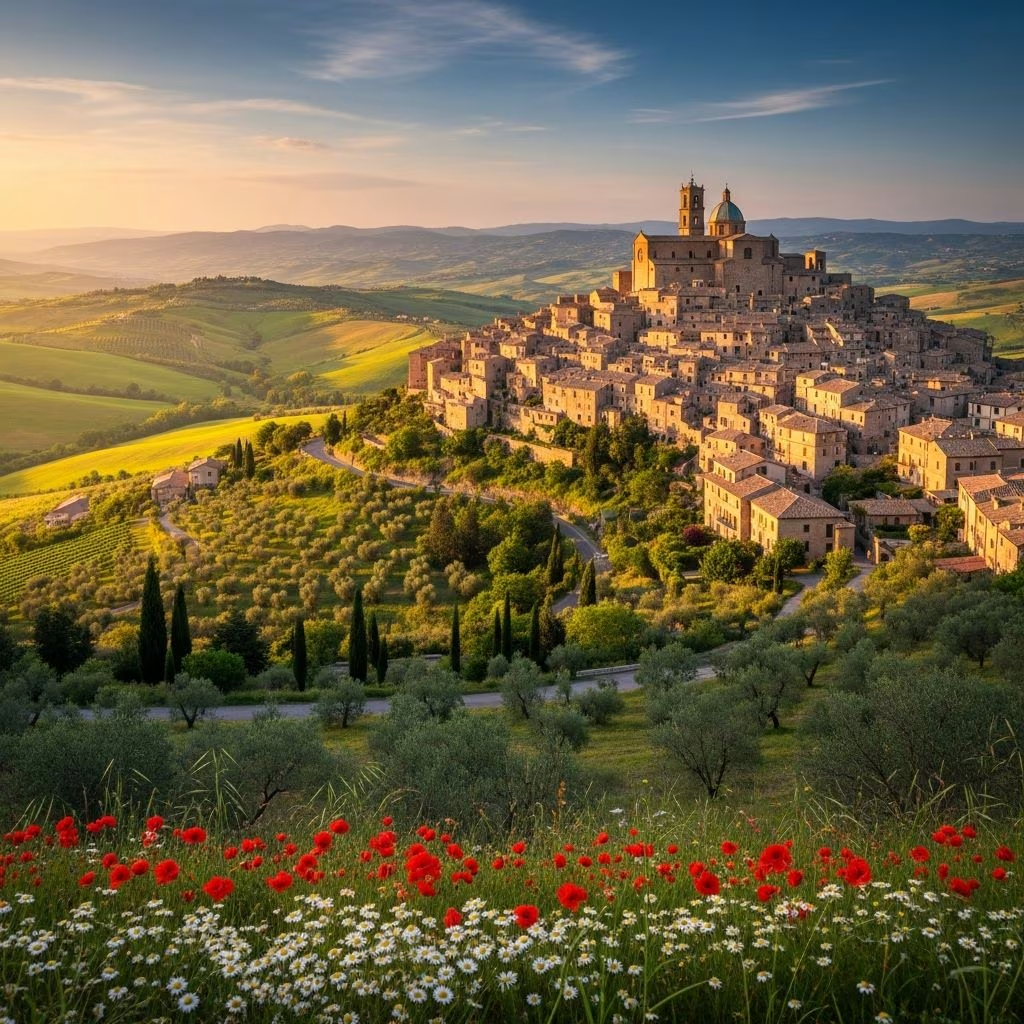
Beyond major archaeological sites and Renaissance villas, numerous medieval communities preserve distinctive character and architectural integrity. Civita di Bagnoregio, perched atop an eroding clay plateau, presents perhaps the most dramatic medieval village experience in Lazio. Access requires crossing a narrow footbridge spanning a vast ravine, reinforcing the settlement’s historical defensive position. The village’s population has dwindled significantly, contributing to its authentic preservation and haunting atmosphere. Visitors encounter genuine medieval streets, modest dwellings, small churches, and cafés rather than commercialized attractions.
Sutri, positioned on volcanic tuff cliffs, combines medieval settlement characteristics with significant archaeological layers. A Roman amphitheater carved from living rock, Etruscan necropolises, and a Mithraic temple demonstrate millennia of continuous habitation. Medieval churches and fortifications overlay earlier structures, creating architectural palimpsests that chronicle changing political and religious priorities across centuries.
The Castelli Romani hill towns—including Ariccia, Genzano, and Frascati—developed as agricultural communities specializing in wine production. Each community preserves medieval cores with Renaissance modifications, creating visually coherent settlements with distinctive local identities. Ariccia’s famous bridge designed by Gian Lorenzo Bernini exemplifies baroque influence on community infrastructure.
Lazio contains numerous sites significant to Christian history and monastic traditions. Montecassino Monastery, perched above the Liri Valley, holds exceptional importance as the mother house of the Benedictine order. The complex’s architectural development reflects centuries of monastic history, with medieval structures, baroque additions, and 20th-century reconstructions following World War II destruction. Visitors encounter libraries, artwork, and spiritual spaces that emphasize the historical centrality of monastic communities to European intellectual and spiritual life.
Subiaco preserves multiple monastic foundations attributed to Saint Benedict, the Christian saint credited with establishing formal monastic rules. Several monasteries occupy dramatic cliff locations, with structures carved into rock faces or ingeniously positioned on narrow ledges. Santa Scolastica Monastery, the oldest, contains a beautiful gothic cloister and functions as an active religious community. The nearby Sacro Speco di San Benedetto dramatically demonstrates how medieval monks adapted architecture to extreme topography, creating spiritual spaces that emphasize physical remoteness and natural grandeur.
Lazio’s agricultural landscape supports distinctive food and wine traditions reflecting regional history and terroir characteristics. The Castelli Romani wine region produces crisp white wines, particularly Frascati, that have achieved protected designation status. Tours of local wine cellars such as Casale del Giglio and Valle dell’Usignolo provide opportunities to understand wine-making processes while sampling products in their regional context.
The region’s cuisine emphasizes seasonal ingredients, agricultural products, and traditional preparation methods. Ariccia’s famous porchetta—roasted pork prepared with traditional techniques—exemplifies how specific communities maintain distinctive culinary identities. Local restaurants in medieval villages serve family recipes transmitted across generations, providing gastronomic experiences that reflect authentic regional culture rather than commercialized interpretations of Italian food.
The Tyrrhenian coastline provides access to beach recreation, seaside villages, and maritime heritage sites. The Ulysses Riviera, a roughly 100-kilometer stretch of coast in Latina Province, combines mythological significance with practical beach amenities. According to Homer’s Odyssey, Ulysses traveled these waters, connecting modern visitors with classical literature and ancient maritime routes. Contemporary travelers can embark on mini-cruises to ports such as Gaeta, which maintains medieval fortifications and historic harbors alongside modern resort facilities.
Sabaudia Beach provides access to the Circeo National Park, offering opportunities for coastal hiking, nature study, and beach relaxation. The park protects diverse ecosystems including Mediterranean scrub vegetation, dune systems, and maritime pine forests that characterize southern Lazio’s natural heritage.
Lazio’s tourism infrastructure supports multiple modes of exploration. Day trips from Rome provide options for visitors with limited time, with excellent public transportation connecting the capital to major attractions. Tivoli’s villas and archaeological sites are readily accessible via regional trains, while rental vehicles enable more flexible exploration of smaller communities and remote sites.
Seasonal considerations affect visitor experience and activity availability. Spring and fall offer moderate temperatures and reduced tourist congestion compared to summer months. Winter travel enables a more contemplative exploration of archaeological sites without crowds, though some seasonal activities and restaurants may operate on reduced schedules.
Lazio’s geographic extent and attraction diversity accommodate multiple travel approaches. Visitors with archaeological interests can focus on Etruscan sites, Roman ruins, and medieval castles concentrated in northern and central regions. Those prioritizing Renaissance art and architecture can concentrate on Tivoli’s villas and villa complexes in the Castelli Romani area. Travelers seeking natural experiences can organize itineraries around volcanic lakes, mountain hiking, and coastal recreation.
Accommodation options range from luxury resort hotels near major attractions to family-operated agriturismos embedded within rural communities. This infrastructure diversity enables visitors to select experiences matching their preferences and budget constraints.
