

 Travel Essentials
 Travel Essentials

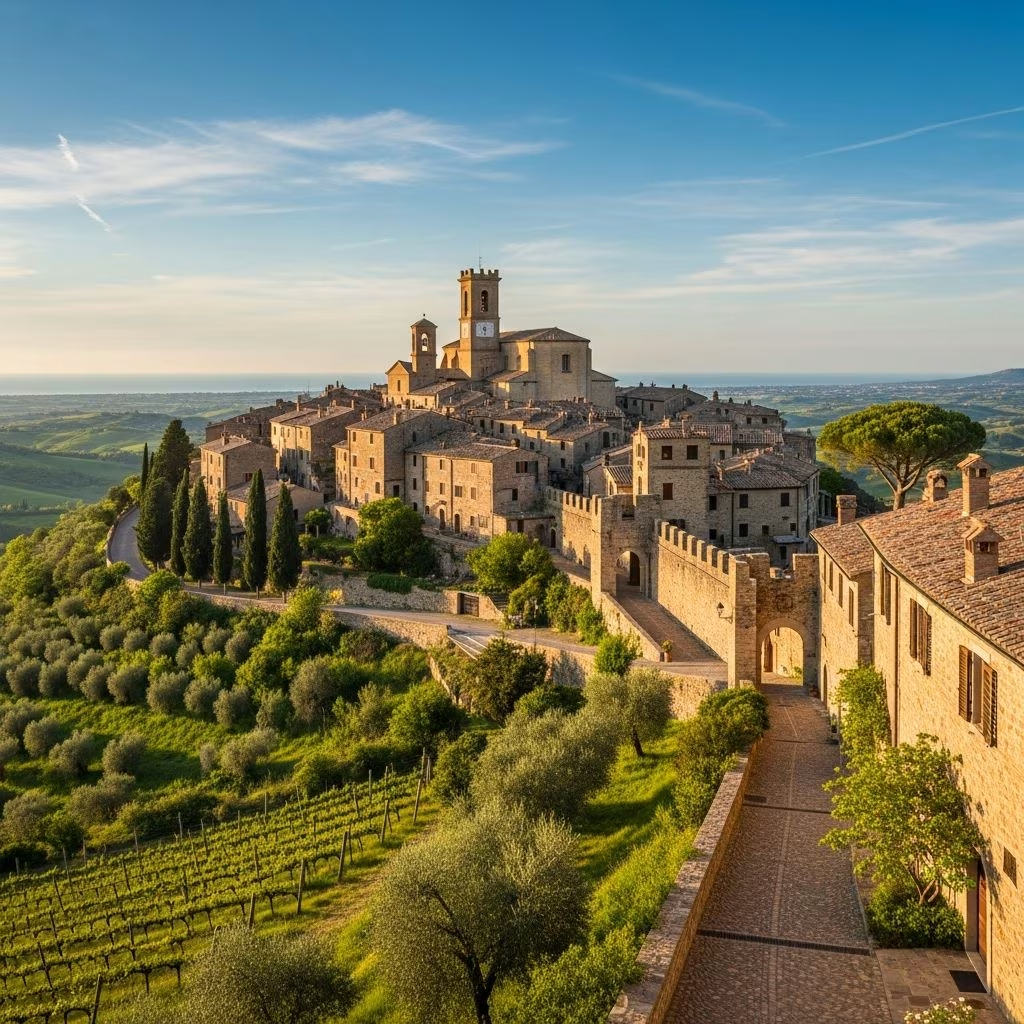
Explore Le Marche's medieval villages, countryside traditions, and authentic slow travel experiences away from mass tourism crowds.
 Travel Essentials
Nestled between the Apennine Mountains and the Adriatic Sea lies one of Italy’s most overlooked regions, a place where time moves differently and tourism has yet to reshape local culture into a commodity. Le Marche represents a different vision of Italian travel—one where visitors arrive not via tour buses but via local regional transport, where attractions are measured not by their Instagram potential but by their genuine connection to centuries-old traditions. This region offers travelers an opportunity to experience Italy as it actually exists, filtered through the lens of communities that continue living according to their own rhythms rather than visitor expectations.
The central regions of Italy have become increasingly synonymous with managed tourism experiences. Certain areas have been so thoroughly documented and packaged that the authentic experience becomes nearly indistinguishable from the curated one. Le Marche, however, remains positioned outside this equation. The absence of high-speed rail connections, the infrequency of local bus services, and the deliberate preservation of traditional schedules all contribute to an environment where tourism remains subordinate to local life rather than its driving force.
This regional geography creates natural barriers to mass tourism. Villages that appear adjacent on maps can require substantial travel time due to the hilly topography. The transportation infrastructure—primarily local buses operated by regional companies—runs according to local needs rather than tourist convenience, with limited daily services and no Sunday operations on many routes. This inconvenience, from a conventional tourism standpoint, becomes the region’s greatest asset for travelers seeking genuine connection.
The architecture itself reinforces this sense of historical continuity. Medieval town walls, built during periods when Italian nobles regularly threatened neighboring settlements, still encircle village centers. These defensive structures remain not as museum pieces but as functional boundaries between the historic cores and modern expansion, creating compact walking areas where twentieth-century development has been largely excluded.
Slow travel extends far beyond simply taking more time in fewer locations. It represents a fundamental shift in how travelers approach their relationship with place and community. Rather than treating destinations as collections of attractions to be efficiently checked off, slow travel practitioners view the journey itself—and the gradual understanding that emerges from sustained presence—as the actual experience.
In Le Marche, this philosophy transforms from aspiration into practical reality. The region’s physical characteristics actively encourage this approach. Distances between villages compress significantly compared to geographic representations, yet terrain and elevation changes expand the actual travel time required. This friction between expectation and reality becomes educational, teaching visitors to recalibrate their understanding of scale and progress.
The region’s calendar operates according to agricultural cycles rather than tourist seasons. Festivals occur for residents and participants rather than spectators. Shops close during midday hours regardless of visitor presence. This calendar creates natural rhythms that slow travelers actively seek—moments of genuine local activity interspersed with genuine quiet, rather than the artificial quietness created by closed attractions in off-season tourist towns.
Successful slow travel in Le Marche begins with strategic base selection. Rather than attempting a geographic sweep across the region, travelers should identify a single town or small collection of nearby villages as their anchor point. From this base, exploration occurs through walking, short bus journeys, or taxi connections to neighboring communities.
Tolentino, a lowland city positioned 1.5 hours by train from Ancona (the region’s primary transportation hub), serves as an effective entry point. From Tolentino, regional buses connect to hill towns such as San Ginesio, traditionally built with defensive walls and medieval street patterns that force walking as the primary mode of interior navigation.
Key considerations for multi-week stays include:
Food in Le Marche functions simultaneously as sustenance, cultural expression, and organizational principle for daily activities. Rather than treating meals as breaks between attractions, slow travelers can structure entire days around food-related experiences, allowing cuisine to dictate their movement through the landscape.
Weekly markets in village squares offer opportunities to understand seasonal agriculture and meet vendors with direct connections to producers. These markets typically operate in morning hours and include not just produce but also cheese, cured meats, bread, and prepared specialties reflecting local culinary traditions. Shopping at these venues provides both ingredients and education regarding what grows in the surrounding hills during different seasons.
Family-operated restaurants—easily identified by their focus on set menus rather than expansive options—typically source ingredients from local producers and reflect the seasonal character of regional agriculture. Dining in these establishments provides occasions for extended conversations with restaurant staff, many of whom hold personal connections to ingredient suppliers and can articulate the stories behind particular dishes or preparation methods.
Agricultural estates offering accommodations frequently prepare meals using products grown or produced on their property. Multi-day stays at these properties provide access to dining experiences that function as educational events, with meal preparation sometimes explaining regional cooking techniques or showcasing particular seasonal specialties.
Le Marche’s compressed geography creates opportunities for remarkable landscape diversity without requiring extensive travel. The Monti Sibillini mountains, positioned inland, offer hiking possibilities ranging from day excursions to multi-day treks, depending on physical capacity and available time. Seasonal conditions in these mountains include local festivals and rural villages where regional wine specialties complement traditional cuisine.
The Frasassi Caves system, featuring dramatic karst geology with underground rivers and stalactite formations, provides geological education accessible through guided tours. These cave systems exist within walking distance of the Tempio del Valadier, a historic religious structure, allowing combined visits that integrate natural and cultural experiences.
The Conero Natural Park, positioned along the Adriatic coastline, offers cliff formations and beach access without the crowding characteristic of more famous coastal regions. These beaches provide swimming and seaside relaxation while remaining anchored in authentic community structures rather than tourism-focused development.
Walking represents the primary exploration method for village interiors and immediate surrounding countryside. Medieval street patterns typically eliminate vehicle traffic from historic cores, forcing pedestrian movement that naturally encourages observation of architectural details and social encounters with residents.
Timing significantly influences the character of Le Marche experiences. Summer months, while offering reliable weather, bring visible tourist presence to certain villages and create temporary price increases in accommodations and restaurants. The summer season also compresses local life into evening hours as residents avoid midday heat.
Spring and autumn weather remains pleasant while preserving the region’s characteristic quietness. These seasons align with agricultural cycles that structure local activities—spring planting festivals, autumn harvest celebrations—providing opportunities to witness community traditions occurring within their original context rather than as performances for visitors.
Winter travel remains possible, particularly in lower-elevation villages, though some accommodations and restaurants operate on reduced schedules. This season offers the quietest experience and the most affordable accommodations, though travel via local buses may be affected by occasional weather conditions in higher-elevation communities.
Le Marche maintains active traditions of skilled craft production that remain visible in village life. Leather shoe manufacturing, for instance, continues through small artisan workshops where craftspeople work through hand-stitching techniques that have changed minimally across generations. These workshops typically welcome visitors who approach respectfully, providing opportunities to understand labor-intensive production methods that contrast sharply with industrial manufacturing.
Small-scale production persists across multiple categories including textiles, ceramics, and traditional food products. These businesses operate according to local economics rather than tourist demand, though visitors who demonstrate genuine interest frequently receive educational explanations regarding production processes and material selections.
Shopping in these contexts involves extended conversations with proprietors who typically maintain family histories connected to their enterprises. Purchases from these sources support local economic structures more directly than purchases from tourist-focused retailers.
Public transportation limitations should be understood not as obstacles to overcome but as essential components of the slow travel experience. Regional bus operators including Contram Mobilita SCPA and Autolinee SASP provide limited daily service on most routes, with several hours potentially separating consecutive departures. This frequency forces travelers to build buffers into their schedules and creates opportunities for spontaneous interactions in waiting areas and bus stations.
Taxi services offer alternatives for connections between villages outside bus operating hours, though advance arrangement through tourist information offices or accommodations providers remains necessary. These taxi journeys provide opportunities for conversations with drivers who frequently possess detailed local knowledge regarding village history, family connections, and cultural peculiarities.
The journey itself becomes educational through observation of changing landscape characteristics, architectural styles, and land-use patterns. Rather than viewing travel time as an impediment to attraction-based tourism, slow travelers can reframe transportation as an integral component of regional understanding.
Lodging choices significantly influence the character of individual experiences. Larger hotels in town centers typically provide professional services while limiting organic community interaction. Smaller properties—family-run establishments, agriturismi operations, or private apartments—create conditions for more extensive interaction with property managers and local residents.
Extended stays (three or more nights) in individual accommodations typically generate invitations to local social events, recommendations for lesser-known restaurants, or introductions to shop owners and craftspeople. These relationships emerge organically from repeated presence rather than through organized tourist activities.
Properties located in village centers rather than outlying rural areas provide daily exposure to local commercial activity and social rhythms. Morning coffee purchases at neighborhood bars, conversational shopping at small groceries, and evening social gatherings in piazzas all remain more accessible from centrally-positioned accommodations.
Q: What is the optimal length for a Le Marche visit?
A minimum of one week allows sufficient time for meaningful exploration of 2-3 base locations. Two or three weeks permits deeper integration with communities and participation in regular activities alongside residents. Stays shorter than one week typically result in surface-level experiences insufficient to capture the region’s authentic character.
Q: How do I navigate without a rental vehicle?
Regional buses connect major villages, though schedules require advance planning. Taxi services, arranged through accommodations providers, offer flexibility for unscheduled connections. Walking remains viable between adjacent villages on certain routes, though distance and elevation changes may exceed initial expectations.
Q: Are English-language resources available for independent travelers?
Tourist information offices in larger villages typically employ English-speaking staff. Smaller communities may require use of translation applications or assistance from accommodations staff. This language barrier often enhances rather than diminishes authentic interaction, as genuine communication efforts typically generate goodwill from local residents.
Q: What should I budget for accommodations and dining?
Le Marche remains significantly less expensive than northern Italian regions or coastal areas. Mid-range accommodations range from approximately €60-100 per night, while restaurant meals at local establishments typically cost €12-20 for primary courses. Market shopping for self-catered meals reduces daily expenses substantially.
Q: Can I visit multiple regions during one trip?
Geographic accessibility to Umbria and Tuscany creates possibilities for multi-region journeys, though such approaches typically contradict slow travel philosophy. Sequential stays in different regions across a two to three-week period remain feasible, though true slow travel engagement typically requires concentrated focus on limited geographic areas.
The fundamental distinction between slow travel in Le Marche and conventional tourism lies in the relationship between experience and memory. Conventional tourism frequently prioritizes the collection of discrete experiences—photos at famous locations, meals at renowned restaurants, visits to primary attractions. Slow travel constructs meaning through sustained presence, repeated observation of landscape and social patterns, and gradual understanding that accumulates across days and weeks.
In Le Marche, this approach yields experiences fundamentally tied to individual perception and spontaneous circumstance. Two travelers visiting the same villages during the same season will likely generate entirely different narratives based on accommodations choices, market timing, weather conditions, and social encounters. This variability reflects authentic engagement rather than the reproducibility characteristic of managed tourism experiences.
The region’s resistance to tourism commodification means that experiences resist standardization and remain resistant to advance planning. This unpredictability, uncomfortable for travelers accustomed to itinerary-driven journeys, becomes the precise factor that allows authentic cultural observation and genuine community interaction to flourish.
