

 Travel Essentials
 Travel Essentials

Explore the Lebanon Mountain Trail: a 470km journey from north to south, featuring cedar forests, UNESCO sites, diverse terrain, and local culture. Perfect for thru-hikers and day trippers.
 Travel Essentials
The Lebanon Mountain Trail (LMT) stands as one of the Middle East’s premier long-distance hiking paths, stretching approximately 470km from the northern town of Andqet in the Akkar region to Marjayoun near Mount Hermon in the south. This trail, meticulously developed by the Lebanon Mountain Trail Association (LMTA) since 2006 and officially opened in 2008 after regional challenges, snakes through Lebanon’s central mountain spine, offering hikers a profound connection to the country’s natural beauty, historical landmarks, and vibrant communities.
Initiated by the non-profit LMTA, the LMT represents a landmark effort in environmental conservation and sustainable tourism in Lebanon. Spanning over 75 towns and villages, the trail was crafted to highlight the nation’s diverse ecosystems while boosting local economies through hiker stays in guesthouses and interactions with residents. Divided into 27 well-marked sections ranging from 10 to 24km each, it accommodates various hiking styles—from multi-day thru-hikes completable in about a month to standalone day excursions.
The trail’s creation involved collaboration with local communities for maintenance, signage, and cultural integration, turning it into a symbol of civic pride and reforestation. It traverses elevations from 600m to over 2,000m, including five protected areas and two biosphere reserves, showcasing Lebanon’s resilience amid its complex history.
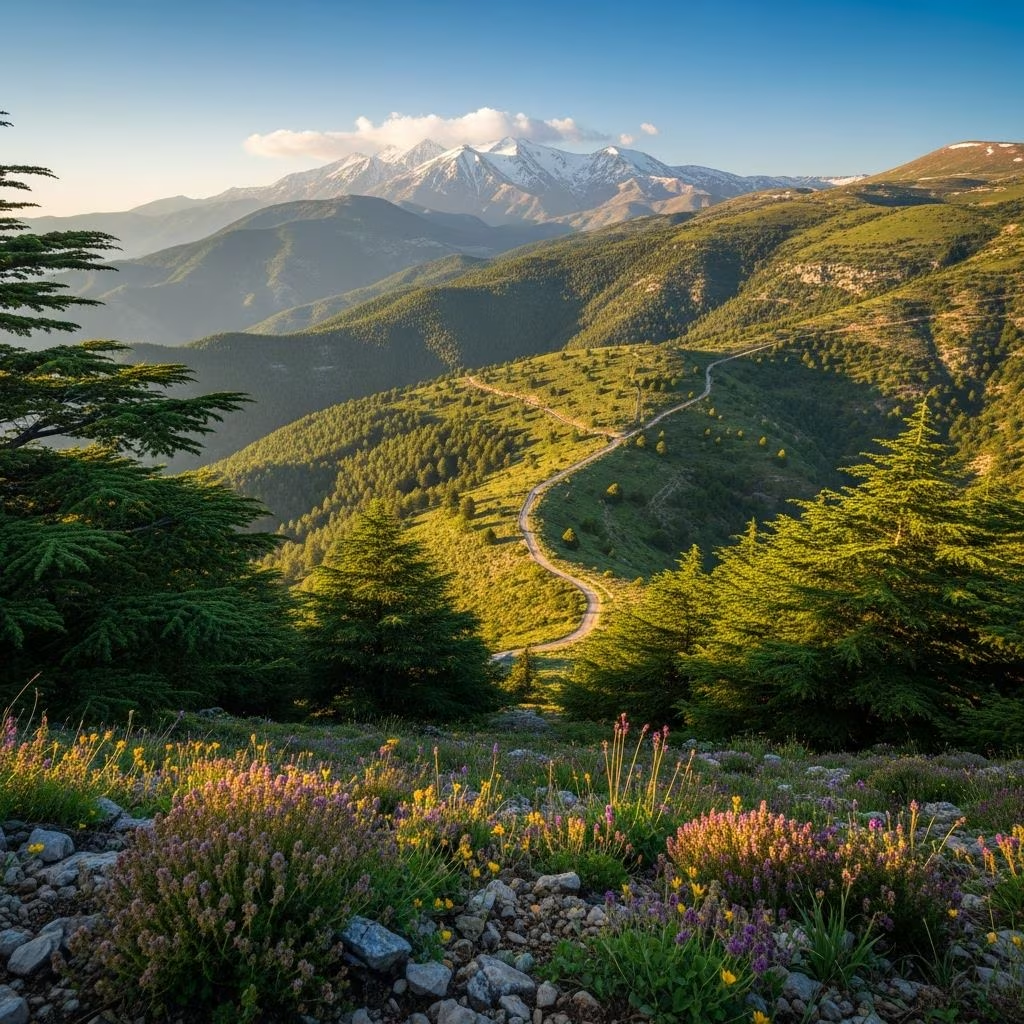
The LMT’s path follows the Mount Lebanon range, rising sharply between the Mediterranean coast to the west and the Bekaa Valley to the east. Hikers encounter a tapestry of landscapes: rocky open slopes with panoramic sea views, dense cedar forests—the biblical trees symbolizing Lebanon—umbrella pines, junipers, olive orchards, and wildflower meadows in spring.
Seasonal variations enhance the experience: winter snows blanket peaks, April snowmelt feeds springs and blooms wildflowers, while summer brings clear skies for distant sea glimpses.
With 27 sections, the LMT caters to all levels. Many are bike-friendly, and accommodations dot the route. Below is a table summarizing key sections based on terrain, distance, and highlights:
| Section | Distance (km) | Elevation Gain (m) | Highlights | Difficulty |
|---|---|---|---|---|
| Qadisha Valley Descent (North) | 10-15 | 500 descent | Cliff monasteries, river trails | Moderate |
| Tannourine Cedars | 12 | 300 ascent | Sinkhole waterfall, dense forests | Moderate-Strenuous |
| Chouf Biosphere | 18 | 200 | Southernmost cedars, flat paths | Easy-Moderate |
| Jezzine to Bkassine | 22 (side) | 400 | Pine forests, sea views | Strenuous |
| South Bekaa Plains | 20 | Minimal | Orchards, villages | Easy |
Thru-hikers often start south-to-north to ease into elevations, crossing agricultural lowlands before ascending wooded ridges.
Prior to setting out, assess fitness: daily ascents/descents average 300-600m, with rocky, steep single-tracks demanding sturdy boots, trekking poles, and hydration packs. Spring (April-May) or fall (September-October) offer mild weather; pack layers for sudden changes and check LMTA updates for conditions.
For thru-hikes, budget 25-30 days, with guesthouses (20-50 USD/night) providing home-cooked Lebanese meals like kibbeh and tabbouleh, supporting communities.
The LMT weaves through reforestation zones combating centuries of deforestation. Iconic Lebanese cedars dominate reserves like Tannourine and Chouf, joined by pines, oaks, and seasonal wildflowers. Wildlife includes golden eagles, mouflon sheep, and diverse butterflies; stick to paths to minimize impact.
LMTA’s work in three nature reserves promotes biodiversity, with side trails enhancing access. Hikers contribute via ‘Leave No Trace’ principles and local spending.
Beyond nature, the trail immerses you in Lebanon’s heritage: Roman temples, fortress ruins at Niha, ancient churches in Qadisha, and bustling village souks. Homestays offer storytelling sessions, fresh produce, and feasts reflecting Phoenician-Maronite influences.
Jezzine dazzles with knife craftsmanship; Tannourine with cedar lore. This path counters stereotypes, revealing a welcoming, history-rich nation.
Combine sections for custom itineraries—e.g., 8-day trips blending Chouf cedars and Qadisha hikes. Use LMTA’s map for GPS; join guided tours for logistics. Post-hike, unwind in Beirut’s vibrancy.
Day sections vary; start with easy southern plains before strenuous northern ascents.
Spring for waterfalls/wildflowers, fall for comfort; avoid summer heat/winter snows.
Primarily guesthouses; wild camping limited—check reserves.
Moderate to strenuous; 15-25km/day with elevation—train with hill walks.
Stick to marked paths; LMTA monitors—generally safe for prepared hikers.
The LMT transforms perceptions of Lebanon, blending adventure with cultural depth for enduring memories.
