

 Travel Essentials
 Travel Essentials

Explore Leipzig's transformation into a creative powerhouse with world-class museums, historic architecture, and a thriving arts scene that attracts visitors worldwide.
 Travel Essentials
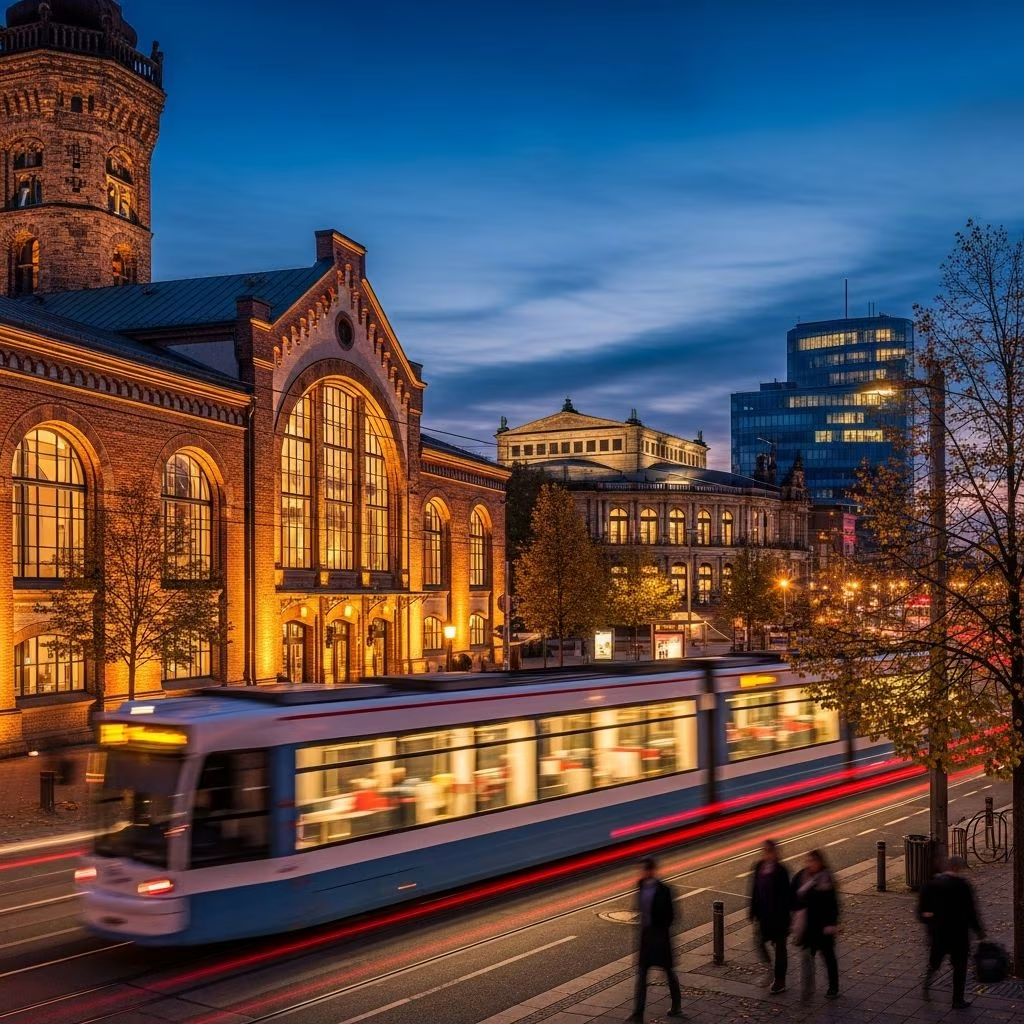
Positioned in the heart of Saxony, Leipzig has emerged as one of Europe’s most compelling urban destinations, attracting travelers seeking authentic cultural experiences away from more conventional tourist routes. With a population of approximately 600,000, this dynamic city represents a fascinating blend of meticulously preserved historical architecture and cutting-edge contemporary creativity. Often compared to Berlin during its most experimental period, Leipzig has earned the nickname “Hypezig” for its ability to draw young creative professionals, artists, and musicians from across Europe and beyond. The transformation reflects decades of careful urban renewal that has restored hundreds of Baroque, Renaissance, and Art Nouveau structures, creating pedestrian-friendly streets lined with galleries, boutiques, and culturally significant venues.
Few cities can claim the musical significance that resonates throughout Leipzig’s streets and concert halls. The city served as the professional home of Johann Sebastian Bach, one of history’s most influential composers, who worked as the Kapellmeister at St. Thomas Church during his most productive years. This historical connection has been carefully preserved and celebrated, with the Bach Museum offering visitors an opportunity to explore his life through interactive displays and original manuscripts.
Beyond its classical pedigree, Leipzig continues to host the Gewandhaus Orchestra, recognized as one of the oldest and most prestigious symphony orchestras in the world. This institution maintains the city’s reputation as a world-class destination for serious classical music enthusiasts. The orchestra regularly performs at Augustusplatz, an expansive cultural square that anchors the city’s artistic identity and remains surrounded by other significant cultural institutions.
The city’s musical character extends beyond classical traditions. Each summer, Leipzig hosts the Wave-Gotik-Treffen, acknowledged as the world’s largest gothic festival, drawing participants from across the globe who celebrate alternative music, fashion, and subculture. This juxtaposition—where centuries-old classical traditions coexist with contemporary musical movements—defines the city’s unique cultural atmosphere.
The fabric of Leipzig’s city center reveals layers of history through its architecture. The Markt, or main square, functions as the geographic and spiritual heart of the historic district. Dominated by the imposing Old Town Hall, a structure dating to the 16th century, this square demonstrates Leipzig’s importance during medieval and Renaissance periods when it flourished as a major trade hub. The building now houses the Museum of City History Leipzig, where visitors descend into medieval chambers to learn about the city’s Slavic origins, its development as a commercial center, and the influential artists and musicians who shaped its cultural trajectory.
St. Thomas Church represents another architectural masterpiece, blending Romanesque and Gothic design elements in a building that has stood since the 13th century. This church transcends its religious function to embody important historical moments: Martin Luther preached his groundbreaking religious reform from its pulpit, and Bach conducted the renowned St. Thomas Boys’ Choir, whose performances continue to draw audiences today.
Equally compelling is St. Nicholas Church, which holds profound significance in modern European history. The church served as the gathering point for the Prayers for Peace and Monday Demonstrations that became catalysts for the Peaceful Revolution of 1989, the movement that ultimately led to German reunification. This location transformed from a house of worship into a symbol of peaceful resistance against authoritarian rule.
Augustusplatz functions as Leipzig’s cultural nucleus, surrounded by the Leipzig Opera, the Gewandhaus Concert Hall, and Leipzig University. This configuration creates an environment where academic pursuit meets artistic expression. The square itself features the Mendebrunnen fountain and the striking modern University Church, offering visitors a visual experience that bridges centuries of architectural evolution.
Beyond these major institutions, the city supports an expansive network of galleries and exhibition spaces. The Spinnerei area has transformed from an abandoned industrial complex into a thriving gallery district housing artist studios and contemporary art exhibitions. Similarly, the Kunstkraftwerk presents immersive digital art installations that appeal to visitors seeking innovative cultural experiences.
Shopping enthusiasts will appreciate the historic arcades that crisscross the city center. The Mädler Passage, constructed between 1912 and 1914, features elegant skylights and houses Auerbachs Keller, a restaurant frequented by Johann Wolfgang von Goethe, the German literary giant who wrote portions of his masterpiece “Faust” while residing in Leipzig. Specks Hof represents the oldest original shipping arcade, offering visitors a tangible connection to the city’s commercial heritage.
Leipzig’s event calendar reflects its position as a cultural destination that celebrates both tradition and contemporary creativity. The Christmas Market, operating since 1458, transforms the city into a festive wonderland during winter months, offering traditional crafts, regional foods, and seasonal entertainment. This medieval market tradition continues largely unchanged, providing visitors with an authentic holiday experience.
The Wave-Gotik-Treffen festival represents the opposite end of the cultural spectrum, attracting thousands of participants who celebrate gothic music, fashion, and alternative culture each summer. This festival demonstrates the city’s cultural inclusivity and its appeal to diverse creative communities.
Leipzig provides numerous green spaces that offer respite from urban exploration. The Palmengarten, located on the city’s western edge, exemplifies Victorian landscaping principles with stone bridges, winding trails, a decorative pond, and a 19th-century cast-iron pavilion. The Clara-Zetkin-Park, named after the pioneering women’s rights activist, combines aesthetic appeal with recreational facilities including a cafe, lake, summer concert bandstand, and beer garden, creating an atmosphere conducive to relaxation and social gathering.
Beyond these urban parks, the Neuseenland region surrounding Leipzig offers a massive lake district perfect for water-based activities. The Karl-Heine Canal permits kayaking and canal boat tours year-round, while the scenic King Albert Bridge provides photographic opportunities and access to waterfront paths.
Beyond the historic center, Leipzig’s neighborhoods each possess distinctive character. The Karli Road area buzzes with independent shops, cafes, and restaurants that reflect the city’s creative energy. This district embodies the contemporary cultural spirit that has transformed Leipzig into a destination for young professionals and artists seeking affordable urban living combined with cultural opportunity.
The Johanna Park area offers another perspective on local life, serving as a recreational hub where residents and visitors gather for outdoor activities, picnics, and informal socializing. These neighborhood explorations provide genuine insight into daily life beyond tourist attractions.
Leipzig’s accessibility enhances its appeal as a destination. Located just over an hour from Berlin via convenient rail connections, the city functions as an ideal weekend destination or stopping point for travelers exploring eastern Germany. The compact city center allows most significant attractions to be reached within walking distance, making exploration manageable without requiring extensive transportation planning.
The restoration of hundreds of architectural structures over the past 25 years has created a pedestrian-friendly environment that encourages leisurely exploration. This urban design philosophy prioritizes visitor experience while preserving the city’s historical character.
Leipzig represents a significant evolution in European urban tourism. Rather than resting on historical laurels, the city has successfully integrated its rich past with contemporary cultural dynamism. The presence of world-class musical institutions alongside cutting-edge art galleries, coupled with a thriving alternative culture scene and carefully preserved architecture, creates a destination that appeals to diverse traveler interests and sensibilities.
The city’s affordability compared to Berlin or other major German cities, combined with its cultural richness and creative energy, positions Leipzig as an increasingly attractive destination for travelers seeking authentic experiences. The transformation from post-industrial decline to cultural renaissance demonstrates urban renewal possibilities and provides visitors with insight into contemporary European city development.
Whether drawn by classical music heritage, contemporary art, architectural exploration, or simply the desire to experience an emerging cultural hub before it becomes oversaturated with mainstream tourism, Leipzig offers compelling reasons for inclusion in any Central European itinerary.
