

 Travel Essentials
 Travel Essentials

Essential information for LGBTQ+ travelers visiting Turkey, covering legal status, cultural considerations, safe cities, and practical tips for a meaningful experience.
 Travel Essentials
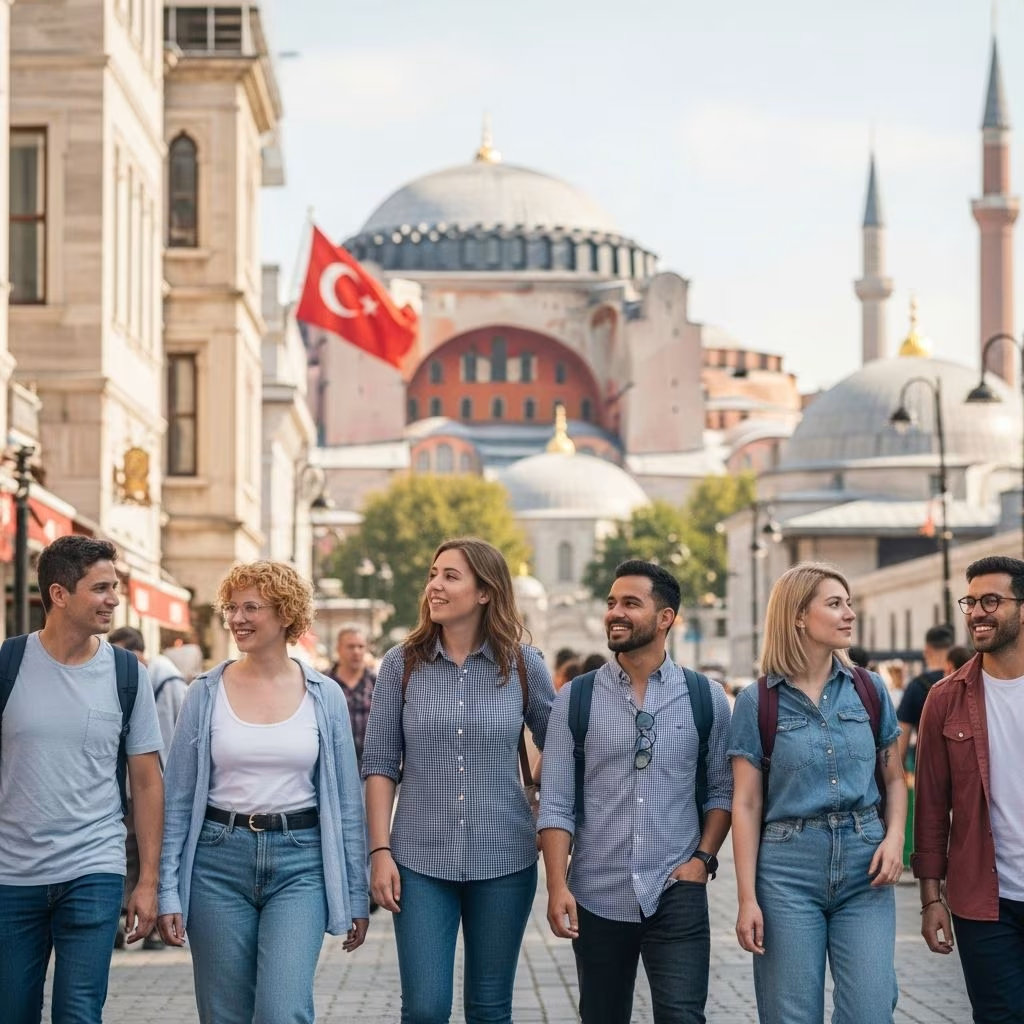
Planning a journey to Turkey as an LGBTQ+ individual or couple requires balancing enthusiasm for the destination’s rich history and natural beauty with practical awareness of the country’s current social and political landscape. While Turkey operates under a secular legal framework, the intersection of religious traditions and conservative cultural values creates a nuanced environment for LGBTQ+ travelers. This guide provides essential information to help you navigate Turkey confidently while respecting local customs and prioritizing your safety.
Turkey’s legal position on LGBTQ+ rights presents a mixed picture that requires careful understanding. Unlike many countries with explicit anti-LGBTQ+ legislation, same-sex relationships are not illegal in Turkey. Homosexuality was decriminalized decades ago, establishing a foundation that distinguishes Turkey from many neighboring nations in the Middle East and North Africa region.
However, the absence of criminalization does not equate to comprehensive legal protection or recognition. Same-sex marriages and civil partnerships remain unrecognized under Turkish law, leaving couples without the legal frameworks available to heterosexual pairs. Additionally, Turkey provides no legal protection from discrimination in employment, education, housing, or healthcare sectors. This gap between non-criminalization and active protection creates ongoing challenges for both residents and visitors.
The political environment has grown increasingly complex in recent years. Turkish LGBTQ+ individuals report facing accusations of “inciting hatred” or violating “public morality” statutes, contributing to an atmosphere of heightened scrutiny. Despite these legal ambiguities, the fact remains that simply being LGBTQ+ is not a criminal offense in Turkey.
Understanding the distinction between legal status and social acceptance is crucial for LGBTQ+ travelers. While Turkish law does not explicitly criminalize same-sex relationships, the broader cultural environment remains predominantly conservative. This creates a situation where legal permission and practical comfort do not always align.
Research highlights the extent of social challenges facing the LGBTQ+ community in Turkey. Studies by advocacy organizations have documented that approximately 90 percent of LGBTQ+ individuals in Turkey experience digital violence regularly, suggesting pervasive hostility across multiple dimensions of society. Additionally, the LGBTQ+ community in Turkey contends with daily experiences of violence and discrimination, coupled with insufficient response from authorities and law enforcement.
For many Turkish LGBTQ+ locals, particularly outside major urban centers, discretion remains essential for personal safety. Many individuals lead dual lives, presenting a conventional heterosexual appearance in professional and family contexts while expressing their authentic identities only within trusted private circles. This reality, while not necessarily affecting tourists directly, provides important context for understanding the social dynamics you may encounter.
Turkey’s geography significantly influences LGBTQ+ safety and community presence. The country exhibits stark regional differences in attitudes toward LGBTQ+ individuals, with a clear gradient from cosmopolitan urban centers to conservative rural communities.
Major cities including Istanbul, Izmir, Antalya, Ankara, and popular resort towns like Bodrum, Çeşme, and Fethiye demonstrate substantially greater acceptance and safety for LGBTQ+ travelers. These urban environments host gay-friendly establishments, occasional pride events, and visible LGBTQ+ communities. Istanbul, in particular, functions as the cultural and social epicenter for Turkish LGBTQ+ life, attracting both domestic and international visitors seeking community and acceptance.
In contrast, rural and conservative areas present different challenges. Rural regions may exhibit significantly stricter social norms and hold more negative attitudes toward LGBTQ+ individuals. These areas lack the infrastructure of gay-friendly venues and the protective anonymity of urban environments. In extreme cases, honor-based violence remains a documented concern in some rural communities.
This urban-rural divide is not merely theoretical. Cities like Izmir have demonstrated substantial community support, with pride parades attracting over 50,000 participants in peaceful, violence-free celebrations. Meanwhile, smaller towns and villages typically lack similar visibility or community infrastructure. When planning your itinerary, prioritizing major metropolitan areas and established tourist destinations significantly enhances safety and comfort.
Istanbul occupies a unique position as Turkey’s most cosmopolitan city and the primary destination for LGBTQ+ travelers. This transcontinental metropolis, straddling Europe and Asia, represents the face of modern Turkey—progressive, diverse, and culturally vibrant.
Istanbul’s nightlife, gay bars, and substantial LGBTQ+ community presence create an environment where travelers can find welcoming spaces and connect with local LGBTQ+ individuals. The city attracts younger generations and university students who tend to hold more liberal perspectives compared to older or rural populations. This demographic composition supports a thriving scene of gay-friendly establishments and community events.
For accommodation, several hotel chains have established reputations for welcoming LGBTQ+ guests. IGLTA-approved gay-friendly hotels in Istanbul include the Park Hyatt Istanbul, Kumru Hotel, and Grand Hyatt Istanbul. These establishments have demonstrated commitment to inclusive practices and provide safe spaces for LGBTQ+ travelers. However, it is important to note that gay and lesbian couples have been denied service at some Turkish hotels, particularly smaller or remote properties. When booking accommodation, researching specific hotel policies and seeking establishments with documented LGBTQ+ friendly records reduces risk of uncomfortable situations.
Beyond Istanbul, several other Turkish destinations offer welcoming environments for LGBTQ+ travelers:
Traveling safely as an LGBTQ+ individual in Turkey requires balancing authentic self-expression with practical awareness. Several behavioral guidelines enhance your experience:
Public displays of affection require careful judgment. While heterosexual couples may also avoid kissing in public given Turkish cultural norms, same-sex physical affection carries elevated social risk. In major cities and tourist areas, brief, discreet affection may pass without incident, but extended kissing or overt displays invite unwanted attention. In rural areas or conservative neighborhoods, even hand-holding between same-sex couples may provoke negative reactions.
Clothing choices merit consideration, though Turkish fashion is generally modern in urban areas. Avoid exaggerated or deliberately provocative presentations in conservative neighborhoods. Standard contemporary fashion worn by locals—regardless of sexual orientation—typically poses no issues.
Dating applications present particular considerations. While apps commonly used by gay men exist in Turkey, users should exercise vigilance when meeting individuals through digital platforms. Standard safety protocols apply: meet in public spaces, inform trusted contacts of your whereabouts, and trust your instincts if situations feel unsafe.
Pride events warrant specific caution. While pride marches and LGBTQ+ celebrations occur in Turkey, particularly in major cities, these events do not always receive government authorization or adequate security provisions. Recent events have witnessed arrests and altercations between participants and authorities. Research current conditions and official permits before attending pride celebrations.
Certain transportation and facility considerations reflect Turkey’s gendered infrastructure approach. Intercity bus services may implement seating policies based on legal gender, potentially preventing same-sex couples from sitting adjacent to one another. Similarly, gender-neutral bathroom facilities remain limited, with gendered facilities typically reflecting legal gender rather than gender identity.
These limitations, while frustrating, rarely escalate to safety concerns but may create discomfort during travel. Understanding these practices beforehand allows you to prepare mentally and plan alternative arrangements when possible.
Successful travel requires recognizing that Turkish conservatism reflects both religious tradition and broader cultural values rather than explicit legal prohibition. Turkey is constitutionally secular, yet maintains a Muslim-majority population, creating a complex dynamic between government policy and cultural practice.
Respecting local customs—including religious sites, prayer times, and social traditions—demonstrates cultural awareness that enhances your reception. Younger Turkish populations, particularly in urban areas, tend toward greater acceptance of LGBTQ+ individuals. Engaging with local communities, showing genuine interest in Turkish culture, and maintaining respectful boundaries creates opportunities for positive cross-cultural exchange.
Safety depends significantly on location and behavior. Major cities like Istanbul, Bodrum, and Izmir offer tourism infrastructure with established LGBTQ+ communities and substantially reduced risk. Discretion regarding public affection and avoidance of rural areas minimize complications. Individual travelers have successfully visited Turkey while maintaining authentic identities in appropriate contexts. However, baseline caution and awareness are necessary—Turkey is not a destination for travelers seeking uninhibited public expression of LGBTQ+ identity.
No, being LGBTQ+ is not illegal in Turkey. Same-sex relationships are not criminalized. However, individuals should remain aware of laws against “inciting hatred” or violating “public morality,” which have been invoked against LGBTQ+ individuals in some contexts.
Not necessarily. While Turkey presents legitimate challenges for LGBTQ+ travelers, the country is one of the more LGBTQ+-friendly destinations in the Middle East. Millions of tourists visit Turkey annually safely by respecting local norms. LGBTQ+ travelers can have meaningful, safe experiences through informed planning and cultural sensitivity.
Ensure that legal guardianship, medical power of attorney, and emergency contact documentation clearly specify your partner in case of medical emergencies or legal complications. Since same-sex partnerships lack legal recognition, explicit documentation becomes particularly important.
Successful LGBTQ+ travel to Turkey combines realistic expectations with proactive planning. Prioritize established tourist destinations and major cities. Research specific hotels, bars, and venues before arrival. Connect with LGBTQ+ travel communities and forums for current firsthand accounts. Register with your embassy or consulate. Maintain emergency contact information for trusted individuals both in Turkey and your home country.
Consider your personal comfort level and travel style when evaluating Turkey’s suitability. Travelers comfortable adapting to local customs, exercising discretion regarding public affection, and focusing on tourism infrastructure rather than public activism can experience Turkey’s remarkable history, cuisine, and landscapes authentically and safely.
Turkey represents a destination of extraordinary cultural richness and historical significance that welcomes LGBTQ+ travelers willing to navigate its complexities thoughtfully. While Turkey’s legal framework does not criminalize LGBTQ+ identities, the broader social environment requires discretion and cultural awareness. By prioritizing major cities, selecting LGBTQ+-friendly accommodations, exercising judgment regarding public affection, and respecting local customs, LGBTQ+ travelers can create meaningful Turkish experiences while prioritizing their safety and well-being.
