

 Travel Essentials
 Travel Essentials

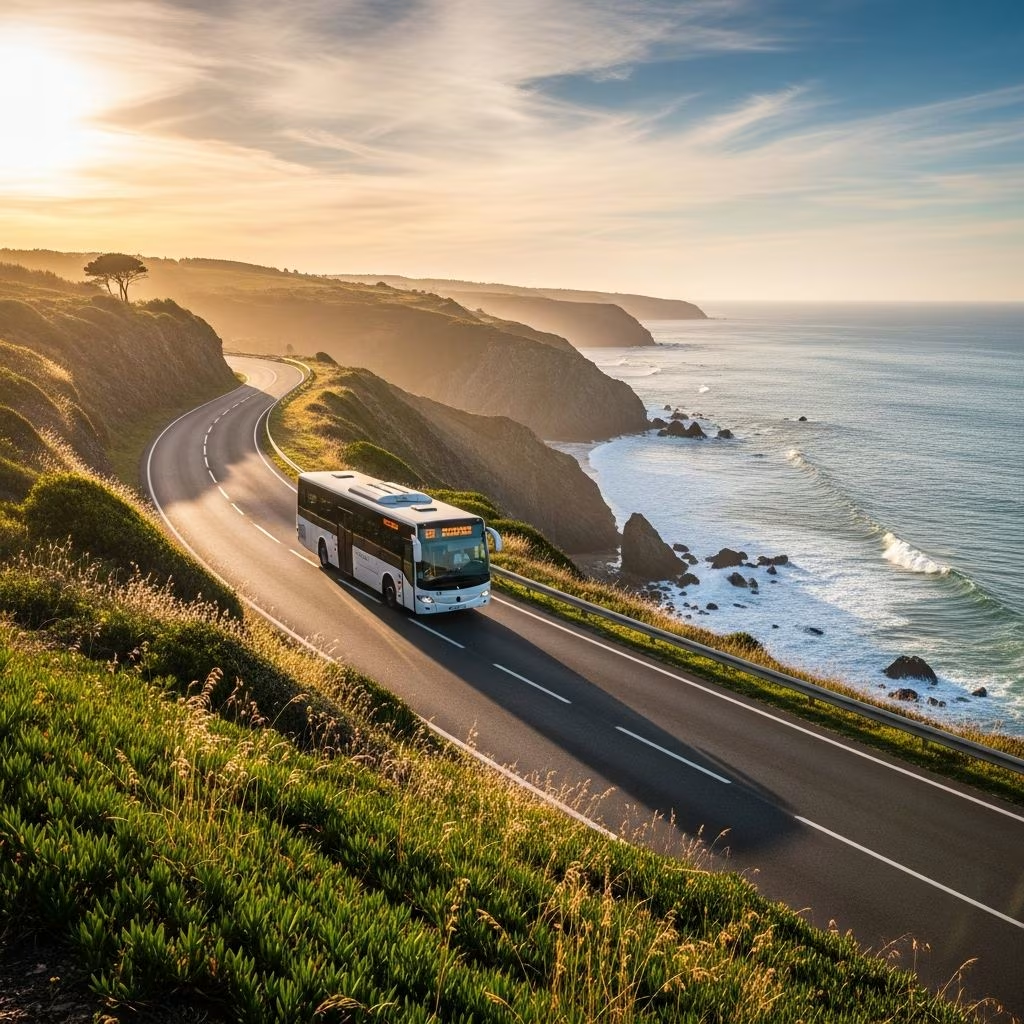
Explore the scenic coastal bus routes connecting Lisbon and Porto, offering travelers an alternative to fast inland routes with stunning Atlantic views.
 Travel Essentials
Portugal’s transportation network offers multiple pathways connecting its two largest cities, yet many travelers default to the fastest option without considering what they might miss. While the inland route between Lisbon and Porto has become the standard choice for time-conscious visitors, a slower alternative exists that reveals the country’s most captivating coastal landscapes. This journey transforms a simple commute into an immersive travel experience that showcases charming seaside towns, maritime heritage, and authentic Portuguese culture.
Traveling between Lisbon and Porto presents several viable methods, each with distinct advantages depending on your priorities. The conventional inland route prioritizes speed and efficiency, completing the journey in approximately 3 to 4 hours using either bus or train services. However, for visitors seeking a more enriching experience, the coastal alternative offers a compelling counterpoint to the direct approach.
The standard inland journey covers roughly 190 miles, with buses and trains operating on established schedules throughout the day. Major operators including Rede Expressos and FlixBus maintain extensive service networks, ensuring flexibility for travelers with varying schedules and budgets. Pricing remains competitive, with options starting as low as $9.48 for bus tickets, making ground transportation accessible to most travelers.
Opting for a coastal journey fundamentally changes the nature of travel between Portugal’s two primary metropolitan centers. Rather than viewing the transit period as mere passage, this approach transforms the trip itself into the destination. The slower pace allows passengers to observe gradual environmental and architectural transitions as the bus progresses northward along the Atlantic shoreline.
Coastal routes provide fleeting yet meaningful glimpses of maritime communities, fishing villages, and natural coastal formations that remain invisible to inland travelers. These routes typically involve additional stops in regional towns, creating opportunities to explore communities beyond the major urban centers. The journey becomes a cultural immersion rather than a logistical necessity.
Environmental considerations also favor this alternative. Traveling through populated coastal areas supports local economies through passenger stops and regional tourism, while the extended timeframe encourages more thoughtful consumption of travel experiences rather than rushing between destinations.
The coastal route’s extended duration becomes an asset once travelers understand the significant communities positioned along the journey. The city of Aveiro, situated approximately 50 miles south of Porto, represents a particularly worthwhile intermediate destination. Known for its distinctive transportation boats and artistic architecture, Aveiro offers a compelling pause in an otherwise continuous journey.
Between Lisbon and Aveiro, the bus passes through several smaller coastal settlements, each with characteristic Portuguese charm. These communities provide windows into regional life beyond the tourist infrastructure of major cities. The proximity of these stops to the Atlantic creates opportunities for passengers to step outside and experience the coastal atmosphere directly.
The final leg from Aveiro to Porto can itself be accomplished by either bus or train, with the train option offering particularly scenic views around the Espinho region where the transportation line runs notably close to coastal features. This flexibility allows travelers to customize their journey by combining different transportation methods.
Successfully executing a coastal bus journey requires understanding operational details that differ from the standard inland route. Buses depart from Lisbon’s established terminals, with Sete Rios Bus Terminal and Oriente Station serving as primary departure points. Arrival in the Porto region occurs at Campo 24 de Agosto Terminal, conveniently positioned near the city center.
The extended timeframe—typically requiring additional hours compared to direct routes—necessitates adequate planning for meal breaks and rest periods. Unlike high-speed trains or direct buses, coastal services make multiple stops, creating natural opportunities for passengers to disembark and explore intermediate communities. These pauses transform potential frustrations with slower travel into advantages for cultural exploration.
Reservation requirements remain consistent with standard bus travel, with online booking through operator websites recommended, particularly during peak travel seasons. Advance purchasing offers ticket security during busy periods when single-service routes may reach capacity quickly.
Multiple operators provide bus services in Portugal’s coastal regions, each offering distinct service characteristics. Rede Expressos, the largest coach operator in Portugal, maintains comprehensive service coverage including specialized coastal routes. This operator typically provides single daily services during low seasons and expands to eight daily departures during summer months.
FlixBus offers alternative services with competitive pricing and frequent departures, with research indicating 41 average daily trips between major cities. The variation in pricing between operators—ranging from under $10 to $20 per ticket—reflects differences in service amenities, departure timing, and route specificity.
Route variations exist even within coastal service categories. Some buses follow more direct coastal paths, while others incorporate inland segments that penetrate regional interiors before returning to the shoreline. These variations affect total journey duration, pricing, and the character of communities accessed during travel.
Coastal bus services experience significant seasonal fluctuations that impact frequency and availability. Summer months see substantial increases in service frequency, with operators adding extra departures to accommodate tourist demand. Conversely, winter seasons witness reduced service levels, occasionally reverting to single daily routes in each direction.
Peak travel periods present both challenges and opportunities for coastal travelers. Sunday evenings during summer represent the busiest travel windows, with tickets frequently selling out and requiring advance purchases. However, traveling during shoulder seasons—late spring and early autumn—offers a balance between operational convenience and relatively uncrowded conditions.
Off-season travel provides advantages for independent explorers seeking authentic interactions with coastal communities. Reduced passenger volumes on buses create more intimate atmospheres and facilitate conversations with local residents and fellow travelers. These quieter periods also allow extended exploration of intermediate stops without pressure to re-board departing vehicles.
| Transportation Method | Typical Duration | Starting Price | Primary Advantages | Best For |
|---|---|---|---|---|
| Direct Inland Bus | 3-3.5 hours | $9.48-€19 | Speed, frequency, affordability | Budget-conscious travelers with limited time |
| Coastal Bus Route | 4+ hours | €16-€19 | Scenic views, cultural stops, experience-focused | Explorers prioritizing landscape and community engagement |
| Train Service | 3-3.5 hours | €24-€43 | Comfort, reliability, dining options | Travelers valuing comfort and accessibility |
| Flight | 1 hour | €44+ (round trip) | Speed, premium experience | Connecting travelers or those with significant time constraints |
Coastal routes prioritize accessibility to regional communities and scenic experiences over pure speed efficiency. These services incorporate additional stops in smaller towns and position passengers for optimal viewing of maritime landscapes. The trade-off between journey duration and experiential value represents a fundamentally different travel philosophy compared to express services.
Yes, coastal routes naturally facilitate multi-stop experiences. The extended timeframe and frequent intermediate stops create opportunities to explore communities along the route. Travelers might disembark in Aveiro or other coastal centers, spend hours exploring, and board subsequent buses continuing northward.
Extended journey times and multiple stops present challenges for passengers with mobility restrictions. The frequent disembarkations and re-boardings required on coastal routes may prove more demanding than express services offering minimal interruptions. Travelers with specific accessibility needs should verify route characteristics with operators before booking.
Advance booking becomes increasingly important during peak seasons when capacity fills rapidly. Online reservations through operator websites typically require confirmation up to 30 days ahead during busy periods, with summer months demanding earlier planning than shoulder seasons. Off-season travel allows more flexible booking windows.
Modern bus operators provide climate control and comfortable seating arrangements consistent with contemporary European standards. However, specific amenities vary between operators, with budget services offering basic comfort and premium operators including enhanced features. Passengers should verify specific amenity inclusions when selecting among available operators.
Successful coastal bus travel requires thoughtful preparation beyond standard transportation logistics. Comfortable clothing appropriate for extended sitting becomes important, along with entertainment options for passages between significant stops. Digital access to route maps and community information enhances the ability to identify points of interest as the bus progresses northward.
Packing consideration should include refreshments and snacks, as while buses may stop at establishments in intermediate communities, scheduled pause durations might not accommodate leisurely meal preparation. Cash in local currency facilitates spontaneous purchases at small-town shops during stops, as not all vendors accept international payment cards.
Documenting the journey through photography or journaling captures personal impressions of changing landscapes and encountered communities. These records transform a transportation journey into a travel narrative that extends the experience beyond the actual transit period.
Portugal’s transportation infrastructure reflects broader European trends toward integrated mobility networks combining multiple transit methods. Bus services occupy a crucial position within this ecosystem, offering affordability and accessibility that complements premium rail and aviation options. The existence of both express and scenic route options demonstrates market responsiveness to diverse traveler preferences.
The persistence of slower coastal routes despite express alternatives indicates meaningful demand for experience-focused travel. These services validate the principle that transportation time need not represent wasted periods, but rather opportunities for meaningful engagement with geography and culture.
As travelers increasingly seek authentic experiences beyond major urban centers, coastal bus routes position themselves as gateway services facilitating broader Portuguese exploration. The routes themselves become introduction mechanisms to regional communities that might otherwise escape visitor attention.
The decision between direct and coastal bus routes ultimately reflects individual travel philosophy and practical constraints. Time-limited visitors with specific urban center itineraries appropriately prioritize speed and directness offered by inland services. Conversely, travelers conceptualizing their Portuguese experience as immersive discovery rather than logistical progression find genuine value in extended coastal journeys.
Budget consciousness need not require sacrificing experience quality. Coastal bus fares remain competitive with express alternatives, with pricing variations typically reflecting operational frequency rather than service quality disparities. The modest price difference becomes negligible when considered against the experiential value of landscape viewing and community interaction.
Portugal’s coastal geography between its two major urban centers represents a cultural and natural asset deserving visitor attention. Bus routes providing access to these communities perform a valuable service transcending simple transportation function. They enable travelers to construct their Portuguese narratives with greater depth and authenticity than time-optimized itineraries typically permit.
