

 Travel Essentials
 Travel Essentials

Navigate Kolkata authentically by learning local customs, building community connections, and experiencing the city as residents do.
 Travel Essentials
Kolkata stands as one of India’s most distinctive metropolitan areas, offering visitors and newcomers far more than what typical tourist itineraries reveal. The city’s true essence emerges when you venture beyond guidebook recommendations and immerse yourself in the everyday experiences that define how residents navigate their world. Understanding Kolkata authentically requires patience, curiosity, and a genuine willingness to engage with the city’s layered cultural fabric.
Language forms the foundation of cultural integration in any city, and Kolkata presents a uniquely multilingual environment. While Bengali serves as the predominant language and represents the cultural heartbeat of the region, the city has evolved into a linguistically diverse metropolis where multiple languages coexist harmoniously.
In professional environments such as corporate offices and tech companies, English dominates workplace interactions and remains the primary medium for business communication. However, meaningful connections with local residents flourish when you demonstrate effort in learning Bengali, even at a basic conversational level. Market vendors, autorickshaw drivers, and neighborhood shopkeepers respond with warmth and encouragement when visitors and newcomers attempt to communicate in their native tongue.
Beyond formal language, Kolkata possesses its own linguistic personality expressed through colloquialisms, wordplay, and the characteristic rapid-fire speech patterns that longtime residents recognize immediately. This verbal culture reflects the city’s intellectual heritage and the importance placed on eloquent communication and literary expression.
Establishing roots in a new city requires more than securing housing and employment. Creating authentic social bonds demands intentional effort and openness to different social structures. Kolkata residents, known for their friendliness and hospitality, generally welcome newcomers warmly, though breaking into established social circles may require patience and persistence.
Your initial networking should begin with immediate neighbors and workplace colleagues who possess deep knowledge of the city’s neighborhoods and cultural nuances. These individuals can serve as invaluable guides during your transition period. Connecting through digital platforms extends your reach significantly—Facebook groups dedicated to expatriate communities, food enthusiasts, and neighborhood-specific interests create platforms for meaningful interactions.
If you reside in a paying guest accommodation or shared apartment, your flatmates and hosts become your first cultural ambassadors. They provide practical insights about daily life, trustworthy service providers, and local traditions that textbooks cannot convey. Making efforts to establish friendly relationships with these immediate contacts pays dividends throughout your stay.
Kolkata’s geography tells a story about the city’s development and social organization. The city presents distinctly different characters depending on location, with North Kolkata and South Kolkata representing opposing ends of the urban spectrum.
South Kolkata embodies modernity, planned infrastructure, and contemporary metropolitan sensibilities. This region features organized layouts, newer residential complexes, and establishments catering to modern urban lifestyles. The southern territories generally command higher rental prices and attract professionals working in organized sectors.
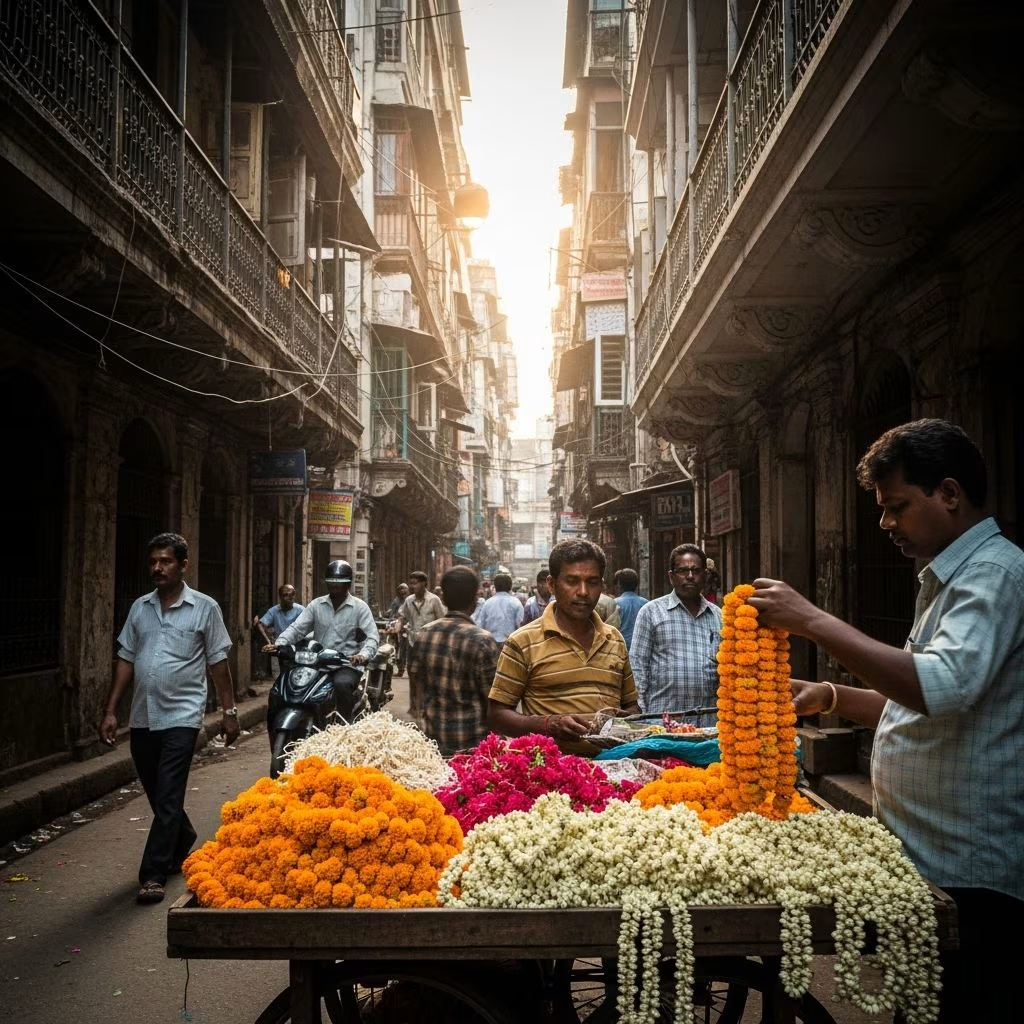
North Kolkata, conversely, preserves the city’s colonial past and old-world charm. Narrow lanes, heritage architecture, and centuries-old establishments coexist in controlled chaos that visitors often find either enchanting or overwhelming. This region maintains stronger connections to traditional Bengali culture and provides authentic glimpses into how generations of Kolkatans have lived.
Central Kolkata serves as a transitional zone, blending elements of both extremes while functioning as the city’s commercial and administrative hub. Understanding these geographic distinctions helps newcomers select neighborhoods matching their lifestyle preferences and practical requirements.
Kolkata distinguishes itself among India’s major metropolitan areas as genuinely affordable compared to cities like Mumbai and Bangalore. This cost advantage extends across accommodation, dining, transportation, and entertainment sectors.
Rental accommodation in Kolkata presents options across a wide spectrum. While Mumbai and Bangalore demand minimum monthly rents of 15,000-25,000 rupees ($200-$340 USD) for single or two-bedroom apartments, comparable Kolkata apartments often rent at significantly lower rates, particularly in non-premium neighborhoods. Housing costs scale according to location, amenities, and building condition, with South Kolkata commanding premium prices compared to other regions.
Transportation expenses remain remarkably economical for a metropolitan area. Monthly transportation costs can be limited to approximately 1,500 rupees ($20 USD) by utilizing a combination of public transit options including metro systems, traditional trams, and affordable cab services. This financial accessibility makes exploring the city’s far-reaching neighborhoods feasible for residents operating under tight budgets.
Dining represents another category where Kolkata’s affordability shines. Street food vendors offer meals at minimal costs, while diverse restaurants ranging from family-operated establishments to upscale dining venues accommodate virtually any budget.
Understanding Kolkata’s transportation infrastructure proves essential for daily navigation. The city offers multiple commuting options suited to different preferences and circumstances.
The Kolkata Metro system functions as a reliable backbone for urban transportation, offering a modern alternative to surface-level congestion. Traditional trams represent another distinctive feature of Kolkata’s transportation landscape, providing historical charm alongside practical commuting functionality.
Beyond these major systems, residents access cycle rickshaws, electronic rickshaws, and in North Kolkata’s specific regions, hand-pulled rickshaws that represent living history. Modern cab applications including the Indian-owned OLA and international platforms like Uber provide additional flexibility for commuters prioritizing convenience over cost considerations.
Traffic congestion remains a reality during peak hours throughout the city, though relative distances between neighborhoods remain manageable compared to sprawling Indian metros. Strategic route planning and familiarity with alternative pathways help experienced residents navigate congestion more efficiently.
Kolkata’s reputation as a city of extraordinary street food provides legitimate justification. Food represents far more than sustenance in this city—it embodies cultural identity, social bonding, and artistic expression.
Street vendors throughout the city prepare iconic dishes including phuchka (fried spheres filled with spiced potatoes and tamarind water), chur-mur (mixture snacks), various chat preparations, distinctive biryani preparations, and kathi rolls (marinated meat wrapped in paratha bread). These culinary staples offer accessible entry points into local gastronomic traditions while costing mere rupees.
Beyond street food, established restaurants ranging from modest family operations to sophisticated fine dining establishments reflect the city’s culinary sophistication. Engaging with diverse dining venues at various price points provides cultural insights and authentic tastes that drive deeper appreciation for local traditions.
Kolkata’s cultural identity rests on foundations of literature, performing arts, cinema, and intellectual discourse. The city maintains deep-rooted devotion to literary culture reflected in established book markets (boipara), classical music traditions (Rabindrasangeet), and philosophical conversations that locals call “adda”—the free-flowing discussion that serves as Kolkata’s particular contribution to social interaction.
Participating in cultural events such as book fairs and film festivals provides opportunities for both enjoying artistic expression and connecting with residents who share intellectual interests. These gatherings function as informal networking opportunities that transcend professional contexts.
The city’s pride in its heritage means that demonstrating genuine respect for local traditions and artistic achievements builds positive relationships with residents. This respect extends beyond passive appreciation to active engagement with cultural institutions and artistic expressions.
Kolkata’s professional environment differs from metropolitan areas with more aggressive corporate cultures. The city generally maintains more relaxed work hours, particularly within multinational corporations and technology sector companies.
The expanding startup ecosystem concentrated in areas like Salt Lake and New Town creates networking opportunities for entrepreneurially inclined professionals. Industry associations including the Confederation of Indian Industry (CII) and the Bengal Chamber of Commerce organize regular events facilitating professional connections.
Tech and business meetups occur regularly, especially in Sector V where numerous information technology companies maintain offices. These gatherings provide platforms for professional development and relationship building outside traditional corporate hierarchies.
Kolkata’s tropical climate presents significant challenges requiring deliberate preparation and adaptive strategies. Summers bring extreme heat and humidity that can affect newcomers accustomed to different climates.
Practical clothing choices including light cotton garments, consistent hydration practices, and ensuring adequate cooling infrastructure (air conditioning or fans) in living and working spaces become non-negotiable elements of daily comfort.
Monsoon seasons introduce precipitation that tests the city’s drainage infrastructure, occasionally resulting in waterlogging that affects transportation and accessibility. Investing in quality rain gear and mentally preparing for potential delays during monsoon periods represents wise planning.
Successfully settling into Kolkata requires balancing ambitious immersion with realistic acknowledgment of adjustment timelines. Embracing the city’s more relaxed intellectual pace compared to high-pressure metropolitan rivals allows newcomers to experience Kolkata’s particular character rather than imposing external expectations onto local rhythms.
Learning basic Bengali demonstrates commitment to integration while yielding practical communication benefits. Residents respond supportively to genuine efforts at language learning, providing encouragement and correction that accelerates proficiency.
Accepting invitations to participate in adda culture—the traditional social gathering centered on conversation and intellectual exchange—provides authentic windows into how Kolkatans build relationships. This cultural practice differs from higher-pressure networking in some metropolitan areas, emphasizing genuine conversation over strategic advancement.
Establishing authentic community ties requires targeted strategies combining digital connectivity with face-to-face interaction. Hobby-based communities including book clubs, photography groups, and football fan clubs provide common ground for connecting with residents sharing specific interests.
Alumni networks connecting you with individuals from your educational institution create built-in common ground. Cultural and literary events attended by intellectually engaged residents facilitate both enjoyment and relationship formation.
Tea stalls (chayer dokan) represent traditional gathering spaces where casual conversation and extended social interaction have occurred for generations. Becoming a regular at a neighborhood tea stall provides organic integration into local social structures through repeated interaction.
Newcomers to Kolkata typically encounter predictable obstacles that experienced residents have navigated successfully. Understanding these challenges in advance enables proactive rather than reactive problem-solving.
Language barriers, while surmountable through determined effort, initially present communication difficulties in transactions involving local merchants and service providers. Accepting that this represents a temporary challenge encouraging language learning rather than a permanent limitation facilitates mental adjustment.
Climate adaptation requires acknowledging physical discomfort during extreme heat and humidity while implementing practical mitigations. Recognizing that permanent residents also struggle during particularly intense periods normalizes the experience rather than framing it as personal weakness.
Breaking into established social circles represents perhaps the most psychologically demanding adjustment. Recognizing that this requires genuine patience, consistent effort, and acceptance of slower relationship development than other cities helps reset expectations appropriately.
Your first week in Kolkata should prioritize establishing practical foundations enabling subsequent integration. Securing reliable utilities including internet connectivity and obtaining a local SIM card representing immediate necessities. Requesting colleague or neighbor recommendations for reliable service providers accelerates this process.
Selecting appropriate neighborhood based on commute requirements, lifestyle preferences, and budget constraints deserves careful consideration rather than rushed decisions. Understanding the distinctions between North and South Kolkata’s character helps align residential location with personal preferences.
Investing adequate resources in initial setup costs including deposits, furnishings, and utility installations prevents subsequent financial stress. Creating realistic budgets accounting for monthly accommodation, transportation, food, and discretionary spending establishes sustainable financial foundations.
Living authentically in Kolkata transcends temporary tourism, requiring commitment to understanding the city’s rhythms, respecting its heritage, and building genuine relationships with residents. This approach yields rewards extending far beyond typical visitor experiences, creating memories and connections that enrich personal growth and cross-cultural understanding.
