

 Travel Essentials
 Travel Essentials

Explore the vibrant world of art in London Underground stations, from historic posters to modern installations that elevate everyday travel into an artistic experience.
 Travel Essentials
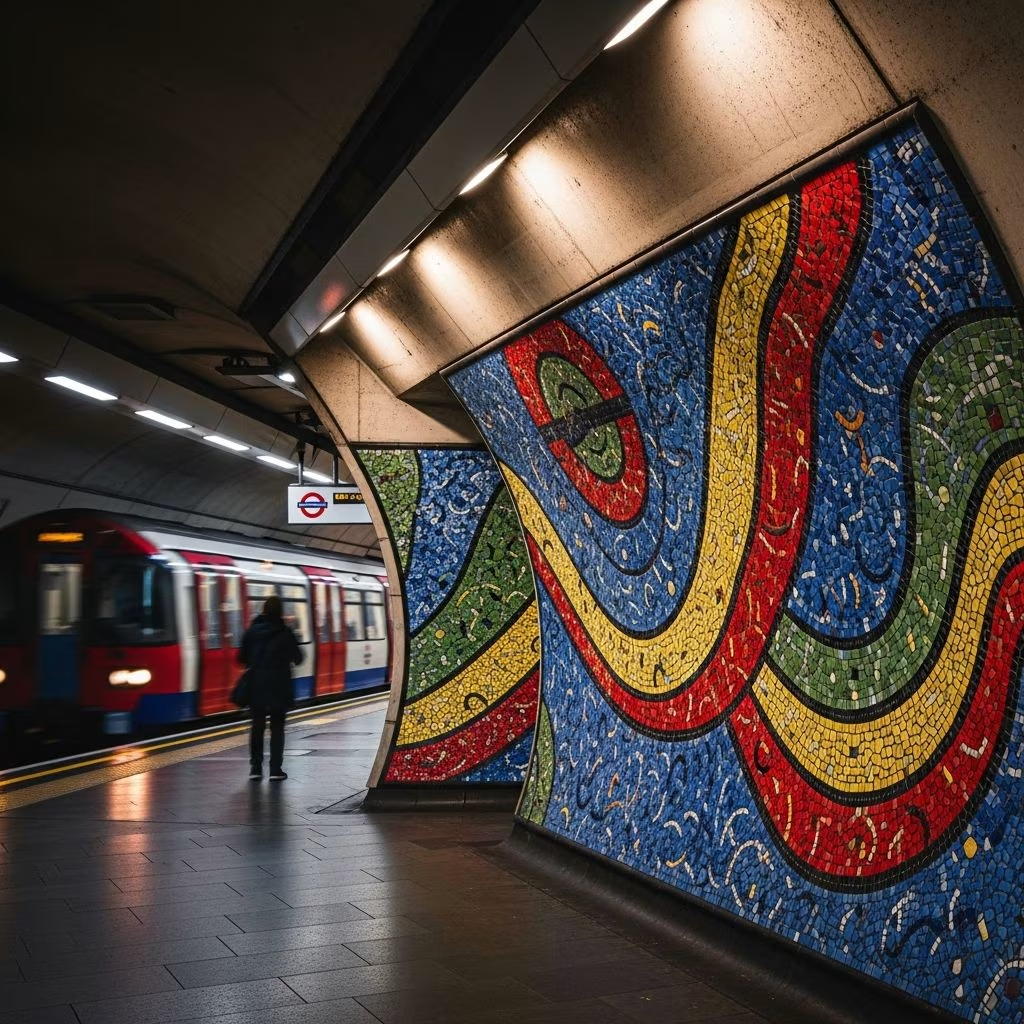
The London Underground, often simply called the Tube, serves as more than just a transport network; it functions as a dynamic gallery showcasing a rich tapestry of artistic expressions. Spanning 272 stations, many feature permanent installations that reflect London’s cultural evolution, from early 20th-century posters to cutting-edge contemporary pieces. These artworks transform rushed commutes into moments of inspiration, inviting passengers to pause and appreciate the creativity embedded in the city’s infrastructure.
The artistic legacy of the Underground began over a century ago with pioneering poster campaigns. In 1908, Frank Pick, appointed as a traffic officer for the Underground Electric Railways Company of London, launched a pictorial poster initiative aimed at boosting off-peak ridership and familiarizing passengers with new lines. These posters, displayed outside stations and on buses, turned public spaces into open-air galleries, introducing modernist motifs to everyday Londoners.
Pick’s vision extended to visual branding. He commissioned Edward Johnston in 1913 to design a distinctive sans-serif typeface, still used today, and refined the iconic bullseye roundel sign in 1918, symbolizing both the Tube and London itself. By promoting leisure travel to countryside spots and cultural venues, these posters not only informed but also culturally enriched the public, laying the groundwork for the Underground’s role as an art patron.
Contemporary stations boast mosaics and sculptures that capture artistic innovation. At Tottenham Court Road, the expanded ticket hall features conceptual designs by Daniel Buren, with vibrant shapes and colors adorning walls and glass panels, creating an immersive entry experience. This installation exemplifies how art can redefine utilitarian spaces.
One of the most renowned works graces Tottenham Court Road’s platforms: Eduardo Paolozzi’s massive glass mosaics, covering 950 square meters across Central and Northern line interchanges. Commissioned in 1986, these collages draw from pop culture, technology, and mythology, offering a visual feast for commuters. Their scale and detail reward closer inspection, turning platforms into unexpected art zones.
Other stations host quirky homages. At Leytonstone, mosaics celebrate Alfred Hitchcock’s birth centenary in 1999, commissioned by Waltham Forest council. These playful tiles depict film scenes, nodding to the director’s Leytonstone roots and blending cinema history with transit art.
Transport for London (TfL) actively champions art through its Art on the Underground program, commissioning works that integrate seamlessly with station architecture. Recent projects include Joy Gregory’s ‘A Taste of Home’ at Heathrow Terminal 4, a photographic installation evoking multicultural narratives for arriving passengers.
Pocket Tube map covers represent one of the UK’s largest public art commissions. Since 2004, TfL has invited British and international artists to design 38 unique covers, distributed freely and turning a simple navigation tool into collectible art. These limited-edition pieces highlight diverse styles, from abstract to illustrative, making art accessible to millions.
Beyond aesthetics, Underground art fosters community engagement and historical awareness. With art in numerous stations—official commissions alongside graffiti and murals—it tells London’s story through visual narratives. Commuters encounter themes of migration, innovation, and local pride, enriching transit routines.
These installations encourage mindfulness amid hustle. A simple pause reveals layers of meaning, such as Paolozzi’s fusion of past and future or Hitchcock mosaics’ cinematic whimsy. TfL’s initiatives ensure art evolves, with new projects addressing contemporary issues like diversity and sustainability.
For visitors and locals seeking artistic detours, certain stations stand out. Here’s a table of must-see spots:
| Station | Line(s) | Key Artwork | Highlights |
|---|---|---|---|
| Tottenham Court Road | Central, Northern | Eduardo Paolozzi Mosaics | 950 sqm of pop art collages on platforms |
| Leytonstone | Central | Hitchcock Mosaics | Film-inspired tiles honoring local director |
| Heathrow Terminal 4 | Piccadilly | A Taste of Home by Joy Gregory | Photographic tribute to global travelers |
| Various (maps) | All | Tube Map Covers | Artist-designed collectibles since 2004 |
Plan visits during off-peak hours for quieter appreciation. Many works are platform-based, so a simple ride reveals them naturally.
The Tube’s design history intertwines with art. Early posters evolved into architectural features, with architects like Charles Holden crafting stations as total works of art in the 1930s. Modern renewals prioritize integrated installations, ensuring art withstands daily wear while captivating users.
Challenges include maintenance amid millions of passengers, yet TfL invests in preservation. Future projects promise digital integrations, like augmented reality overlays, expanding immersive experiences.
London’s commitment rivals global peers. New York’s subway hosts murals, Paris Metro features Art Nouveau entrances, but TfL’s scale—commissioning across 272 stations—sets a benchmark. Paolozzi’s mosaics and map covers exemplify sustained patronage unique in scope.
Eduardo Paolozzi’s mosaics at Tottenham Court Road cover 950 square meters, visible on Central and Northern platforms.
Yes, all permanent works are publicly accessible during station hours, no tickets required.
Through open calls and invitations via Art on the Underground, prioritizing diverse voices and site-specific concepts.
Photography is permitted for personal use; respect passenger flow and TfL guidelines.
Recent additions like Joy Gregory’s Heathrow piece highlight ongoing multiculturalism themes.
Next commute, look beyond the map. London’s Underground art elevates the ordinary, weaving creativity into the city’s pulse. Whether mosaic admirer or poster enthusiast, these stations offer endless discovery.
