

 Travel Essentials
 Travel Essentials

Explore Loreto's colonial charm, world-class whale watching, stunning Sea of Cortez marine life, and authentic cultural experiences in Baja California Sur.
 Travel Essentials
Nestled along the eastern coast of Baja California Sur, Loreto emerges as an undiscovered paradise for travelers seeking authentic experiences without overwhelming crowds. With a population just under 20,000, this charming beachfront community offers the perfect balance of natural beauty, cultural richness, and tranquil coastal living. Unlike the bustling resort destinations scattered across Mexico’s coastline, Loreto maintains its peaceful character while providing visitors with extraordinary opportunities to connect with nature, history, and local traditions.
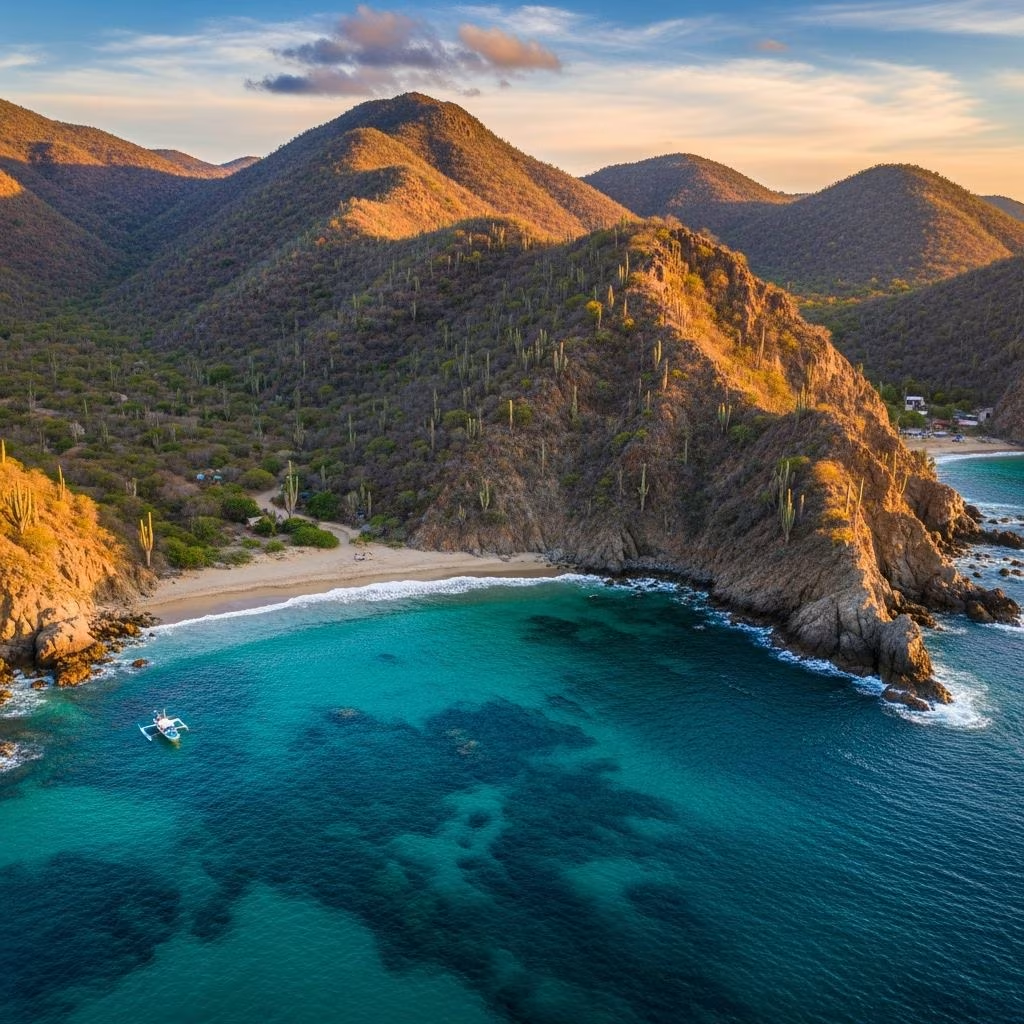
The town’s strategic location overlooking the Sea of Cortez positions it as an ideal base for exploring one of the world’s most biodiverse marine ecosystems. The crystalline waters, dramatic desert landscape, and proximity to the Sierra de la Giganta mountains create a landscape of remarkable contrasts that captivates first-time visitors and draws seasoned travelers back repeatedly.
Loreto’s historical narrative dates back to 1697 when Father Junipero Serra established the Mission of Our Lady of Loreto, marking the first Jesuit mission in California. This architectural and spiritual landmark remains the oldest building in the region and stands as a testament to the town’s foundational role in Spanish colonial expansion. The Baroque-style structure features distinctive stone architecture, with hourly bell chimes that echo through the streets, creating an audible connection to centuries past.
The mission complex includes a modest museum offering insights into the religious and cultural transformations that shaped Baja California Sur. Beyond the mission itself, visitors can discover murals and artistic installations throughout town, including a remarkable four-wall mural within City Hall that weaves together regional flora, fauna, indigenous mythology, and local narratives into a cohesive visual history.
The Mexican government officially designated Loreto as a Pueblos Mágicos (Magical Town), recognizing its possession of distinctive cultural qualities and historical preservation efforts. This designation reflects the community’s commitment to maintaining authentic charm while developing sustainable tourism infrastructure.
The heart of Loreto revolves around several interconnected plazas and streets that showcase colonial architecture and vibrant community life:
The surrounding waters constitute one of Earth’s most remarkable aquatic environments. Oceanographer Jacques Cousteau famously called the Sea of Cortez “the aquarium of the world,” and contemporary visitors quickly understand his enthusiasm. The marine ecosystem supports extraordinary biodiversity and seasonal migrations that create world-class wildlife viewing opportunities.
Whale watching represents one of Loreto’s signature attractions, with multiple species gracing local waters seasonally. Blue whales, the world’s largest living animals, visit during winter months, while gray whale populations create spectacular viewing opportunities from January through March. Humpback whales, fin whales, and various dolphin species supplement the whale-watching experience, and manta rays glide through deeper channels.
Professional tour operators organize daily excursions lasting four to six hours, typically including lunch and refreshments. These guided experiences significantly increase the probability of meaningful wildlife encounters while ensuring safety and environmental respect. Local operators maintain extensive knowledge of migration patterns, behavioral characteristics, and optimal viewing locations.
Loreto Bay National Park encompasses five distinctive islands—Carmen, Coronado, Santa Catalina, Danzante, and Monserrat—each offering unique snorkeling opportunities. The crystalline water, with exceptional visibility, reveals vibrant coral formations, tropical fish species, and occasionally sea lions engaging in playful interactions with visitors. Boat tours to Isla Coronados provide opportunities for close encounters with dolphin pods and potential whale sightings, as marine mammals frequently approach vessels with apparent curiosity.
Beyond oceanic adventures, Loreto’s desert and mountain terrain offers diverse recreational pursuits:
The surrounding landscape contains numerous hiking trails ranging from moderate day hikes to challenging mountain treks. The La Pinguica pictographs, featuring indigenous cave paintings representing centuries of human habitation, require a 6.4-kilometer return journey through varied terrain. These archaeological sites provide tangible connections to pre-Columbian cultures that flourished in the region before Spanish colonial arrival.
The Sierra de la Giganta mountains, positioned just 15 to 30 minutes from downtown Loreto, feature distinctive Cardón and Elephant cacti species adapted to the harsh desert climate. These peaks provide hiking opportunities with panoramic vistas encompassing the coastal plain and distant Isla Carmen.
Despite the arid desert environment, Loreto supports golf facilities including the renowned TPC Danzante Bay course, which challenges players with creative design solutions addressing the challenging terrain. The facility maintains championship-caliber standards while integrating seamlessly into the natural landscape.
Loreto’s food culture reflects genuine Mexican traditions combined with fresh seafood harvested from surrounding waters. Local establishments range from casual street-side vendors to family-operated restaurants emphasizing fresh ingredients and traditional preparation methods.
Visitor experiences frequently highlight tortilla-making demonstrations at working farms like Rancho Viejo, where owners Juan and Chari share generational knowledge about traditional food preparation alongside artisanal goat cheese production. Local breweries such as El Zopilote Brewing Company showcase contemporary Mexican craft beverage innovation, while casual favorites like Super Burro serve generous portions of traditional Mexican fare.
| Season | Weather Conditions | Marine Activity | Tourism Level |
|---|---|---|---|
| Winter (Dec-Feb) | Mild, 65-75°F | Peak whale watching | Moderate to high |
| Spring (Mar-May) | Warm, 75-85°F | Gray whale migration | Moderate |
| Summer (Jun-Aug) | Hot, 85-95°F | Limited marine activity | Low |
| Fall (Sep-Nov) | Warm, 75-85°F | Variable activity | Low to moderate |
Most visitors explore Loreto with personal rental vehicles or arranged tour services, as the surrounding attractions distribute across a broader geographic area than the compact downtown core. The international airport accommodates flights from major Mexican destinations and U.S. border cities. Downtown Loreto itself remains highly walkable, with most cultural attractions, restaurants, and shops within comfortable pedestrian distance.
Loreto’s lodging philosophy emphasizes boutique properties and locally-owned establishments rather than mega-resort chains. Visitors discover everything from modest family-run hotels to upscale casitas offering oceanfront locations and personalized service. The absence of large-scale tourism infrastructure actually enhances the authentic character many travelers specifically seek.
Loreto maintains a reputation as a safe, welcoming destination with minimal crime affecting visitors. The community actively promotes tourism while maintaining traditional values of hospitality and respect for guests.
Winter months (December through March) offer optimal conditions combining mild weather and peak whale-watching opportunities. However, spring and fall provide comfortable temperatures with fewer tourists and lower accommodation costs.
A minimum three to four-day visit allows exploration of primary attractions including marine excursions, historical sites, and desert activities. Seven to ten-day visits enable comprehensive experiences with hiking, mission exploration, and relaxation.
U.S. citizens need valid passports for entry into Mexico. Travel insurance is recommended though not mandatory, particularly for activities involving marine environments or remote terrain.
In an era when many coastal destinations succumb to overdevelopment and commercialization, Loreto preserves a rare combination of natural splendor and authentic cultural continuity. The absence of nightclubs, mega-resorts, and mass-tourism infrastructure doesn’t represent limitation but rather intentional preservation of place and community character.
Visitors consistently emphasize that Loreto’s greatest asset comprises interaction with local residents, whose warmth and genuine hospitality create memorable connections transcending typical tourist-host dynamics. The community’s commitment to sustainable tourism development ensures that future generations will encounter the same unspoiled landscapes and vibrant traditions that captivate contemporary travelers.
Whether seeking adventure through whale watching and diving, historical exploration through colonial missions and indigenous sites, or simply peaceful restoration in natural surroundings, Loreto delivers extraordinary value and authentic Mexican experiences without the overwhelming commercialism characterizing competing destinations.
