

 Travel Essentials
 Travel Essentials

Master Los Angeles transportation with our comprehensive guide covering metro rail, bus systems, airport access, and practical tips for getting around the city.
 Travel Essentials
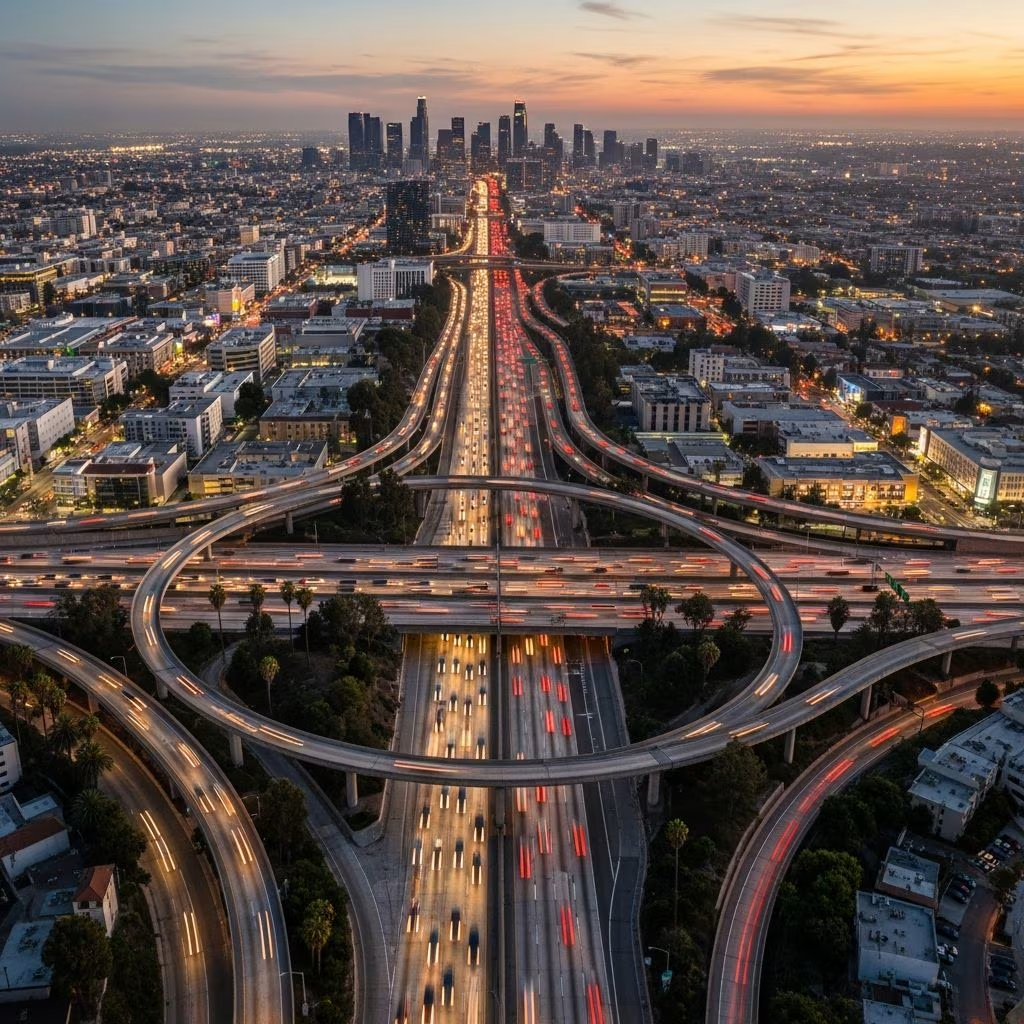
Los Angeles spans over 500 square miles, making it one of the largest metropolitan areas in the United States. Despite its sprawling nature and car-centric culture, the city offers a robust public transportation network that continues to expand. Whether you’re a first-time visitor or a long-term resident, understanding your transportation options will significantly enhance your ability to explore this diverse city efficiently and affordably.
The backbone of Los Angeles public transportation is the LA Metro Rail system, which serves as the most reliable way to navigate the city without a personal vehicle. This extensive network comprises six distinct lines that connect major destinations across Los Angeles County, reaching 101 stations and expanding regularly to serve new areas.
The Metro Rail system is divided into two primary categories: light rail lines and subway lines. The B Line and D Line are fully underground subway services, while the A Line, C Line, E Line, and K Line operate as light rail or mixed-mode transit. Each line has been developed to address specific transportation corridors and serve particular communities throughout the metropolitan area.
| Line Name | Route Highlights | Primary Destinations |
|---|---|---|
| B Line (Red) | Underground subway from North Hollywood to Downtown | Hollywood, Universal Studios, Union Station |
| D Line (Purple) | Subway connecting San Fernando Valley to Downtown | Koreatown, Wilshire District, Downtown LA |
| A Line (Red) | Light rail from Long Beach to Downtown | Long Beach, Compton, Downtown LA |
| C Line (Green) | Runs along I-105 freeway corridor | LAX Airport (via shuttle), South Bay |
| E Line (Expo) | Light rail from Downtown to Santa Monica | Santa Monica, Culver City, Downtown LA |
| K Line (Gold) | Light rail serving eastern and central LA | Azusa, Pasadena, Downtown LA |
Standard Metro Rail fares cost $1.75 per ride, which includes up to two hours of free transfers between rail and bus services. This fare structure makes it economical to combine multiple transportation modes in a single journey. Discounted fares are available for seniors 62 and older, individuals with disabilities, and K-12 or community college students.
Beyond the rail system, LA Metro operates an extensive bus network that covers areas not served by rail lines and provides more frequent service on many routes. The bus system is categorized into several types, each designed to serve different transportation needs and travel patterns.
All Metro buses offer free high-speed Wi-Fi, allowing passengers to remain connected during their journeys. This amenity is particularly valuable for commuters and travelers who need to work or stay informed while traveling across the city.
DASH buses provide hyper-local transportation within specific neighborhoods, offering shorter routes than the main Metro system. Originally launched in downtown Los Angeles, DASH service has expanded to encompass 31 routes across 27 different neighborhoods. These buses are particularly useful for last-mile connections and navigating within specific communities. Additionally, DASH operates a specialty route connecting the Vermont/Sunset Metro station to Griffith Observatory and the Greek Theater, making popular tourist destinations more accessible without requiring a personal vehicle.
For travelers using Los Angeles International Airport (LAX), multiple transportation options exist to reach the terminals and surrounding areas. The C Line light rail connects directly to the LAX/Metro Transit Center, where passengers can board a free shuttle bus to the airport terminals. This connection provides an affordable alternative to expensive taxi or rideshare services.
The LAX FlyAway Bus offers another option, providing frequent non-stop service between LAX and key destinations including Union Station in downtown Los Angeles and Van Nuys in the San Fernando Valley. FlyAway fares are priced at $9.75 one-way, making it a cost-effective choice compared to rideshare services. Passengers can board FlyAway buses at the lower/arrivals level in front of each terminal at clearly marked blue columns.
A significant development is expected in 2026, when an Automated People Mover will launch, connecting the Metro station directly to LAX terminal buildings via elevated train infrastructure, eliminating current shuttle bus transfers and providing seamless connection to the regional transit network.
Paying for LA public transportation has been simplified through multiple convenient options. The TAP Card is the primary payment method, offering a reloadable card available at vending machines located throughout Metro Rail and Bus stations. This contactless payment system enables quick boarding and makes tracking spending straightforward.
Modern payment alternatives have expanded accessibility. Passengers can now pay fares using Apple Wallet and other digital wallet technologies, eliminating the need to carry a physical card. For those preferring traditional methods, cash payment remains available on buses and at some station locations, though exact change is often required.
For residents commuting between distant neighborhoods, Commuter Express provides limited-stop service during peak morning and afternoon hours. These routes span from the San Fernando Valley to San Pedro and surrounding areas, reducing travel times by minimizing stops at residential areas and focusing on major employment centers.
Commuter Express operates on a zone-based fare system where passengers pay according to distance traveled and number of zones crossed. Five fare zones exist: Base and Zones 1-4. Pass options and trip tickets for Commuter Express are exclusively sold through the TAP Card system, encouraging adoption of the regional payment standard.
Successfully navigating Los Angeles public transportation begins with accessing reliable planning tools. The LA Metro Trip Planner is available online and helps passengers identify optimal routes combining rail and bus services. This tool provides estimated travel times, transfer points, and cost calculations to help travelers make informed decisions about their commutes.
Detailed maps and schedules are available in PDF format on the Metro website, allowing travelers to research routes before beginning their journey. Many transit-oriented neighborhoods have printed schedules available at stations and transit centers. Tourist information centers throughout Los Angeles also stock transportation maps and guides.
The TAP Card with monthly passes offers the best value for regular commuters, providing unlimited travel for a fixed monthly price. Casual visitors benefit most from individual $1.75 fares or day passes depending on trip frequency.
Take the C Line to LAX/Metro Transit Center, then board the free airport shuttle to terminal buildings. Alternatively, use LAX FlyAway Bus service at $9.75 per ride.
Children aged 0-5 travel free when accompanied by a paying adult. K-12 and community college students receive discounted fares with valid identification.
Check the LA Metro website or mobile app for real-time service alerts. Alternative routes and bus bridge services are typically implemented quickly during planned or emergency closures.
Yes, Apple Wallet and the TAP app allow mobile payment at most tap readers on buses and rail stations, offering the same convenience as physical cards.
While this guide focuses on public transportation, Los Angeles residents and visitors should recognize that multimodal travel combining transit with other options often works best. Metro Bikes provide short-distance connections, while rideshare services complement transit for trips where public transportation is impractical.
As Los Angeles continues expanding its transit infrastructure, additional lines and connections are planned or under construction. Staying informed about these developments through official Metro channels ensures you can take advantage of new transportation options as they become available.
