


 Food & Culture
Food & Culture
Louisiana Food Guide: Iconic Dishes, History & Where to Eat
Explore Louisiana's most iconic dishes, from crawfish to boudin, and learn where to experience authentic Cajun and Creole cuisine across the state.
 Food & Culture
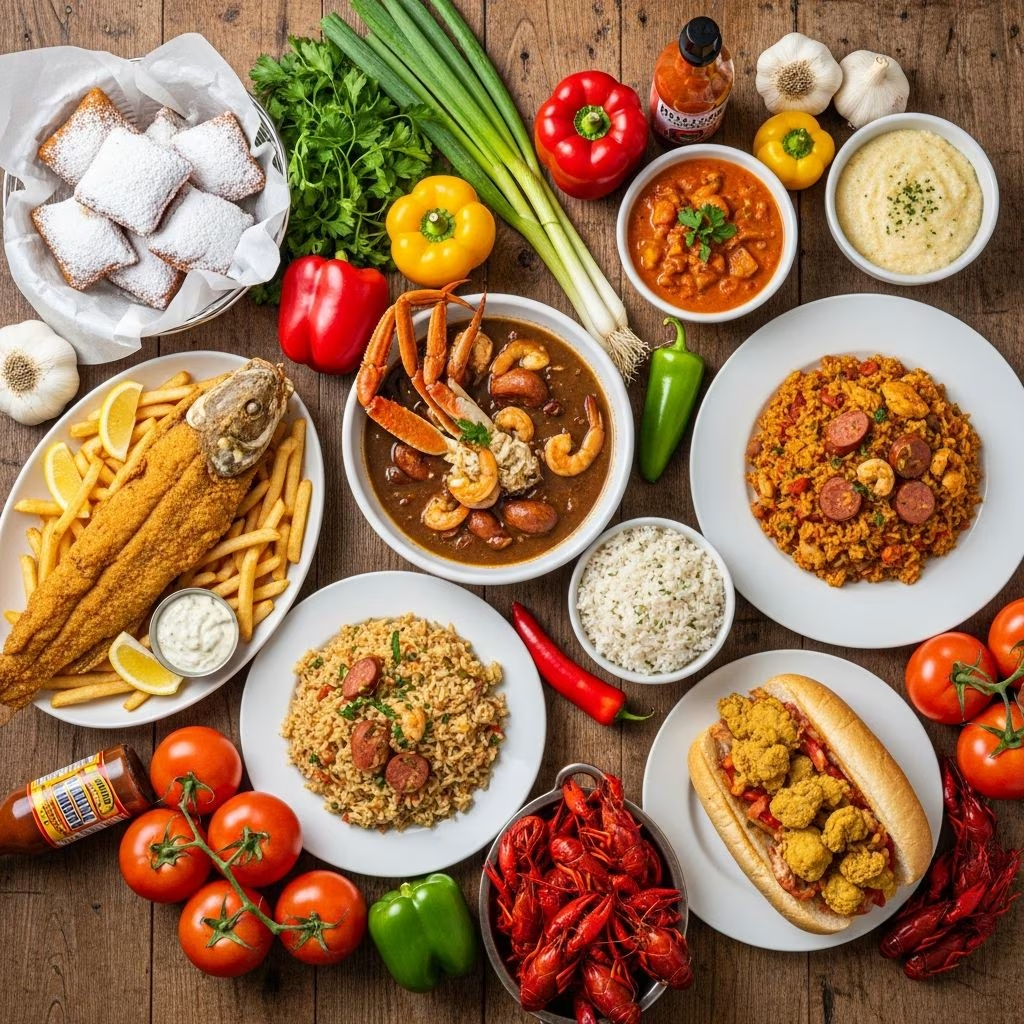
Louisiana stands as one of America’s most distinctive culinary destinations, where centuries of cultural influences have created a unique gastronomic identity. The state’s food culture reflects its complex history, blending French, Spanish, African, and Native American traditions into a cohesive whole that is instantly recognizable and deeply beloved by locals and visitors alike. Understanding Louisiana’s food requires more than simply tasting individual dishes—it demands an appreciation for the stories, techniques, and regional variations that make each plate meaningful.
Understanding Louisiana’s Food Heritage
The foundation of Louisiana cuisine rests upon three fundamental elements: the abundant natural resources of the Gulf Coast and bayous, the cultural heritage of its diverse population, and the historical trading routes that brought ingredients and techniques from across the world. Seafood dominates the culinary landscape, with crawfish, shrimp, and crab serving as primary ingredients in countless preparations. Rice, another staple crop, appears in nearly every savory dish, from jambalaya to gumbo, providing both substance and cultural continuity.
What distinguishes Louisiana cooking is the emphasis on layering flavors through patient preparation and the judicious use of spices and aromatics. The holy trinity—onions, celery, and bell peppers—forms the aromatic base for thousands of preparations, while seasonings like cayenne, file powder, and sassafras add complexity and depth. Cooking methods emphasize both time-honored slow preparations and quick, intense cooking techniques that preserve the integrity of fresh ingredients.
The Crawfish: Gateway to Louisiana Flavor
Few ingredients capture Louisiana’s essence as completely as crawfish. These freshwater crustaceans, resembling miniature lobsters, have become synonymous with springtime celebrations and represent one of the state’s most valuable commercial exports. The crawfish season typically runs from December through May, peaking during the spring months when festivals and boils proliferate throughout the state.
Crawfish appear in preparations ranging from simple boils seasoned with spices and aromatics to sophisticated dishes where their delicate meat becomes the foundation for refined sauces. The étouffée preparation stands as particularly popular, combining crawfish with a rich roux-based sauce enriched with vegetables and served over rice. The word “étouffée” derives from the French term meaning “to smother,” accurately describing how the sauce embraces and flavors the crustacean. Establishments like Oceana Grill and Jacque-Imo’s in New Orleans have earned reputations for exceptional crawfish preparations, while restaurants throughout Bayou Country maintain consistent quality.
Beyond prepared dishes, whole crawfish boils represent a social institution rather than merely a meal. Community events, family gatherings, and commercial establishments all embrace the boil as a vehicle for connection and celebration. Participants crack open shells, extract meat, and consume crawfish with hands and enthusiasm rather than formal utensils, reinforcing the communal and unpretentious nature of Louisiana’s food culture.
Sausage Traditions: Boudin and Andouille
Louisiana’s relationship with pork extends far beyond simple cuts of meat, manifesting instead in sophisticated sausage traditions that reflect centuries of food preservation knowledge and culinary creativity. Boudin represents perhaps the most quintessentially Cajun of all sausages, combining ground pork, rice, and a complex blend of seasonings within a natural casing. The texture provides textural variety, with soft rice grains contrasting against pieces of tender meat.
The consumption of boudin reflects its role as an accessible, portable meal historically consumed by working people in Cajun communities. Locals famously consume boudin by squeezing the filling directly from the casing into their mouths while walking, demonstrating the dish’s unpretentious character. Modern preparations present boudin in multiple forms: traditional links served at casual eateries, fried boudin balls offering a more indulgent preparation, and increasingly innovative uses in boudin-filled quesadillas and breakfast applications.
Andouille sausage, by contrast, emphasizes smoky intensity through extended smoking processes and the addition of garlic and pepper to the pork base. This sausage appears prominently in gumbo preparations, jambalaya, and as a component in various stews. The Andouille Trail running through Louisiana’s River Parishes celebrates this sausage’s importance through a network of producers and restaurants dedicated to showcasing traditional and contemporary preparations.
A third sausage tradition involves cracklins—prepared pork skin and attached fat that achieves maximum textural contrast through frying. While technically not a sausage, cracklins occupy a similar cultural space as a beloved snack and component ingredient in various dishes. These crunchy, fatty morsels appear in both sweetened and savory contexts, sometimes incorporated into cornbread and other baked goods.
Gumbo: The Dish That Defines a State
Gumbo holds the official designation as Louisiana’s state dish, a recognition that reflects both its historical importance and its ubiquity throughout the state. This thick stew represents perhaps the most visible manifestation of Louisiana’s multicultural heritage, combining West African okra, French roux techniques, Spanish peppers, and the native sassafras plant into a single vessel.
The foundation of any gumbo rests upon its roux, a mixture of fat and flour cooked together to provide both thickening power and deep, complex flavor. Louisiana roux differs from classical French preparations through its extended cooking time, which transforms the mixture from blonde to chocolate brown, intensifying flavors and creating a foundation that carries the weight of additional ingredients. This technique demands patience and constant attention, as the line between perfectly developed roux and burnt failure remains narrow.
Beyond roux, gumbo variations proliferate based on available ingredients and regional preferences. Seafood gumbos incorporate shrimp, crab, and oysters, while meat-based versions might feature chicken, andouille sausage, or rabbit. Some preparations combine multiple proteins for maximum complexity. Okra, often associated with traditional gumbo preparations, adds distinctive mucilaginous texture, though file powder derived from sassafras leaves offers an alternative thickening and flavoring agent.
The cultural practice surrounding gumbo transcends simple consumption. The dish appears at celebrations, family gatherings, and casual weeknight dinners with equal frequency. Learning to make proper gumbo represents a marker of cultural competency for many Louisiana natives, with family recipes jealously guarded and cooking techniques passed across generations.
The Po’boy: Sandwich as Culinary Institution
The po’boy sandwich represents a democratization of culinary pleasure, historically emerging as an affordable, filling meal for working-class New Orleanians. This elongated submarine sandwich constructed from French bread filled with fried or roasted proteins—most commonly shrimp or roast beef—has transcended its humble origins to become recognized as an American classic.
The preparation methodology matters considerably, with quality po’boys featuring crispy exterior bread that remains supple and absorbent enough to accept gravies and oils without disintegrating. “Dressed” po’boys include mayonnaise, lettuce, tomato, and pickles, while alternative preparations might feature mustard, hot sauce, or specialized sauces. The legendary “debris” po’boy incorporates charred beef fragments and rendered fat swimming in gravy, offering textural variety and intense flavor concentration.
Regional variations showcase local ingredients and preferences. Roast beef remains the most traditional, but shrimp po’boys have achieved near-equal prominence in contemporary restaurants. Some establishments have expanded the concept to include oysters, soft-shell crab, or even vegetables for accommodating dietary preferences. Innovation has led to creative combinations, with some restaurants offering multiple proteins combined in single sandwiches alongside modern accompaniments.
Creole Complexity: Beyond Simple Classification
While Cajun cuisine dominates popular understanding of Louisiana food, Creole cooking represents an equally important tradition, particularly in New Orleans and urban centers. Creole cuisine historically reflected urban sophistication, incorporating fine cooking techniques refined through European training, while drawing upon Caribbean influences and local ingredients. The distinction between Cajun and Creole cooking has blurred considerably, with contemporary chefs drawing upon both traditions in creative synthesis.
Creole preparations often demonstrate greater complexity in sauce construction and presentation refinement compared to rustic Cajun preparations. Dishes like shrimp Creole showcase tomato-based sauces built through careful technique, while Creole gumbo might emphasize okra more heavily than Cajun versions. These distinctions remain fluid, however, with many dishes equally claimed by both traditions.
Regional Variations Across Louisiana
Louisiana’s geography and settlement patterns have created distinct regional food cultures, each emphasizing locally available ingredients and reflecting particular cultural influences. South Louisiana, encompassing the Bayou Country and Cajun regions, emphasizes seafood and the rustic preparations historically developed by working communities. Southwest Louisiana, anchored by Lake Charles, has developed a distinctive food culture with particular emphasis on boudin production and consumption.
Northeast Louisiana reflects different settlement patterns and agricultural traditions, with greater emphasis on game, poultry, and inland freshwater fish. Baton Rouge and the River Parishes showcase their own distinctive preparations while maintaining connection to broader state traditions. New Orleans, as the state’s largest city and primary tourist destination, presents the widest range of culinary options, from traditional preparations to contemporary innovations.
Lesser-Known Specialties Worth Discovering
Beyond the widely recognized dishes, Louisiana cuisine contains numerous regional specialties that reward exploration. Meat pies, particularly prominent in Natchitoches, combine ground meat with spices wrapped in pastry and deep-fried, offering portable nutrition and distinctive flavor combinations. Turtle sauce picante, a rare preparation featuring locally caught turtle meat slow-cooked in brown gravy with tomato and Cajun seasonings, appears at select traditional restaurants, offering adventurous diners insight into historical foodways.
Jambalaya, often mentioned alongside gumbo as a Louisiana staple, represents a rice dish combining meat, vegetables, and seasonings in a single pot preparation. Muffulettas, Italian-influenced sandwiches featuring cured meats and olive salad on round bread, demonstrate New Orleans’ Italian heritage. Bananas Foster, the flambéed dessert combining bananas, butter, rum, and ice cream, showcases the theatrical tradition of fine dining preparation.
Where to Experience Authentic Louisiana Cuisine
Seeking authentic Louisiana food requires venturing beyond tourist-oriented establishments to discover local favorites operating with minimal fanfare. These restaurants often occupy unassuming locations, lack elaborate marketing, and compete on quality rather than presentation or atmosphere. The Creole Lunch House exemplifies this category, serving simple but flavorful preparations that reflect generations of cooking knowledge. Bon Temps Grill in Lafayette similarly emphasizes authentic Cajun preparations in an unpretentious setting.
Established institutions like Mother’s Restaurant in New Orleans, famous for its Ferdi po’boy, have earned legendary status through decades of consistent quality. Newer establishments like SoLou in Lafayette have rapidly earned local credibility through contemporary presentations of traditional dishes, including innovative preparations like boudin quesadillas and deconstructed muffulettas.
Gas stations and casual markets sometimes offer unexpectedly excellent food, reflecting Louisiana’s tradition of food commerce across multiple retail contexts. Danny & Clyde’s gas station has achieved regional fame for its exceptional po’boys, while various boudin trails showcase the range of production approaches across the state.
Seasonal Timing and Food Festivals
Visiting Louisiana during peak seasons for specific ingredients provides the optimal experience. Crawfish season peaks during spring months, making April through May ideal for crawfish boils and étouffée preparations. Oyster season runs during months containing the letter “R,” traditionally making October through April the optimal period for raw oysters and oyster-based dishes. Understanding these seasonal rhythms helps visitors align their travel with optimal ingredient availability and associated festival celebrations.
FAQs About Louisiana Food
What is the difference between Cajun and Creole cooking?
Creole cooking emerged from urban centers, particularly New Orleans, and reflects refined European techniques combined with Caribbean and local influences. Cajun cooking developed in rural Bayou Country among working-class communities and emphasizes rustic preparations with locally available ingredients. Contemporary Louisiana cuisine blends both traditions.
When is the best time to visit Louisiana for food?
Spring (March-May) coincides with peak crawfish season, making it ideal for crawfish boils and étouffée preparations. Fall and winter offer superior oyster availability, while summer brings other seasonal specialties. Year-round, excellent food remains available regardless of season.
Where should first-time visitors experience Louisiana food?
New Orleans provides the widest range of options and highest restaurant concentration, making it accessible for visitors unfamiliar with the state. However, traveling to Cajun Country provides more immersive cultural experiences and closer proximity to ingredient sources.
How important is the roux in Louisiana cooking?
The roux represents one of the most fundamental techniques in Louisiana cuisine, providing both thickening power and deep, complex flavor. Mastering roux preparation separates competent cooks from excellent ones in Louisiana culinary traditions.
References
- Louisiana’s Most Famous Dishes — Explore Louisiana. Retrieved April 23, 2026. https://www.explorelouisiana.com/articles/louisianas-famous-dishes
- Louisiana Food Guide — JRNY Travel Magazine. Retrieved April 23, 2026. https://jrnymag.com/louisiana-food-guide/
- The Best Louisiana Food Guide to Tantalize Your Tastebuds — The World On My Necklace. Retrieved April 23, 2026. https://theworldonmynecklace.com/louisiana-food-guide/
- Louisiana’s Most Iconic Dishes (and Where to Try Them) — Lonely Planet. Retrieved April 23, 2026. https://www.lonelyplanet.com/articles/what-to-eat-in-louisiana
- A Year of Food in Louisiana — The Local Palate. Retrieved April 23, 2026. https://thelocalpalate.com/articles/a-year-of-food-in-louisiana-listen/
On This Page
Understanding Louisiana's Food Heritage The Crawfish: Gateway to Louisiana Flavor Sausage Traditions: Boudin and Andouille Gumbo: The Dish That Defines a State The Po'boy: Sandwich as Culinary Institution Creole Complexity: Beyond Simple Classification Regional Variations Across Louisiana Lesser-Known Specialties Worth Discovering Where to Experience Authentic Louisiana Cuisine Seasonal Timing and Food Festivals FAQs About Louisiana Food← Previous
South Australia Travel Guide: Adelaide, Wine Regions, Wildlife & Road Trips
Next →
Best Things to Do in South Korea: Seoul, Jeju, Busan & More
Related Reading
More in Food & Culture
Food & Culture Food & Culture
 Food & Culture
Best Places to Eat in Rome: Neighborhood Dining Guide
 Food & Culture
 Food & Culture