

 Travel Essentials
 Travel Essentials

Journey through Louisiana's filming locations and cultural landmarks that shaped vampire entertainment tourism, blending history with fictional narratives.
 Travel Essentials
Louisiana has emerged as a premier destination for travelers fascinated by vampire-themed entertainment and supernatural storytelling. The state’s rich cultural heritage, atmospheric landscapes, and historic architecture have made it an ideal setting for countless supernatural narratives, transforming tourism patterns and attracting visitors from around the world who seek to experience the intersection of fiction and reality.
The southern state has become synonymous with vampire narratives in popular culture, serving as the primary setting for multiple television series and literary works that explore themes of immortality, darkness, and complex supernatural societies. This association has fundamentally reshaped how travelers view the region, moving beyond traditional cultural tourism to encompass entertainment-driven exploration.
The state’s capital is Baton Rouge, while New Orleans stands as its largest metropolitan center. Both cities have played significant roles in establishing Louisiana’s vampire entertainment ecosystem, offering visitors authentic southern atmosphere combined with carefully curated supernatural experiences.
Television productions set in Louisiana often create entirely fictional towns that exist only within the narrative world, yet production teams film these stories using actual physical locations throughout the state. This creates a unique tourism opportunity where visitors can stand in real places that audiences recognize from television screens, blurring the boundary between imagination and geography.
The filming process for Louisiana-based supernatural productions typically utilized genuine locations during initial seasons, establishing visual authenticity that connected viewers emotionally to the on-screen world. This production strategy has proven economically beneficial for local communities and has established sustainable tourism patterns centered on entertainment media.
Several properties in Louisiana serve dual roles as both historical landmarks and entertainment tourism destinations. These structures retain their authentic historical significance while simultaneously offering contemporary cultural interest through their association with popular media productions.
Victorian-era residences in particular have attracted substantial visitor attention, with many properties that appeared in opening credits or establishing shots experiencing increased tourism inquiries and property acquisitions by entrepreneurs seeking to capitalize on entertainment-driven visitation trends. Some of these homes have been converted into hospitality ventures such as bed and breakfast establishments, transforming private residences into tourist accommodations that allow visitors extended interaction with these historically significant properties.
Properties such as Austen Place represent the evolution of entertainment tourism infrastructure in Louisiana. This Victorian mansion gained prominence through its appearance in television production elements, subsequently generating visitor interest that motivated property owners to establish commercial hospitality operations. Properties previously standing empty have been rehabilitated and reopened to public access through organized tour schedules, creating economic opportunity while preserving architectural heritage.
These accommodations offer visitors authentic experiences of Louisiana hospitality combined with entertainment tourism appeal. By lodging at properties with documented entertainment media connections, travelers create deeper personal connections to the narratives they consume through television and other entertainment platforms.
Dining establishments throughout Louisiana have become incorporated into entertainment tourism circuits. Properties such as The Stockade have achieved recognition through their portrayal as significant narrative locations within television productions, with particular scenes establishing these venues as memorable settings within supernatural storylines. The French restaurant setting where critical plot developments occur has attracted visitors seeking to dine in locations where pivotal narrative moments were filmed.
These restaurants continue operating as functional dining establishments while simultaneously serving tourism functions, allowing visitors to consume both food and entertainment experience concurrently. The restaurants maintain their authentic culinary operations while leveraging their media associations for marketing purposes.
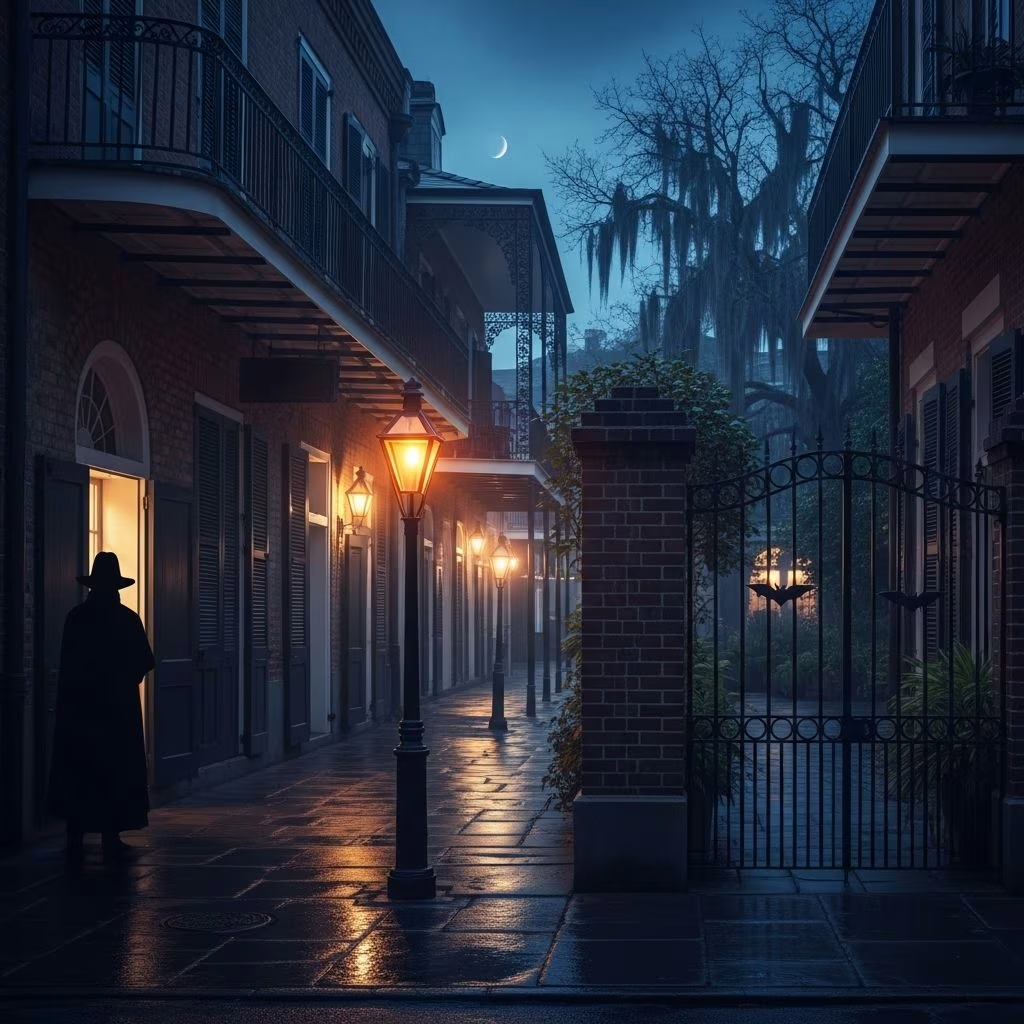
New Orleans holds particular importance within Louisiana’s entertainment tourism landscape due to its distinctive architectural character, atmospheric qualities, and established cultural tourism infrastructure. The city’s French Quarter, Garden District, and surrounding neighborhoods provide authentic settings that require minimal modification for entertainment production purposes while maintaining visual authenticity that connects to centuries of established cultural narratives.
The city’s cemeteries, historic buildings, and cultural institutions have become particularly significant within entertainment tourism frameworks, as multiple properties offer dual cultural and supernatural-themed appeal to diverse visitor segments.
Cemeteries throughout New Orleans have become incorporated into entertainment tourism experiences, as these properties hold both genuine historical and cultural significance within Louisiana society while simultaneously offering atmospheric qualities attractive to entertainment-focused tourists. Lafayette Cemetery Number One in the Garden District exemplifies this intersection, as the property contains legitimate historical and cultural artifacts while also featuring in entertainment narratives.
These cemeteries operate under controlled access policies, with many requiring visitors to participate in guided tours led by knowledgeable professionals who provide historical context alongside entertainment tourism information. This approach balances preservation and respect for these sacred spaces with legitimate public access.
Historic hotels in New Orleans’s French Quarter serve dual functions as active hospitality operations and entertainment tourism destinations. Properties documented as filming locations for various supernatural television productions continue operating as luxury accommodations while marketing their entertainment connections to prospective guests. Guests can experience authentic nineteenth-century architecture and modern amenities while staying in locations recognized from entertainment productions.
Cultural institutions throughout New Orleans have adapted to incorporate entertainment tourism interests within their educational missions. Museums featuring exhibitions on local history, burial practices, religious traditions, and cultural heritage simultaneously serve visitors attracted by entertainment media associations.
The Ursuline Convent demonstrates this intersection effectively, offering formal exhibitions on Catholic mourning traditions and burial practices alongside its recognition within entertainment tourism circles. By maintaining educational integrity while acknowledging entertainment tourism interests, these institutions expand visitor engagement and serve broader segments of the traveling public.
New Orleans maintains particular significance as the birthplace and longtime home of authors whose literary works established foundational vampire narratives that influenced subsequent entertainment productions. Visitors interested in entertainment tourism frequently extend their interests to include literary tourism, visiting historic residences and properties that inspired fictional narratives.
This intersection of literary and entertainment tourism creates multi-layered visitor experiences that appeal to audiences with varying interests and knowledge levels regarding Louisiana’s cultural contributions to supernatural fiction.
Urban parks throughout Louisiana contribute to entertainment tourism experiences by providing atmospheric settings and authentic historical contexts. Audubon Park in New Orleans occupies land formerly used for agricultural plantation operations, making it one of the only surviving plantation sites within city limits that was not subsequently developed for residential or commercial purposes. This historical preservation combined with contemporary park infrastructure creates accessible spaces where visitors can experience authentic Louisiana landscapes within urban environments.
Travelers interested in combining entertainment tourism with authentic cultural and historical experiences should consider several factors when planning Louisiana visits. Properties vary in accessibility, operating hours, and tour availability, requiring advance planning and coordination.
Louisiana offers diverse accommodation options suitable for entertainment tourism visitors, ranging from properties with direct entertainment media connections to traditional hotels and resorts. Properties in New Orleans’s French Quarter provide central access to multiple tourist attractions, while bed and breakfast establishments outside urban centers offer authentic Louisiana hospitality combined with rural landscape experiences.
Entertainment-driven tourism has created significant economic activity throughout Louisiana, generating employment opportunities, supporting hospitality industries, and establishing sustainable funding models for historic property preservation. This tourism category has expanded beyond traditional cultural tourism frameworks, attracting visitors with specific entertainment interests who might not otherwise travel to Louisiana for conventional tourism purposes.
The entertainment tourism industry has simultaneously created opportunities for communities to preserve historic properties, maintain cultural heritage, and diversify local economies through hospitality and tourism infrastructure development.
Fictional towns exist only within the television narratives and are not replicated as complete constructed environments. However, filming locations throughout Louisiana, where specific scenes were recorded, are frequently accessible to visitors seeking to experience authentic settings used in production.
Requirements vary by property and location. Some venues operate as open public spaces, while historic properties and museums typically require guided tours or formal access arrangements. Advance research on specific properties ensures proper planning.
Louisiana offers tourism opportunities year-round, though seasonal variations affect weather conditions, attendance levels, and special events. Spring and fall typically provide favorable weather conditions combined with moderate tourist populations.
