

 Travel Essentials
 Travel Essentials

Explore Louisville's premier bourbon destinations, from historic Whiskey Row distilleries to innovative tasting experiences and cocktail venues.
 Travel Essentials
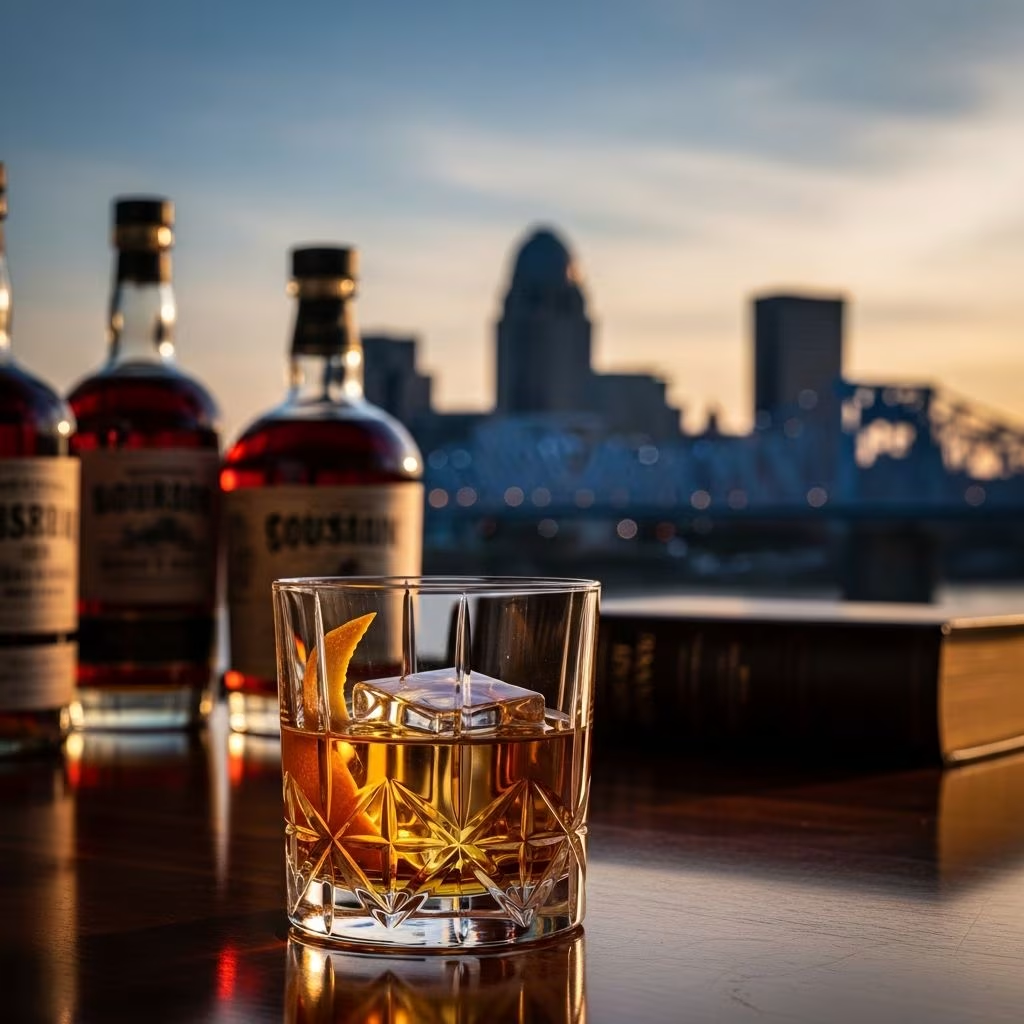
Louisville, Kentucky stands as the epicenter of American bourbon production and heritage. With more than two dozen bourbon-focused attractions, the city has transformed itself into an essential destination for spirit enthusiasts and curious travelers alike. Whether you’re a seasoned whiskey connoisseur or embarking on your first tasting journey, Louisville offers diverse pathways to deepen your appreciation for this quintessentially American spirit.
The significance of Louisville in bourbon production extends far beyond mere production volume. The city serves as the official gateway to the Kentucky Bourbon Trail, positioning itself as the starting point for visitors seeking authentic bourbon education and experiences. Historic Whiskey Row, located in downtown Louisville, represents generations of bourbon craftsmanship and innovation. This concentrated district showcases both traditional distillery practices and modern interpretations of bourbon culture, creating a dynamic environment where heritage meets contemporary creativity.
Louisville’s bourbon industry has evolved dramatically over recent decades. What once was primarily an industrial operation has transformed into an experiential destination where visitors can engage with bourbon production at multiple levels. Modern facilities now feature interactive elements, augmented reality environments, and educational programs designed to demystify the bourbon-making process.
Downtown Louisville’s Whiskey Row represents the most concentrated collection of bourbon attractions in the city. This historic corridor has been reimagined to serve both serious enthusiasts and casual visitors. The urban distillery concept brings production directly into the city center, eliminating the need for extensive travel outside Louisville proper.
Several flagship locations anchor this district. Bardstown Bourbon Company operates a state-of-the-art facility featuring highly interactive education platforms alongside innovative craft cocktails. Their venue incorporates augmented reality technology and immersive digital environments, creating a modern bourbon education experience that transcends traditional tasting room formats. The facility also houses curated retail merchandise and exclusive bottle selections.
Angel’s Envy, which opened in 2016, operates a fully functional urban distillery on Whiskey Row. This location distinguishes itself through multiple engagement options, including bottle-your-own experiences and cocktail classes conducted behind the distillery bar. Their guided insider tours provide access to working production facilities within the downtown core, bridging the gap between urban accessibility and authentic distillery operations.
The Evan Williams Bourbon Experience combines historical education with modern hospitality. Located at the midpoint of downtown’s Bourbon District, this venue features an immersive historical exhibit, artisanal distillery operations, a Prohibition-themed speakeasy, and the ON3 cocktail bar. This multi-faceted approach allows visitors to engage with bourbon history, production, and contemporary cocktail culture within a single location.
Old Forester’s Distillery emphasizes the complete production journey, from barrelling through bottling stages. The facility includes retail space and George’s Bar, creating an environment where visitors can observe production processes and enjoy curated spirits in an integrated setting.
Green River’s Louisville Tasting Room introduces a playful, discovery-oriented approach to bourbon exploration. Positioned on historic Whiskey Row, this venue combines interactive experiences with handcrafted cocktails, presenting bourbon tradition through a contemporary lens designed for experiential learners.
While downtown offers convenience and concentration, Louisville’s bourbon offerings extend throughout surrounding regions. The Four Roses Distillery in Lawrenceburg provides an alternative experience centered on traditional production methods and scenic countryside settings. This Spanish Mission-style facility offers guided walking tours exploring distillation processes and the signature characteristics of Four Roses bourbons. Tours conclude with guided tastings of award-winning expressions.
The Four Roses Warehouse & Bottling Facility in Cox’s Creek reveals the maturation and packaging aspects of bourbon production often overlooked in visitor experiences. This location demonstrates how aging conditions, blending decisions, and packaging techniques contribute to final product character. The facility’s behind-the-scenes orientation appeals to visitors seeking deeper technical understanding of bourbon creation.
Louisville’s bourbon attractions cater to multiple learning styles and engagement preferences. Comprehensive distillery tours typically include production facility access, barrel warehouse exploration, and guided tastings with expert commentary. These experiences typically run 60–90 minutes and provide context for understanding how bourbon characteristics develop through production stages.
Specialized experiences have emerged to address particular interests. Bottle-your-own programs allow visitors to participate directly in the bottling process. Cocktail classes teach practical mixology skills while highlighting how spirits interact with other ingredients. Tastings conducted outside formal tour structures offer flexibility for visitors with limited time availability.
Interactive technology has become increasingly prevalent in Louisville’s bourbon venues. Augmented reality applications overlay production information onto physical spaces. Digital environments provide visual demonstrations of fermentation, aging, and distillation processes. These tools enhance traditional bourbon education by accommodating diverse learning preferences and making abstract technical concepts tangible and comprehensible.
Distinct from the Kentucky Bourbon Trail’s distillery-focused experiences, the Urban Bourbon Trail represents Louisville’s cocktail and culinary heritage. This trail highlights the city’s most celebrated bourbon bars and restaurants, emphasizing mixology, food pairings, and social experience over production education. The Urban Bourbon Trail provides alternatives for visitors seeking bourbon appreciation through culinary contexts rather than technical production knowledge.
This approach recognizes that bourbon culture extends beyond distillery visits. Bartenders trained in bourbon cocktail preparation become educators in their own right, guiding guests through spirit selection, flavor profiling, and pairing principles. Restaurants incorporating bourbon into their culinary philosophies demonstrate how this spirit integrates into broader culinary traditions.
Planning Your Itinerary: First-time visitors benefit from concentrating initial experiences in downtown Louisville’s Whiskey Row, allowing access to multiple venues without extensive travel time. Subsequent visits can expand to include countryside distilleries and specialized experiences.
Experience Selection: Consider your primary interests when choosing among available options. History enthusiasts should prioritize venues emphasizing bourbon heritage and historical context. Production-focused learners benefit from distillery tours with facility access. Cocktail enthusiasts find more value in Urban Bourbon Trail venues and specialized mixology classes.
Advance Planning: While walk-in availability exists at many locations, peak visitor seasons often require advance reservations. Most venues maintain websites with current hours, pricing, and booking information. Calling ahead ensures availability for specific experiences, particularly for group visits.
Accommodation Proximity: Downtown bourbon venues’ proximity to hotels, restaurants, and other attractions creates efficiency for multi-day visits. Visitors planning to explore countryside distilleries should factor travel time (typically 30–60 minutes from downtown) into itinerary planning.
The Kentucky Bourbon Trail emphasizes distillery experiences, including production facilities, aging warehouses, and technical education about bourbon creation. The Urban Bourbon Trail focuses on bourbon as experienced through cocktails, dining, and hospitality venues within Louisville’s urban environment. Both experiences are complementary rather than exclusive; visitors benefit from exploring both approaches.
No. Louisville’s bourbon attractions accommodate complete newcomers alongside experienced enthusiasts. Educational programs, guided tastings, and interpretive materials are designed for diverse knowledge levels. Professional staff can explain technical concepts accessibly while providing deeper context for visitors with existing bourbon expertise.
Standard distillery tours include facility orientation, explanations of production processes, access to barrel warehouses or production areas, and guided tastings concluding with exclusive bottle selections in retail spaces. Tour length typically ranges from 60–90 minutes. Some venues offer specialized experiences beyond standard tours, including bottle-your-own programs and behind-the-scenes production observation.
Yes. Many venues offer non-alcoholic alternatives and emphasize historical, technical, and cultural education beyond spirit consumption. Visitors uninterested in tasting can still participate in facility tours, observe production processes, and engage with bourbon’s historical significance. Urban Bourbon Trail venues often feature food-focused experiences and non-spirited beverages.
Individual tasting room visits typically range from $10–30 per person. Comprehensive distillery tours with tastings average $25–50. Multi-experience packages and specialized programs may run $50–100 or higher. Urban Bourbon Trail venues operate on standard hospitality pricing. Most venues accept credit cards; some rural locations may have limited payment options.
Effective bourbon appreciation develops through systematic exposure to production processes, flavor characteristics, and heritage context. Begin with introductory tastings to establish baseline flavor references. Progress toward production-focused experiences to understand how specific techniques create distinct bourbon characteristics. Supplement distillery visits with Urban Bourbon Trail experiences to appreciate bourbon’s role within contemporary culinary culture.
Consider tracking your tasting experiences through note-taking or photography. Recording impressions of flavor profiles, appearance characteristics, and production methods deepens memory retention and creates personal reference materials for future exploration. Over time, these records reveal personal preference patterns and guide future purchasing decisions.
Engage with venue staff as educators. Professional bourbon guides possess deep knowledge developed through extended experience. Questions about production variations, aging impacts, and flavor development produce insights unavailable through generic educational materials. These conversations often reveal personal recommendations aligned with individual taste preferences.
Louisville’s bourbon landscape offers multiple entry points and progression pathways for visitors at any engagement level. Whether seeking historical education, technical production knowledge, or contemporary cocktail experiences, the city provides diverse opportunities for bourbon appreciation development. The combination of historic distillery operations, modern interactive facilities, and vibrant cocktail culture creates an environment where bourbon enthusiasm flourishes naturally. By engaging systematically with available experiences and remaining curious about production processes and flavor characteristics, visitors transition from casual bourbon consumers to informed enthusiasts capable of appreciating bourbon’s complexity, heritage, and contemporary relevance.
