

 Travel Essentials
 Travel Essentials

Discover the iconic visual elements of Lunar New Year celebrations, from symbolic decorations to cultural ceremonies, and learn what makes this festival visually distinctive.
 Travel Essentials
The Lunar New Year stands as one of the world’s most visually captivating celebrations, drawing millions of participants across continents and time zones. This ancient festival transforms cities and communities into spectacular displays of color, light, and cultural symbolism. From the brilliant crimson banners adorning storefronts to the intricate choreography of traditional performances, the visual language of this celebration tells stories of prosperity, renewal, and family unity. Whether witnessed firsthand in bustling Asian metropolitan areas or appreciated through photographs and digital media, the Lunar New Year offers an extraordinary array of memorable imagery that captures the essence of cultural continuity and joyful anticipation.
Red dominates the visual landscape of Lunar New Year celebrations, serving purposes far beyond aesthetic preference. This color carries profound cultural significance rooted in centuries of Chinese tradition and belief. According to cultural traditions, red symbolizes good fortune, prosperity, and positive energy, creating a protective barrier against negative influences and misfortune. The prevalence of red throughout celebrations creates an instantly recognizable visual signature that distinguishes the festival from other seasonal observances.
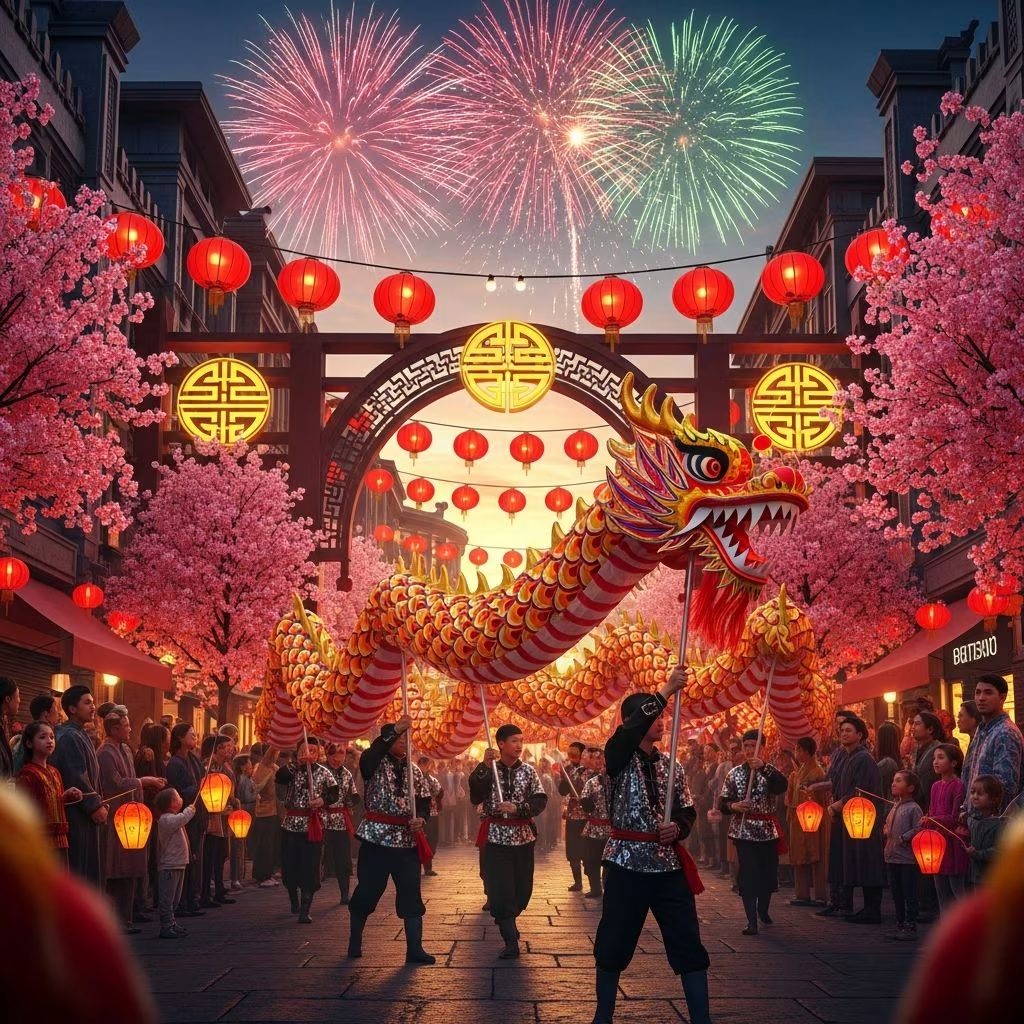
Streets, homes, and public spaces transform into seas of crimson during the festival period. Red lanterns suspended from doorways and across streets emit warm glows at night, creating enchanting nighttime scenes. These lanterns range from simple paper designs to elaborate artistic creations featuring traditional motifs and contemporary illustrations. Red couplets and calligraphic inscriptions adorn doorframes and walls, bearing auspicious messages and wishes for the coming year. The visual repetition of this single color creates a unified aesthetic experience that reinforces the festival’s cultural themes and spiritual intentions.
Preparation for the Lunar New Year involves extensive household decoration that transforms domestic spaces into festive environments. The tradition of thorough house cleaning precedes decoration, symbolizing the removal of past misfortunes and making space for incoming prosperity. This ritualistic cleansing phase connects physical preparation to spiritual renewal, setting the stage for visual transformation.
Households employ multiple decorative strategies to establish a festival atmosphere:
The cumulative effect of these decorative choices creates immersive visual environments that extend the festival atmosphere throughout the entire celebration period.
The visual presentation of traditional foods constitutes a significant aspect of Lunar New Year aesthetics. Reunion dinners feature carefully arranged dishes selected not merely for flavor but for their symbolic appearances and associated meanings. The visual appeal of these culinary creations enhances both the dining experience and the spiritual intentions underlying the meal.
Traditional foods present distinctive visual characteristics that reinforce their symbolic purposes:
| Dish | Visual Characteristics | Symbolic Meaning |
|---|---|---|
| Whole Fish | Complete, golden-brown exterior, served with head and tail intact | Abundance and surplus throughout the year |
| Dumplings | Crescent-shaped, golden fried or steamed, arranged in organized clusters | Wealth and prosperity, resembling ancient gold ingots |
| Long Noodles | Unbroken strands, pale yellow or golden color, stretching across the plate | Longevity and continuous life |
| Sticky Rice Cakes | Dense, amber-colored, cube-shaped pieces with smooth surfaces | Advancement and steady progress |
| Spring Rolls | Crispy golden exterior, cylindrical shape, arranged in rows | Wealth, resembling precious metal bars |
| Citrus Fruits | Bright orange and yellow spheres, often displayed in decorative bowls | Completeness, prosperity, and good fortune |
The arrangement of these dishes on the dining table reflects consideration for both nutritional balance and visual composition. Many families prepare these foods together, creating shared moments of preparation that blend domestic activity with cultural transmission.
Dragon and lion dances constitute among the most photographically striking elements of Lunar New Year celebrations. These traditional performances feature elaborate costume designs, synchronized movement, and vibrant color palettes that captivate audiences and photographers alike. The dragon, a symbol of good fortune in Chinese culture, manifests as a long, flexible structure decorated with scale patterns, featuring prominent head and tail sections. Multiple performers coordinate their movements to create an undulating motion that suggests the dragon’s mythological nature.
Lion dances present different visual characteristics, typically featuring two-person costumes with distinctive facial masks, colorful fabric bodies, and elaborate headdresses. These performances traverse streets and public spaces, creating dynamic compositions of movement, color, and cultural expression. The accompanying percussion instruments, featuring loud cymbals and drums, provide both auditory stimulation and visual performance cues.
Street processions and public gatherings generate opportunities for large-scale visual documentation. Parade participants wearing traditional clothing, contemporary festival attire, and elaborate costumes create diverse visual compositions. Banners and signage incorporating traditional calligraphy and modern design elements delineate festival spaces and announce celebratory events.
The Lantern Festival, marking the conclusion of the two-week celebration period, emphasizes luminous visual effects and nighttime spectacles. This final celebration features hanging lanterns in temples, public spaces, and private residences, creating environments characterized by soft, warm lighting that contrasts with typical urban nighttime aesthetics. The festival’s name derives from this widespread use of lanterns as primary decorative and functional lighting elements.
Traditional lantern designs showcase regional variations and artistic interpretations. Some lanterns incorporate riddles and artistic inscriptions, serving both decorative and interactive functions. Contemporary lantern festivals increasingly feature technologically advanced designs incorporating electrical illumination, projection mapping, and animated elements, while maintaining traditional aesthetic principles.
The visual transformation of urban landscapes during nighttime lantern celebrations creates distinctive photographic opportunities. Street lighting interacts with lantern illumination to create complex lighting environments. The contrast between illuminated lanterns and darker surrounding areas creates compositional opportunities emphasizing the festival’s visual centerpieces.
The Lunar New Year celebration encompasses diverse regional traditions that manifest in distinct visual presentations across different geographic areas. Northern regions emphasize certain decorative elements and performance traditions, while southern areas highlight alternative visual practices. Understanding these regional variations provides deeper appreciation for the festival’s visual diversity.
Northern traditions often feature more prominent use of paper-cuts and window decorations, showcasing intricate folk artistic techniques. Southern celebrations may emphasize different color combinations, alternative decorative materials, and distinct performance styles. Coastal regions sometimes incorporate maritime imagery and fishing-related symbolic elements into their visual presentations. Urban centers develop unique combinations of traditional visual elements with contemporary artistic expressions.
Certain visual practices carry negative connotations during the Lunar New Year celebration period. Understanding these restrictions illuminates the symbolic systems underlying visible practices. The use of sharp implements, including scissors and knives, is discouraged during the festival period. This restriction extends to haircuts and grooming activities, resulting in visible closures of barbershops and hair salons during the celebration.
The timing of household cleaning must occur before New Year’s Eve, establishing a visual cutoff date after which the home remains undisturbed. This practice prevents the inadvertent sweeping away of newly arrived good fortune. The careful management of visual activities demonstrates how cultural beliefs translate into observable behavioral patterns and visible community practices.
Contemporary celebrations increasingly blend traditional visual elements with modern artistic expressions. Urban areas feature large-scale light installations, projection displays, and contemporary art installations alongside traditional decorations. Digital platforms enable sharing of festival imagery across global audiences, creating new audiences for traditional visual practices.
Commercial spaces incorporate festival aesthetics into retail environments, decorative displays, and marketing materials. Restaurants design special Lunar New Year menus with presentations reflecting traditional symbolism. Hotels and hospitality establishments create immersive visual environments celebrating the festival. This commercialization introduces traditional visual elements to broader audiences while sometimes modifying their original cultural contexts.
The visual richness of Lunar New Year celebrations attracts photographers and visual documentarians seeking to capture cultural authenticity and aesthetic beauty. The festival’s emphasis on color, symbolism, and ceremonial performance creates abundant photographic opportunities across varied settings and time periods.
Effective visual documentation requires understanding the cultural significance underlying visible practices. Photographing family reunion dinners, private ceremonies, and personal celebrations necessitates respecting cultural protocols and obtaining appropriate permissions. Public celebrations including street processions, temple festivals, and community performances offer more accessible photographic subjects while still requiring sensitivity to cultural contexts.
The interplay of natural light, artificial illumination, and festival decorations creates dynamic lighting conditions that influence photographic outcomes. Early morning celebrations feature different lighting characteristics than evening events. Nighttime lantern festivals require different technical approaches compared to daytime processions.
Lunar New Year celebrations extend far beyond East Asia, with significant communities observing the festival across North America, Europe, Australia, and other regions. These global celebrations adapt traditional visual elements to local contexts, incorporating host country aesthetics while maintaining cultural authenticity.
International celebrations feature diverse visual presentations reflecting migration patterns, cultural assimilation, and community-specific adaptations. Some communities recreate traditional aesthetic environments within adopted countries, while others develop hybrid visual styles combining traditional elements with local artistic traditions. These varied expressions demonstrate the festival’s evolving visual language across global contexts.
