

 Travel Essentials
 Travel Essentials

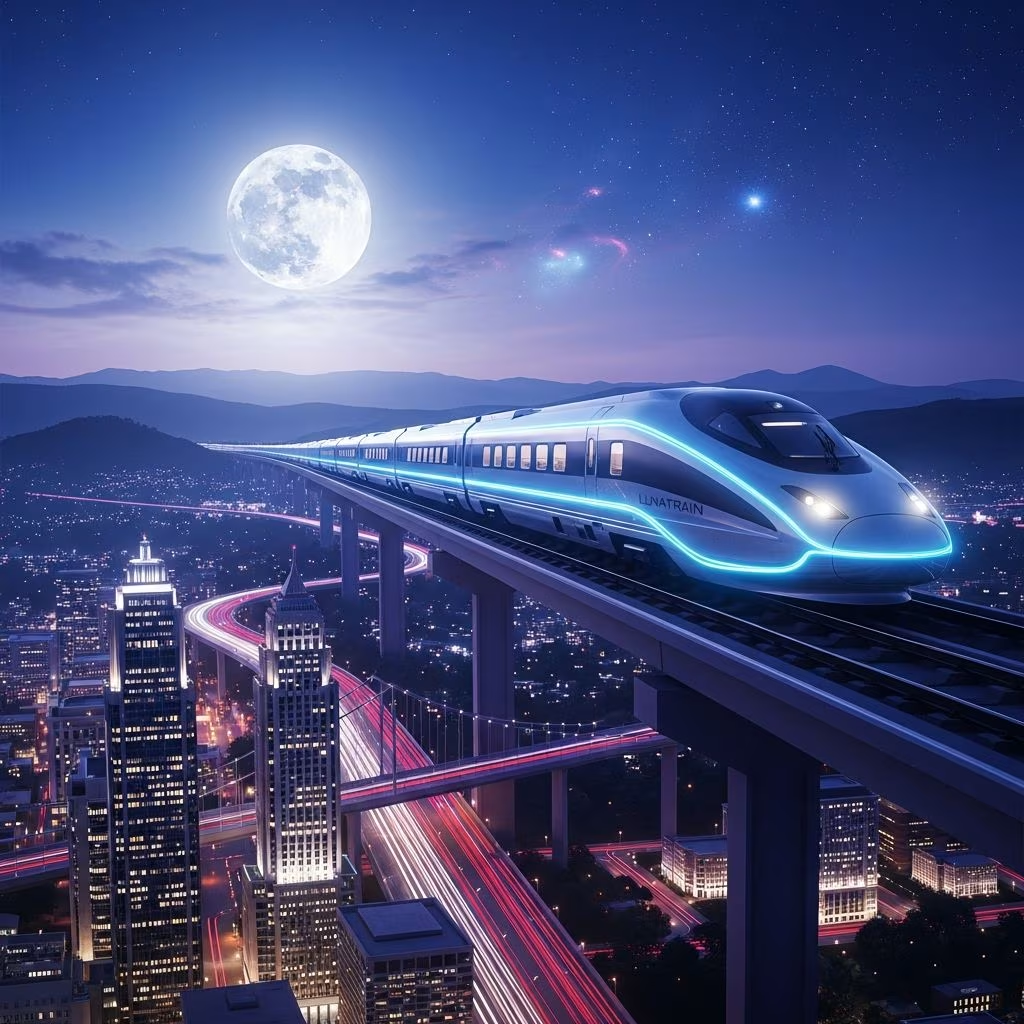
Lunatrain is developing a privately-operated overnight rail service connecting major East Coast and Midwest cities, offering an innovative alternative to flights and long drives.
 Travel Essentials
The landscape of long-distance travel in North America is on the verge of significant transformation. A Philadelphia-based startup called Lunatrain is positioning itself to challenge conventional transportation methods by introducing a network of modern overnight sleeper trains designed specifically for contemporary travelers. This venture represents an ambitious attempt to fill a substantial gap in the American transportation market, particularly for routes where existing options—short-haul flights and extended highway drives—fall short of meeting traveler expectations.
Lunatrain emerged in 2024, founded by Mike Avena, with a clear mission: to provide leisure and business travelers with a more appealing option for covering distances between major metropolitan areas. Rather than attempting to replicate or directly compete with existing rail operators, Lunatrain identifies itself as addressing an overlooked niche in the transportation ecosystem. The company’s approach focuses exclusively on overnight service, distinguishing it from competitors and allowing travelers to minimize waking hours spent in transit.
The startup recognizes that certain routes—particularly those spanning 300 to 800 miles between major cities—present travelers with limited choices. Short flights carry substantial environmental and cost considerations, while long drives consume entire days and carry fatigue-related safety concerns. Lunatrain positions its overnight model as a pragmatic solution that allows passengers to depart in the evening from one major city and arrive refreshed at their destination the following morning.
Several factors create favorable conditions for Lunatrain’s business model. First, highway congestion and airport overcrowding in major corridors limit transportation capacity during peak travel periods. The company recognizes that existing infrastructure cannot accommodate projected demand increases along popular routes, particularly in the Northeast and Midwest regions.
Additionally, traveler preferences have evolved. Many individuals—particularly solo adventurers, young professionals, and families—actively seek alternatives to conventional transportation that offer both efficiency and comfort. These travelers value experiences that maximize vacation time rather than spending substantial portions of journeys in airports, cars, or coach-class seating.
The demographic shift toward experience-based travel also favors Lunatrain’s positioning. Rather than viewing travel time as lost productivity, an increasing segment of travelers appreciates the journey itself as part of their overall experience. An overnight train ride offers novelty, relaxation, and a distinctly different travel narrative compared to anonymous airport terminals.
Lunatrain’s expansion strategy focuses initially on connecting major metropolitan areas throughout the East Coast and Midwest regions. The company has identified several key cities as potential network hubs, including Philadelphia, New York City, Charlotte, Atlanta, and Chicago. Future expansion could extend service through Canada, with connections planned to Toronto and Montréal.
This geographic focus reflects strategic thinking about optimal overnight distances. The company specifically targets routes that can be completed within a single night’s journey—typically between 400 and 900 miles—ensuring passengers can establish a consistent, predictable schedule rather than operating multi-night segments.
Lunatrain’s competitive advantage rests substantially on the quality and thoughtfulness of its cabin designs. Unlike existing American overnight train options, Lunatrain cabins incorporate contemporary amenities and comfort considerations specifically addressing traveler feedback and modern expectations.
Key cabin features include:
The company recognizes that diverse traveler types require different accommodations. Accordingly, Lunatrain designs cabin configurations for solo travelers seeking private retreats, couples preferring intimate shared spaces, and families requiring flexible multi-person arrangements. This segmentation approach acknowledges that no single cabin design satisfies all traveler preferences.
Economy and premium cabin tiers establish price points comparable to airline seating of equivalent service levels on equivalent routes. This pricing strategy positions train travel as cost-competitive with its primary alternative transportation modes rather than as a luxury indulgence.
Unlike rail startups that might develop entirely new track networks, Lunatrain operates within existing infrastructure realities. The company plans to utilize established railroad infrastructure, which necessitates partnerships and agreements with existing operators, including Amtrak. This pragmatic approach dramatically reduces capital requirements compared to building new rail lines while enabling relatively rapid deployment.
However, this dependency on existing infrastructure also creates operational constraints. Lunatrain must negotiate scheduling arrangements with freight operators and other passenger services, coordinate maintenance windows, and manage priority systems for track allocation. Despite these challenges, the approach represents a viable path to market compared to pursuing new infrastructure development.
As of early 2026, Lunatrain remains in active development phases. The company publicly announced its intentions in February 2024 and has since focused on market research, regulatory engagement, and preliminary design work.
A significant milestone lies ahead: Lunatrain plans to deploy a demonstration unit by the second half of 2026. This prototype train will serve multiple purposes—gathering customer feedback on cabin comfort and design, testing operational procedures, and validating market interest through trial service. This demonstration phase allows the company to implement rapid iteration cycles, refining designs and operations based on actual traveler experiences rather than theoretical models.
| Feature | Lunatrain (Planned) | Amtrak Overnight Service | Commercial Airlines |
|---|---|---|---|
| Journey Duration | Single overnight segment | 20-30+ hours | 2-4 hours plus airport time |
| Cabin Amenities | Power, Wi-Fi, soundproofing, showers | Basic sleeping berths | Seat-based only |
| Service Model | Express, non-stop | Multiple stops | Direct or connecting flights |
| Pricing | Comparable to airline coach | Varies by route | Highly variable |
| Network Scope | East Coast and Midwest focus | Nationwide network | Extensive national network |
Lunatrain’s founder has explicitly stated that the company does not seek direct competition with Amtrak. Instead, Lunatrain positions itself as complementary to existing services. Amtrak serves broader geographic areas, including rural destinations and multi-day journeys, while Lunatrain targets specific high-demand corridors between major metropolitan centers.
This differentiation matters strategically. Rather than battling for passengers on routes where Amtrak has established operations and brand recognition, Lunatrain identifies underserved corridors where no existing service adequately addresses demand. By defining a distinct market segment—overnight express service between major cities using modern amenities—Lunatrain avoids direct competition while establishing a unique market position.
Lunatrain’s emergence reflects broader recognition that American transportation infrastructure requires innovation. The United States lacks the comprehensive overnight rail networks common in Europe and Asia, creating opportunities for entrepreneurs to introduce modern alternatives to aging infrastructure and outdated service models.
Success with Lunatrain could catalyze additional private rail ventures, potentially creating a more diverse transportation ecosystem. Such developments might include specialized rail services for specific routes, new operators with distinct service philosophies, and technology-driven innovations in passenger experience.
Additionally, private rail development reduces reliance on government funding for transportation infrastructure, offering policy benefits while creating competitive pressure that could drive quality improvements across the entire transportation sector.
Despite compelling market logic, Lunatrain faces substantial challenges. Regulatory approval, infrastructure access negotiations, and initial capital requirements represent significant hurdles. The company must navigate Interstate Commerce Commission regulations, environmental assessments, and labor considerations before operations commence.
Additionally, consumer adoption remains uncertain. While market research suggests demand for alternatives to existing options, converting that theoretical demand into sustained ridership requires effective marketing, reliable service execution, and consistent positive customer experiences.
If Lunatrain successfully launches operations and achieves operational profitability, the company indicates plans for network expansion beyond initial pilot routes. Potential extensions could eventually connect major Canadian cities, creating transcontinental overnight rail possibilities. Such expansion would represent one of the most ambitious private rail ventures in American history.
Successful execution could also attract additional capital investment and inspire competing ventures, gradually transforming overnight rail travel from a novelty into an established segment of the American transportation landscape.
A demonstration unit is scheduled for release by mid-2026, with commercial service timing to be determined following feedback from initial operations.
Early plans focus on East Coast and Midwest corridors, with Philadelphia, New York City, Charlotte, Atlanta, and Chicago identified as key hubs.
Pricing is designed to be competitive with airline seating of similar service classes on equivalent routes.
Lunatrain positions itself as complementary to Amtrak, focusing on specific high-demand overnight corridors rather than competing for Amtrak’s broader network service.
Cabins feature Wi-Fi, power outlets, soundproofing, climate control, showers, and on-demand dining options.
