

 Travel Essentials
 Travel Essentials

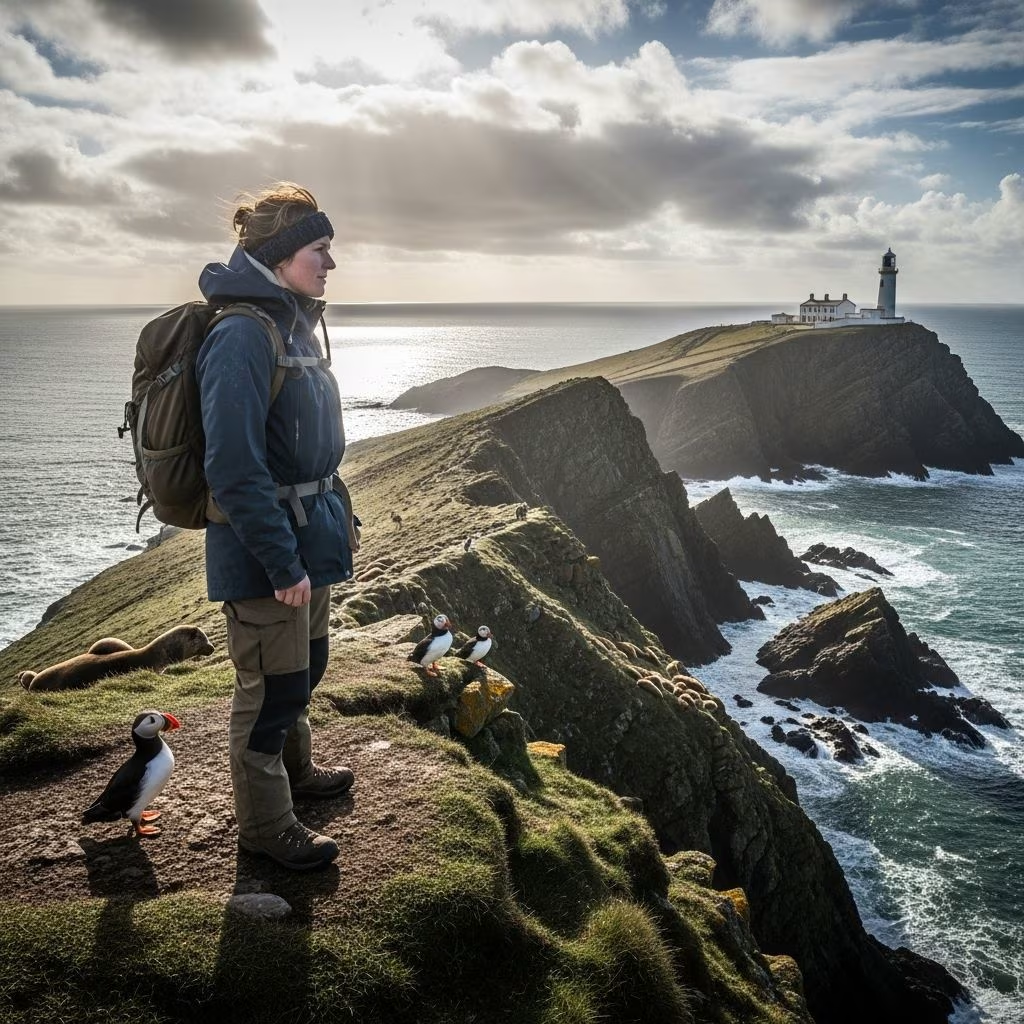
Inside the demanding work of Lundy’s island wardens, who protect rare wildlife, guide visitors, and keep this remote sanctuary thriving.
 Travel Essentials
Lundy Island, a rugged granite outcrop rising dramatically from the Bristol Channel, serves as a vital sanctuary for wildlife and a unique destination for adventurers. At its heart are the island wardens, whose tireless efforts ensure the preservation of this ecological jewel. These dedicated professionals balance conservation duties, visitor management, and scientific research in one of the UK’s most isolated natural havens.
Just three miles long and half a mile wide, Lundy floats 12 miles off the Devon coast, accessible only by boat or helicopter. Its granite cliffs, meadows, and surrounding waters host rare species, from puffins nesting in earthy burrows to vibrant marine life in the protected zones. Managed by the Landmark Trust since 1969, the island blends historical charm with modern conservation.
Visitors arrive via the MS Oldenburg, a historic vessel navigating treacherous tides, or by charter flight. Once ashore, they discover Victorian cottages for rent, a tavern, and trails weaving through 400 puffin burrows and ancient ruins. But beneath this idyllic surface lies a complex ecosystem demanding vigilant stewardship.
Island wardens oversee every facet of Lundy’s operations. The head warden, often joined by an assistant, coordinates a team including marine biologists and seasonal helpers. Their mandate spans terrestrial and marine environments, reflecting Lundy’s status as a Marine Protected Area (MPA) since 2021.
Joe Parker, a recent warden, highlighted 2024’s bounty: record seal sightings and diverse seabird activity, underscoring the role’s dynamic nature. Flexibility defines the job; mornings might involve cliff-top bird watches, afternoons seal patrols.
Wardens rise with the sun, often before 6 AM, to scan beaches for strandings or overnight visitors. Breakfast in the warden’s quarters—simple stone buildings with sea views—fuels the day. Mornings typically feature wildlife monitoring: netting and ringing birds like jays or marsh tits, a practice rooted in the Lundy Field Society’s legacy.
Afternoons shift to practical tasks. Trail clearance prevents erosion, while marine duties include boat checks for the MPA’s no-take zone, safeguarding corals and sea fans. Evenings bring data logging and guest interactions at the Marisco Tavern, sharing sightings over pints.
| Time of Day | Typical Activities | Wildlife Focus |
|---|---|---|
| Dawn (5-8 AM) | Beach patrols, bird counts | Seals, early migrants |
| Morning (8-12 PM) | Ringing sessions, surveys | Birds (puffins, gulls) |
| Afternoon (12-5 PM) | Trail maintenance, dives | Marine species, seals |
| Evening (5-9 PM) | Data entry, visitor talks | All species review |
Weather adds unpredictability; gales can confine wardens indoors, turning days to admin or repairs. Yet, moments like witnessing a peregrine falcon’s stoop or grey seals pupping reward the rigor.
Lundy’s wardens have orchestrated triumphs. The rat eradication in 2004, led by predecessors, restored snipe and puffin numbers. Today, the MPA enforces strict rules: no fishing in core zones, protecting sunset cup corals and pink sea fans. Bird observatories log migrants, contributing to national data.
Challenges persist. Climate change alters migration patterns; warmer seas stress kelp forests. Visitor numbers—up to 300 weekly in summer—risk disturbance, prompting capacity controls. Invasive plants and erosion from storms demand constant vigilance.
The warden’s role evolves with threats, blending tradition with innovation, from drone surveys to citizen science apps.
Simon Parker leads as head warden, with Tara McEvoy-Wilding as assistant marine specialist. Joe Parker (no relation) shared 2024 insights, from seal pups to orchid blooms. Historical figures like Nick Dymond pioneered marine reserves via the Lundy Field Society.
Seasonal wardens rotate, bringing fresh expertise. Training emphasizes first aid, boating, and ecology, with on-island immersion building resilience.
Lundy’s cliffs host 10,000 pairs of Manx shearwaters, emerging nightly in ‘the sound of the sea.’ Puffins dazzle with colorful beaks; wardens ring juveniles to study fidelity. Peregrines and ravens patrol skies, their territories mapped meticulously.
Below waves, the MPA teems: grey seals haul out on beaches, dolphins arc through swells. Divers spot jewel anemones and wolf fish, rarities elsewhere. Wardens enforce boundaries, fining violators to preserve this ‘pristine’ realm.
Meadows bloom with Lundy cabbage, endemic orchids. Sika deer roam, culled humanely for balance. Nighttime brings pipistrelle bats and glowing fungi.
Aspiring guardians need ecology degrees, outdoor skills, and stamina. Volunteering via Landmark Trust paves paths; paid roles suit experienced naturalists. Expect 12-month contracts, modest pay, but unparalleled immersion.
Typically, a degree in biology or environmental science, plus field experience in ornithology or marine surveys. First aid and boat handling are essential.
Yes, but winter access is weather-dependent; helicopter serves when boats can’t.
Equipped with radios, lifeboats, and Coastguard links; helicopter evacuations for serious cases.
Limited workaways via Landmark Trust; contact for opportunities.
Climate shifts and tourism pressure, mitigated by warden-led strategies.
With MPA expansion and tech integration, wardens eye sustainable tourism. Carbon-neutral goals and biodiversity nets promise resilience. Lundy endures as a beacon, its guardians weaving conservation into island lore.
