

 Travel Essentials
 Travel Essentials

Discover expert strategies for designing a luxurious Bhutan adventure, from optimal timing and accommodation selection to cultural immersion and logistics planning.
 Travel Essentials
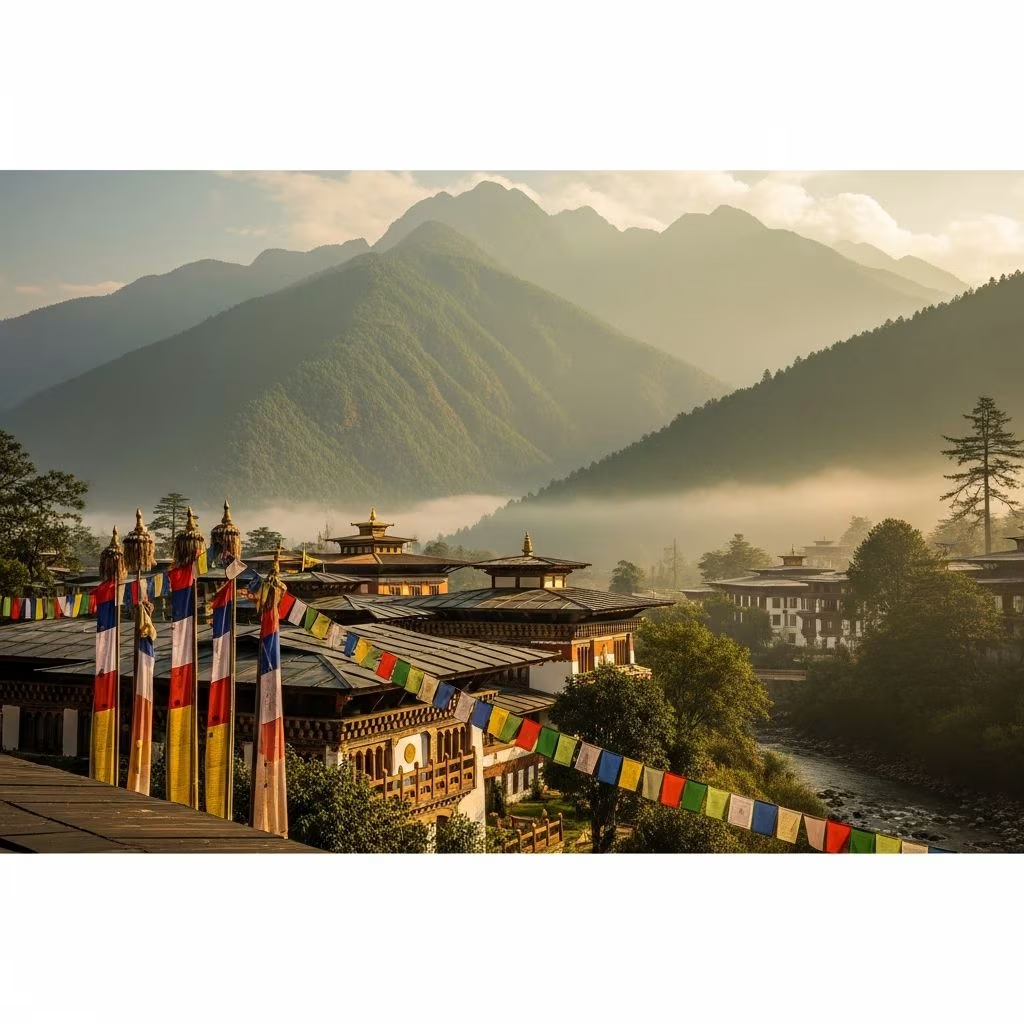
Nestled in the eastern Himalayas, Bhutan offers a uniquely compelling destination for travelers seeking authenticity combined with refined comfort. Unlike more conventional luxury destinations, Bhutan’s appeal lies in its commitment to preserving cultural heritage while offering world-class amenities. Planning a high-end journey to this mountain kingdom requires understanding its distinctive framework, which balances visitor experiences with environmental stewardship and cultural protection.
Bhutan operates under a distinctive tourism model that fundamentally shapes how luxury travel unfolds in the region. The nation implements a daily tariff system that requires all international visitors to book through licensed operators, ensuring quality experiences and sustainable tourism practices. This framework, while initially seeming restrictive, actually enhances the luxury travel experience by maintaining service standards and limiting overcrowding.
The daily package includes comprehensive elements that form the foundation of any Bhutan journey. Accommodations, meals prepared by qualified chefs, private transportation via comfortable vehicles, and the services of a licensed guide all fall within this structured system. For those seeking ultra-premium experiences, luxury properties such as Aman, Six Senses, and COMO operate within this framework, allowing visitors to upgrade their accommodation and dining experiences while maintaining the required booking structure.
Timing profoundly influences the quality of a Bhutan experience. The kingdom experiences distinct seasons, each offering particular advantages for different types of travelers.
The length of your Bhutan stay significantly impacts your experience depth and acclimatization. Travel specialists recommend a minimum five-night commitment to adequately explore the kingdom’s primary regions and adjust to the elevation. Shorter visits risk insufficient time for meaningful cultural engagement and proper physical acclimatization to the mountainous terrain.
Different duration windows accommodate various travel objectives. A five-day itinerary captures essential experiences across multiple valleys, combining cultural sites, natural attractions, and relaxation. Seven-day journeys permit deeper exploration, including longer treks and extended time in communities for cultural immersion. Ten-day or longer expeditions enable comprehensive regional coverage, combining multiple valleys with specialized activities such as extended trekking, horseback riding, or detailed cultural workshops.
Bhutan’s major tourist regions each offer distinct characteristics that should inform itinerary construction:
Paro Valley: The primary entry point featuring the international airport and iconic Tiger’s Nest Monastery perched on a mountainside cliff. This region balances accessibility with significant cultural importance. The 7th-century Kyichu Lhakhang temple and the National Museum provide comprehensive historical context for understanding Bhutanese civilization.
Thimphu District: The capital city blending traditional architecture with contemporary development. Cultural exploration here includes monasteries, artisan communities, and local markets showcasing traditional craftsmanship. The city serves as an ideal base for acclimatization before journeying to higher elevations.
Punakha Valley: Located three hours from Thimphu via the scenic Dochula Pass, this region exemplifies Bhutanese natural beauty. The valley floor provides easier trekking compared to higher regions, while the impressive Punakha Dzong offers architectural grandeur and historical significance. The journey across Dochula Pass, featuring 108 chortens (Buddhist monuments) and panoramic views, creates a memorable transition experience.
Gangtey and Phobjikha Valley: These higher-elevation regions feature pristine alpine landscapes and opportunities for serious trekking. The glacial Phobjikha Valley attracts wildlife enthusiasts seeking encounters with black-necked cranes and endemic bird species. These areas demand stronger physical preparation but reward adventurers with unparalleled natural experiences.
Bumthang Valleys: Multiple interconnected valleys offering cultural depth through access to traditional weaving communities, ancient temples, and artisan workshops. Trongsa Dzong, an ancestral seat of Bhutan’s monarchy, stands as an architectural masterpiece meriting substantial exploration time.
Bhutan’s luxury accommodation sector has expanded significantly, offering refined experiences ranging from boutique properties to international luxury brands. Selection should align with your regions of interest and specific travel objectives.
Luxury properties such as Aman and Six Senses deliver world-class amenities while maintaining authentic cultural connections. These establishments typically feature spa facilities, gourmet dining programs, and concierge services facilitating specialized experiences. Boutique hotels offer more intimate settings with personalized service and often provide direct owner engagement.
Strategic accommodation positioning enhances logistical efficiency. Selecting properties with strong locations relative to your planned activities minimizes travel time and maximizes experience quality. Premium properties frequently offer complementary wellness activities, providing valuable additions to your daily itinerary without additional cost.
Beyond standard sightseeing, Bhutan offers distinctive luxury experiences reflecting the kingdom’s cultural uniqueness:
Understanding Bhutan’s pricing structure enables effective budget planning. The mandatory daily tariff covers essential services, typically starting at moderate base rates for three-star accommodations. Upgrading to luxury properties adds nightly differentiation costs on top of the base daily package.
Comprehensive pricing examples illustrate cost ranges. Seven-day luxury itineraries typically begin around $14,500 per person, encompassing prime accommodations, all meals, private transportation, and expert guiding. Extended ten to twelve-day family-oriented programs range from $22,000 to higher per-person rates, reflecting premium property selections and specialized experiences. Budget-conscious travelers finding lower-season rates may access equivalent experiences at reduced costs, particularly during summer months or winter periods.
Cost considerations extend beyond direct daily rates. The Sustainable Development Fee of $65 daily, international flight expenses, travel insurance, and specialized activity premiums (such as extended trekking expeditions) require separate budgeting consideration.
Successful Bhutan travel requires advance planning addressing multiple logistical elements. International access occurs exclusively through Paro International Airport, with limited daily flight slots managed by a sole airline operator, necessitating early booking confirmation.
Visa requirements demand attention, as standard tourist visas require processing through licensed Bhutanese operators rather than independent applications. Building this requirement into your planning timeline ensures documentation completion without last-minute complications.
Physical preparation warrants consideration, particularly for trekking-inclusive itineraries. Acclimatization periods at varying elevations help minimize altitude-related discomfort. Consulting healthcare providers regarding any altitude-related concerns and obtaining necessary vaccinations ensures health security throughout your journey.
Effective Bhutan planning begins with clearly defined travel objectives. Are you prioritizing cultural immersion, adventure activities, wellness experiences, or balanced combinations? Your answer shapes region selection, accommodation choices, and daily activity programming.
Working with experienced operators who understand Bhutan’s unique landscape proves invaluable. Professional travel specialists access property relationships, understand seasonal dynamics, and facilitate customization aligning itineraries with your specific preferences while respecting Bhutan’s sustainable tourism commitments.
Consider combining Bhutan with adjacent regions for extended journeys. Many luxury operators package Bhutan with Nepal’s heritage sites or Thailand’s coastal retreats, creating comprehensive regional experiences that contrast Bhutan’s mountain landscape with alternative environments.
Bhutan’s luxury travel landscape differs fundamentally from conventional high-end destinations, prioritizing experience quality and cultural preservation over mass tourism. This distinctive approach creates opportunities for genuinely transformative journeys balancing comfort with authenticity. By understanding the kingdom’s unique tourism framework, selecting optimal seasons, strategically planning your geography, and leveraging expert guidance, you create foundations for an extraordinary mountain kingdom experience that resonates long after your journey concludes. The result transcends typical luxury tourism, offering instead a refined, meaningful engagement with one of Asia’s most remarkable destinations.
