

 Travel Essentials
 Travel Essentials

Discover Kenya's Maasai Mara: prime wildlife viewing, migration highlights, travel logistics, accommodations, and cultural immersion for the ultimate safari.
 Travel Essentials
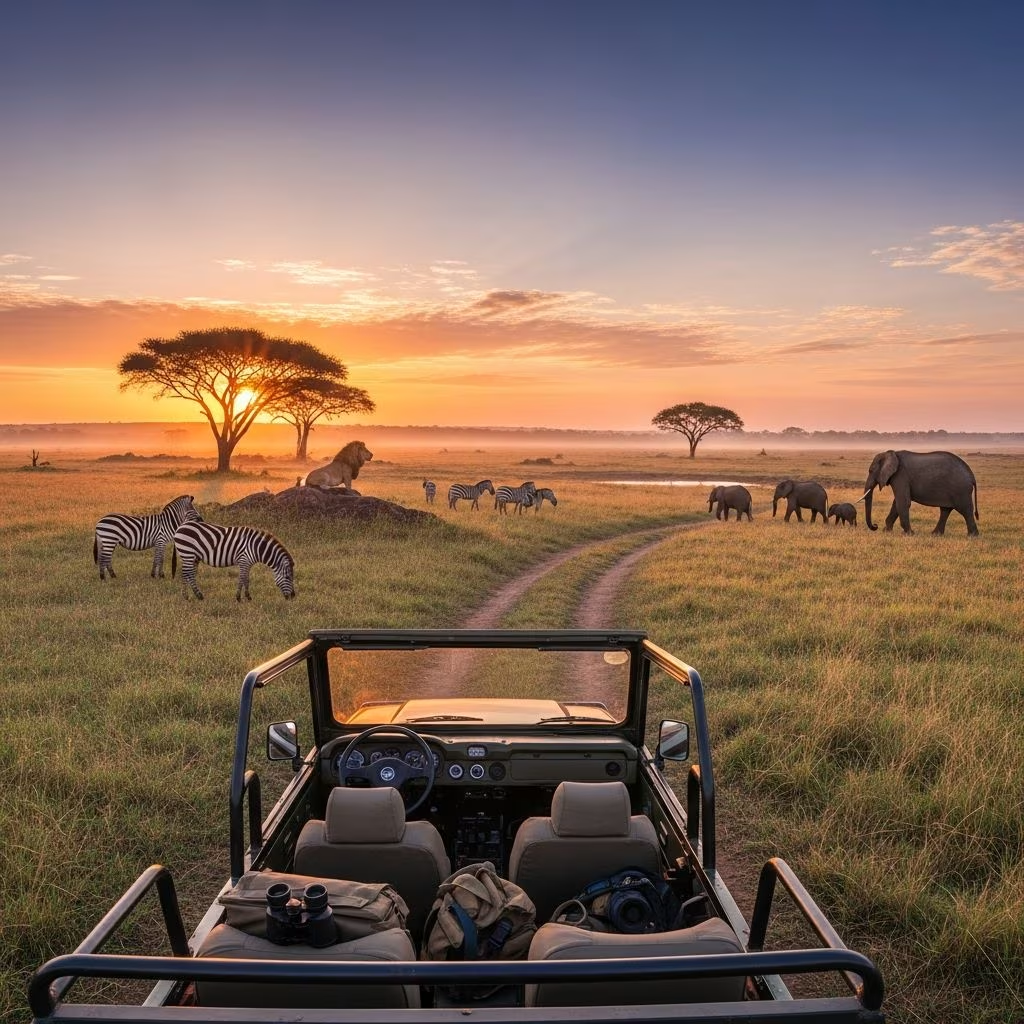
Kenya’s Maasai Mara National Reserve stands as one of Africa’s premier wildlife destinations, drawing adventurers to its vast savannas teeming with iconic animals and dramatic natural events. Spanning roughly 370,000 acres in southwestern Kenya, this protected area forms the northern extension of the Mara-Serengeti ecosystem, renowned for hosting the annual Great Wildebeest Migration. Visitors flock here for unparalleled game viewing, cultural encounters, and immersive experiences amid thorn-dotted plains and life-giving rivers like the Mara, Talek, and Sand.
The reserve’s diverse terrain shapes its biodiversity. Open grasslands dominate, interspersed with acacia groves, rocky kopjes, and seasonal waterways that attract herds during dry periods. Unfenced boundaries connect it to surrounding private conservancies managed by local Maasai communities, expanding the effective habitat for migratory species. This interconnected landscape supports a year-round abundance of herbivores and their predators, making every visit rewarding regardless of season.
Maasai Mara promises sightings of the Big Five—lion, leopard, elephant, buffalo, and rhino—alongside cheetahs, hyenas, and over 470 bird species. Herds of plains game roam freely, but the reserve shines brightest during migration when up to 1.5 million wildebeest thunder across from Tanzania’s Serengeti.
| Animal | Best Viewing Spots | Peak Season |
|---|---|---|
| Lions | Open plains near Talek River | Year-round, esp. July-Oct |
| Cheetahs | Marsh areas | January-March |
| Wildebeest Herds | Mara River crossings | July-October |
| Elephants | Musiara Swamp | Dry season |
Predator-prey interactions unfold daily, offering photographers and nature lovers endless drama.
While accessible year-round, dry season from June to October delivers the clearest views and migration spectacles, with July-September marking river crossings. Calving season in January-February brings predators close to newborn wildebeest, though rains from November to December lushen the scenery despite muddier tracks. Avoid peak crowds by targeting shoulder months like late May or early November.
Most journeys begin in Nairobi, with options suiting budgets and timelines. Road transfers take 5-6 hours via 4×4 vehicles or minibuses, traversing rural Kenya for added authenticity despite bumpy sections. Scenic flights land at airstrips like Keekorok or Musiara in under an hour, ideal for luxury trips. Self-driving is possible but discouraged for newcomers due to rugged paths and navigation challenges—guided tours maximize sightings.
For multi-park itineraries, pair Maasai Mara with Amboseli (elephants under Kilimanjaro) or Lake Nakuru (flamingos and rhinos) in 7-10 day circuits. Shorter 3-day escapes focus solely on the reserve.
Accommodations range from tented camps blending into the bush to lodges with panoramic views. Luxury options like mobile camps follow migration herds, while budget campsites offer communal firesides. Central spots near Sekenani Gate suit fly-ins; conservancy properties provide exclusivity.
Beyond dawn and dusk game drives—the cornerstone of any trip—enhance your adventure with variety. Hot-air balloon rides lift you over herds at sunrise, followed by bush breakfasts. Walking safaris with armed rangers reveal tracks and insects up close. Night drives spotlight nocturnal hunters like leopards.
Cultural visits to Maasai villages introduce warrior traditions, beadwork, and dances, fostering respect for hosts who steward the land. Guided bush meals and photography workshops round out immersive days.
Layer neutral-toned clothing (khaki, green) for camouflage and comfort. Binoculars, high-SPF sunscreen, DEET repellent, and anti-malaria prophylaxis are musts. Sturdy walking shoes handle trails; hats and buffs combat sun. Pack motion sickness aids for drives, reusable water bottles, and power banks—no outlets mid-safari.
Malaria risk persists; consult doctors for vaccines (yellow fever, typhoid) and prophylactics like doxycycline. Stay in vehicles except on guided walks; follow ranger directives near wildlife. Respect animals by maintaining distance—no feeding or off-roading. Support communities ethically via conservancy fees.
Water is safe at camps; tipping guides (USD 10-20/day) shows appreciation.
3-Day Quick Escape: Day 1: Fly in, afternoon drive. Day 2: Full-day migration chase. Day 3: Morning balloon, depart.
7-Day Kenya Highlights: Days 1-2: Nairobi sights. Days 3-5: Maasai Mara core. Days 6-7: Amboseli finale.
Its role in the wildebeest migration, Big Five density, and Maasai conservancies distinguish it.
Yes, with reputable operators; children over 6 thrive on guided safaris.
Budget: $300/day; Luxury: $800+ including flights, stays.
Most camps accommodate; pre-inform for bush meals.
DSLR with 200-600mm zoom; tripods optional in vehicles.
Sustainable tourism bolsters anti-poaching and community projects. Opt for conservancy stays to directly aid Maasai landowners. Minimal-impact practices ensure this wilderness endures for generations.
