

 Travel Essentials
 Travel Essentials

Discover Machu Picchu’s Inca engineering, sacred history, and practical travel tips for visiting Peru’s breathtaking mountain citadel.
 Travel Essentials
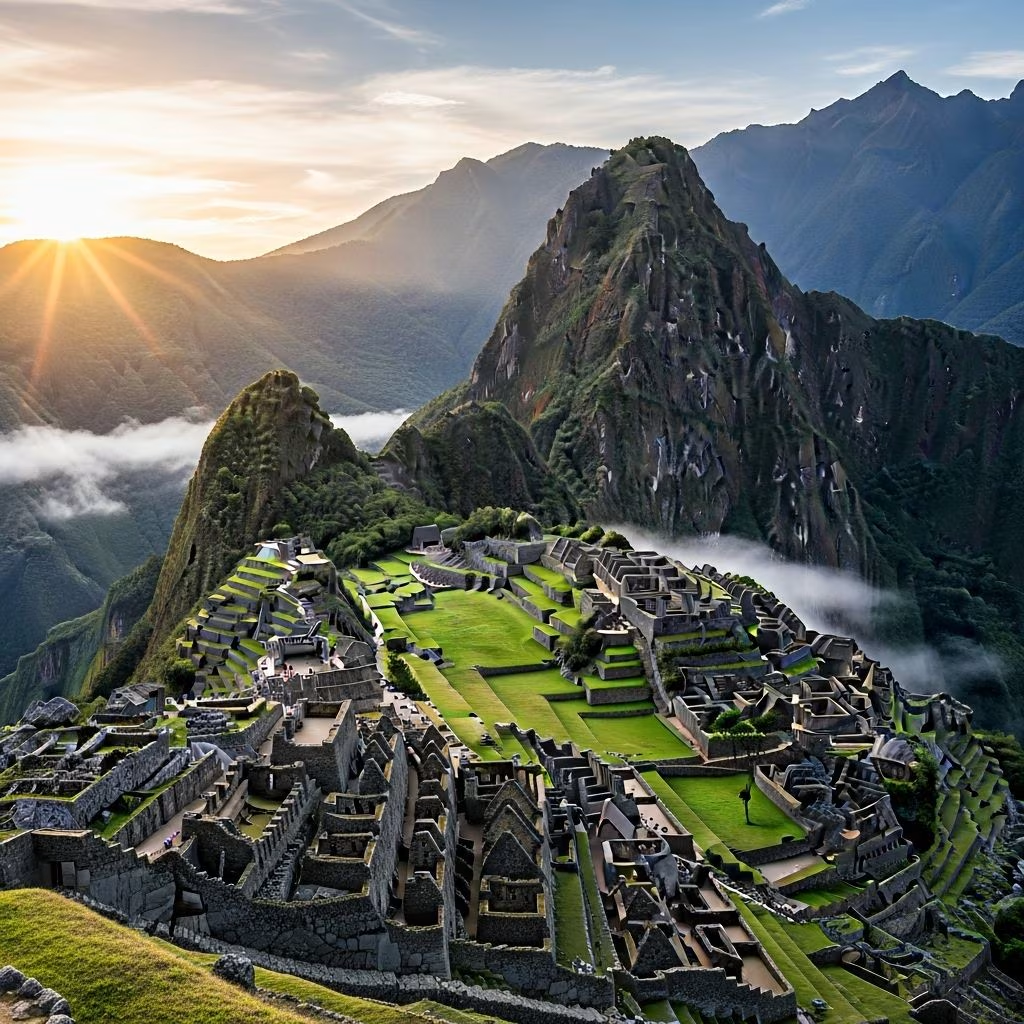
Perched high in the Peruvian Andes, Machu Picchu stands as a profound testament to Inca ingenuity and spiritual depth. This 15th-century citadel, blending seamlessly with its dramatic mountain backdrop, captivates millions annually with its stone terraces, temples, and enigmatic past.
The Inca Empire, known as Tawantinsuyu, emerged in the Cusco Valley around 1200 AD, rooted in legends of founders like Manco Cápac and Mama Ocllo. Its true expansion occurred under Pachacuti, the ninth ruler from 1438 to 1471, who transformed a regional power into a vast domain spanning nearly 2 million square kilometers.
Pachacuti’s vision extended beyond conquest; he commissioned monumental projects symbolizing imperial might. Machu Picchu, constructed around 1450, exemplified this ambition, serving as a royal estate and ceremonial hub amid lush jungle and sacred peaks.
Situated at 2,430 meters (7,970 feet) above sea level, 75 kilometers northwest of Cusco, Machu Picchu occupies a ridge between the Urubamba River and the Amazon Basin. This nexus of Andes and jungle provided defensive seclusion, fertile lands, and access to rare resources like coca leaves.
Inca builders crafted the site without mortar, employing ashlar masonry—precisely cut stones interlocked for earthquake resistance. Over 100 terraces supported agriculture, while aqueducts channeled water across the complex, sustaining up to 1,000 residents including nobility, priests, and servants.
| Feature | Description | Significance |
|---|---|---|
| Terraces | Staggered stone platforms | Agriculture and erosion control |
| Aqueducts | 16 fountains and channels | Irrigation and ritual purification |
| Temples | Sun Temple, Three Windows | Astronomical and spiritual observances |
| Intihuatana | Hitching post of the sun | Solar calendar and rituals |
Debate persists on Machu Picchu’s exact role: a seasonal retreat for Pachacuti, administrative center, or religious sanctuary? Evidence suggests a multifunctional space integrating agriculture, astronomy, and spirituality. Residences for elite women, possibly acllas (chosen women), hint at a sacred dimension, though early theories of a nunnery are contested.
Abandoned around 1530 amid Spanish invasion, the site evaded looters, overgrown by jungle until modern times.
Though known to locals, Machu Picchu gained worldwide fame through Yale explorer Hiram Bingham in 1911. Accompanied by locals, Bingham ascended to the ruins, publishing accounts in National Geographic by 1913, sparking global fascination.
Excavations from 1912-1915 revealed temples and artifacts, now mostly repatriated to Peru. The site’s isolation preserved it, leading to designations: Peruvian Historical Sanctuary (1981), UNESCO World Heritage (1983), and New Seven Wonders (2007).
Today, Machu Picchu welcomes 1.5 million visitors yearly, prompting strict regulations. A cap of 2,500 daily entrants, timed tickets, and circuit paths protect the fragile stones.
UNESCO praises its harmony with the environment, encompassing diverse flora and fauna in a tropical mountain forest.
Most arrive via PeruRail or Inca Rail from Cusco or Ollantaytambo to Aguas Calientes, then bus up 400 meters. The iconic Inca Trail—a 4-day trek—offers immersive history but requires permits months ahead.
Best season: May-September (dry); altitude prep essential.
To preserve this wonder:
Inca workers under Emperor Pachacuti around 1450 AD.
Train to Aguas Calientes, then bus or hike; book via official sites.
Yes, with precautions for altitude, crowds, and trails.
Dry season (May-Sep) for clear views; shoulder months less crowded.
No; designated paths only to prevent damage.
Machu Picchu transcends ruins—it’s a window into Inca cosmology, where mountains were apus (deities), and architecture mirrored the cosmos. Its endurance reflects resilient Andean heritage amid globalization.
Visitors leave transformed, pondering how 15th-century minds sculpted eternity from granite. As Peru safeguards this jewel, future generations will tread its stones, echoing ancient footsteps.
