

 Travel Essentials
 Travel Essentials

Peru is planting one million native trees around Machu Picchu to fight erosion, restore habitats, and protect this UNESCO site.
 Travel Essentials
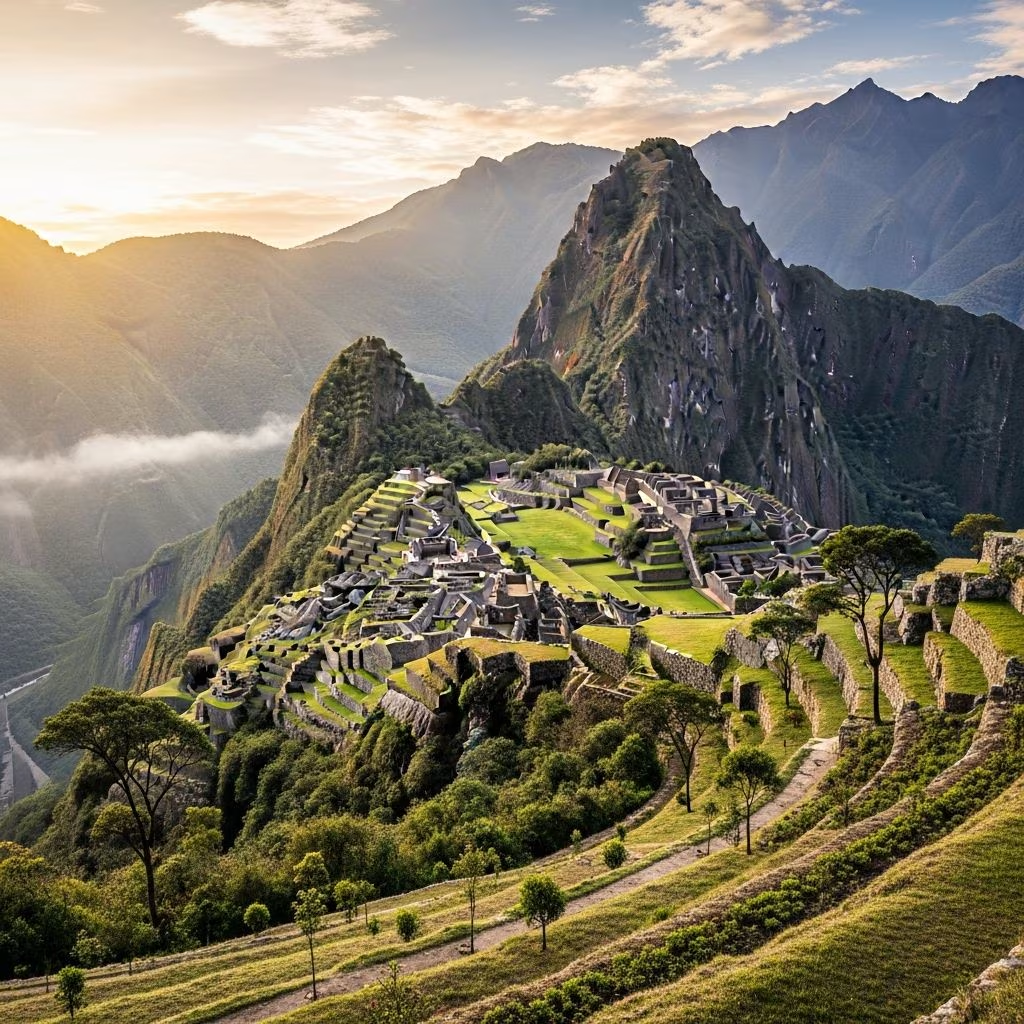
Peru’s Historic Sanctuary of Machu Picchu faces mounting environmental pressures from erosion, wildfires, and vegetation loss, prompting a nationwide effort to plant one million native trees across its vast protected areas. Launched by the Ministry of the Environment in coordination with Sernanp, this initiative targets 11,000 hectares within the 35,000-hectare reserve, focusing on Andean and Amazonian zones to bolster ecological resilience.
Machu Picchu, perched high in the Andes, is not just an archaeological marvel but a delicate ecosystem spanning diverse altitudes and climates. Over recent decades, recurring forest fires, soil degradation, and loss of vegetation cover have accelerated erosion, threatening both the ancient ruins and surrounding biodiversity. The Peruvian government’s response, the “One Million Trees” campaign, relaunched on March 30, 2026, aims to reverse these trends by restoring natural habitats and improving water retention in vulnerable slopes.
Degraded areas, particularly in the buffer zones, have seen progressive soil erosion that endangers trails like the Inca Trail and the stability of the sanctuary itself. By prioritizing native species adapted to high altitudes—such as queñua, chachacomo, and tasta for Andean sections, and alder, pacaymono, chalanque, and incense for Amazonian parts—the project ensures long-term survival rates despite challenging conditions like variable weather and poor soil quality.
The campaign divides efforts across nine key sectors in the sanctuary and its buffer zone, covering 29.23% of the total protected area. Initial plantings occur in high-risk spots like KM 82 Piscakucho and Misquipuquio along the Inca Trail at 3,800 meters above sea level, where fires have stripped protective cover.
These selections are informed by Sernanp specialists, emphasizing species that naturally stabilize slopes, retain moisture, and foster wildlife habitats. Continuous monitoring post-planting is integral, with survival tracked via digital tools to adapt strategies amid Andean unpredictability.
Success hinges on multi-stakeholder involvement. The Ministry of the Environment leads, partnering with Sernanp, local governments like Cusco’s regional authority and Ollantaytambo’s municipality, and indigenous communities. Private tour operators, including Andean Great Treks, contribute through staff-led plantings, aligning tourism with conservation.
A public digital platform invites citizen participation, allowing donations, volunteer sign-ups, and progress tracking. This democratizes restoration, turning visitors into stewards—porters, guides, and chefs from Inca Trail expeditions have already planted hundreds of seedlings, fostering a sense of shared ownership.
| Stakeholder | Role | Contributions |
|---|---|---|
| Government (Minam, Sernanp) | Leadership & Funding | Seedlings, monitoring tech, policy framework |
| Local Communities | On-Ground Execution | Planting labor, traditional knowledge |
| Tour Operators | Private Support | Staff volunteers, eco-tourism promotion |
| Citizens/Volunteers | Participation | Digital pledges, on-site help |
Wildfires have ravaged Cusco’s protected lands, degrading 11,000 hectares and disrupting flora-fauna balance. The million-tree push counters this by creating firebreaks and enhancing soil cohesion—roots from queñua, for instance, anchor topsoil against heavy rains, reducing mudslide risks that imperil trails and ruins.
Biodiversity rebounds as habitats reform: birds, mammals, and insects return, bolstering pollination and seed dispersal. Water cycles improve with better retention, mitigating droughts and floods in this high-altitude zone. Long-term, these trees guard Machu Picchu’s integrity, ensuring its UNESCO status endures for future trekkers.
Machu Picchu welcomes over a million visitors yearly, straining ecosystems via foot traffic and infrastructure. Reforestation elevates its eco-credentials, attracting conscious travelers seeking immersive, low-impact experiences. Operators like those on the Inca Trail integrate planting into itineraries, educating hikers on conservation.
This synergy sustains livelihoods—local jobs in nursery management, monitoring, and guiding—while capping overtourism through greener infrastructure. The campaign positions Peru as a model for heritage sites worldwide, blending cultural reverence with environmental stewardship.
Planting at 3,800+ masl demands innovation: altitude stresses seedlings, frosts kill young growth, and herbivores pose threats. Solutions include protective tubing, mycorrhizal inoculants for root health, and drone-assisted seeding in remote spots. Maintenance crews conduct twice-yearly checks, replanting failures to hit the million-tree goal within a decade.
Climate change amplifies risks—erratic rains and warming—but native genetics confer resilience. Community education programs teach fire prevention, reducing anthropogenic ignitions from trailside camps.
Machu Picchu’s effort mirrors worldwide reforestation drives, like the UN’s Decade on Ecosystem Restoration. It underscores native species’ superiority over exotics, community buy-in’s power, and tech’s role in scaling impact. For UNESCO sites from the Galápagos to Angkor, this blueprint offers hope: renewal through collective action.
Projected outcomes include 20-30% erosion reduction in five years, per Minam models, with biodiversity indices rising as canopies mature. This not only preserves a wonder but inspires planetary care.
Visit the official digital platform via Sernanp or Minam sites to pledge, donate, or join planting events. Tourists can select eco-operators committing to the cause.
Primarily natives: queñua, chachacomo, tasta (Andean); alder, pacaymono, chalanque, incense (Amazonian), chosen for adaptation and ecological benefits.
It combats erosion, wildfires, and habitat loss, protecting ruins, trails, and biodiversity in this climate-vulnerable UNESCO site.
March 30, 2026, building on prior phases to reach one million trees over 10 years.
11,000 hectares across nine sectors, about 29% of the 35,000-hectare sanctuary and buffer.
