

 Travel Essentials
 Travel Essentials

Machu Picchu tops lists as the world's most magical site, blending Inca engineering marvels with breathtaking Andean landscapes. Explore its history, allure, and visitor essentials.
 Travel Essentials
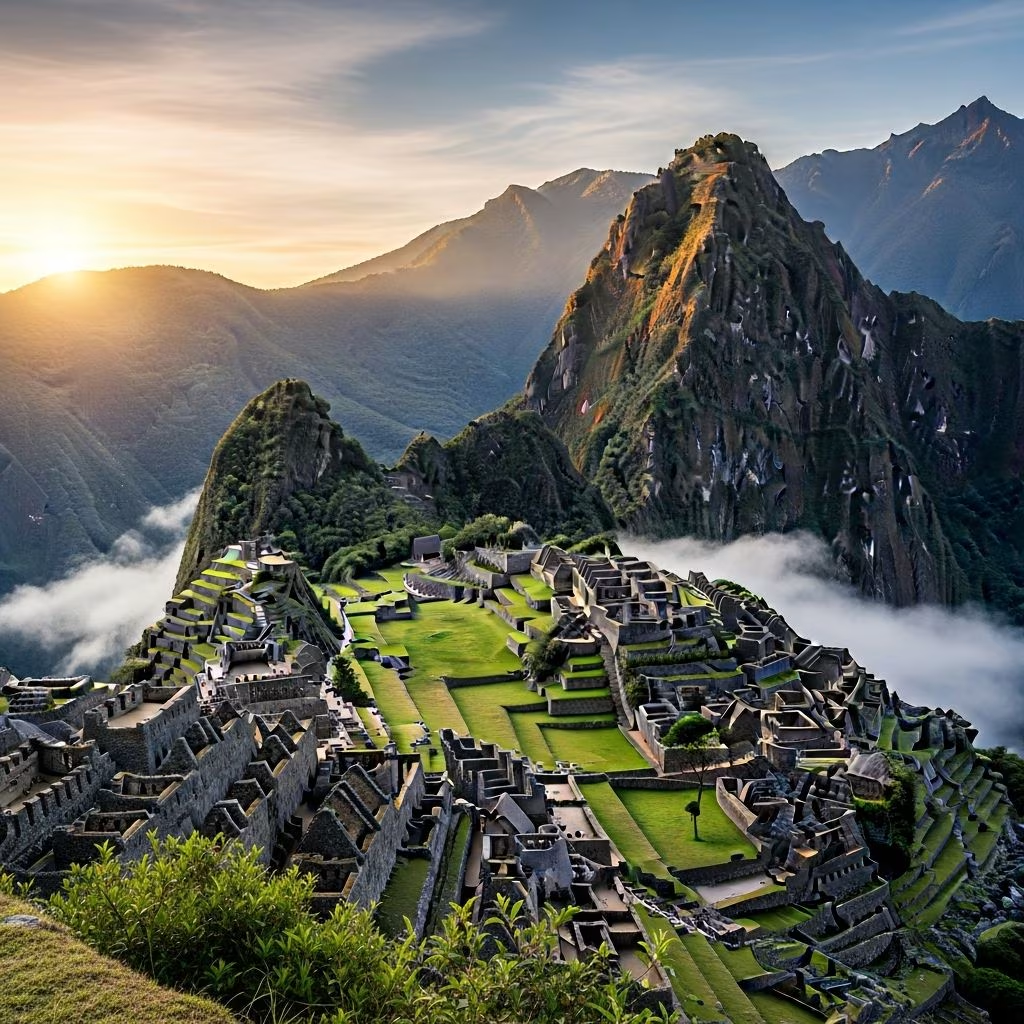
Perched high in the Peruvian Andes, Machu Picchu stands as a timeless testament to human ingenuity and harmony with nature. This 15th-century Inca citadel, often called the “Lost City of the Incas,” has been recognized in global studies as the most magical destination on the planet, drawing millions of visitors each year with its unparalleled blend of architectural brilliance and dramatic scenery.
Machu Picchu’s magnetic pull lies in its seamless integration into a rugged mountain landscape at 2,430 meters above sea level. Nestled amid tropical mountain forests on the eastern slopes of the Andes, it overlooks the upper Amazon basin, where diverse flora and fauna thrive. The site’s giant walls, terraces, and ramps appear carved directly from the rock escarpments, creating an illusion of natural emergence.
Declared a UNESCO World Heritage Site in 1983 for its outstanding cultural and natural values, Machu Picchu exemplifies the Inca Empire’s peak achievements in art, architecture, and land management. Spanning 32,592 hectares, the sanctuary includes steep ridges crisscrossed by stone terraces that supported agriculture, religion, astronomy, and ceremonies.
Constructed around 1450 during the reign of Emperor Pachacuti, Machu Picchu likely served as a royal estate rather than a fortress. Radiocarbon dating confirms occupation from approximately 1420 to 1530, after which it was abandoned, possibly during the Spanish conquest.
The city’s meticulous design divides it into agricultural lower sections and residential upper areas, connected by a grand central square. Up to 200 structures, built with precisely cut dry-stone walls requiring no mortar, highlight Inca engineering prowess. Notable features include the Temple of the Sun, Temple of the Three Windows, and the Intihuatana stone, believed to function as a solar observatory.
Though known locally, Machu Picchu gained worldwide fame in 1911 when American explorer Hiram Bingham III brought it to international attention. Peruvian explorer Agustín Lizárraga had reached it earlier in the 20th century, but Bingham’s expeditions, backed by National Geographic, sparked global interest.
Peru designated it a National Historic Sanctuary in 1981, followed by UNESCO status. In 2007, it was voted one of the New Seven Wonders of the World, alongside sites like the Great Wall of China and Petra.
| Wonder | Location | Year Voted |
|---|---|---|
| Machu Picchu | Peru | 2007 |
| Great Wall | China | 2007 |
| Petra | Jordan | 2007 |
| Taj Mahal | India | 2007 |
| Colosseum | Italy | 2007 |
| Chichen Itza | Mexico | 2007 |
| Christ the Redeemer | Brazil | 2007 |
Recent analyses highlight Machu Picchu’s top ranking in “magical” travel spots due to its ethereal atmosphere, historical depth, and scenic drama. Over 1.5 million visitors arrive annually as of 2025, making it Peru’s premier attraction. Daily limits cap at 2,500 to preserve the site.
Visitors often describe a profound sense of awe amid roaming llamas, mist-shrouded peaks, and ancient steps. The journey via the iconic Inca Trail adds adventure, winding through cloud forests and offering glimpses of the sanctuary before the iconic reveal.
Reaching Machu Picchu requires planning. Most fly into Cusco, then take a train from Poroy or Ollantaytambo to Aguas Calientes, followed by a bus up the mountain. The classic four-day Inca Trail trek demands permits booked months ahead.
Sustainable practices are crucial: stick to paths, avoid touching stones, and support local communities.
Despite extensive study, enigmas persist. Its precise purpose—royal retreat, religious center, or astronomical hub—remains debated. How Incas transported massive stones without wheels fascinates scholars. The site’s abandonment without Spanish traces adds intrigue.
Tourism booms strain the fragile ecosystem. UNESCO monitors erosion from foot traffic and climate change impacts like landslides. Peru implements circuit limits and restoration projects to safeguard this irreplaceable treasure.
It sits at 2,430 meters (7,970 feet) above sea level.
Yes, it’s among the New Seven Wonders, selected in 2007.
Train from Cusco area to Aguas Calientes, then bus or hike up.
Yes, but permits are limited; book via authorized operators.
It was abandoned and overgrown, rediscovered in 1911.
Llamas and alpacas roam freely among the ruins.
