

 Travel Essentials
 Travel Essentials

Explore the challenges and wonders of riding Madagascar's only passenger train from highlands to coast, a 163km trip lasting 12-24 hours amid stunning landscapes and local life.
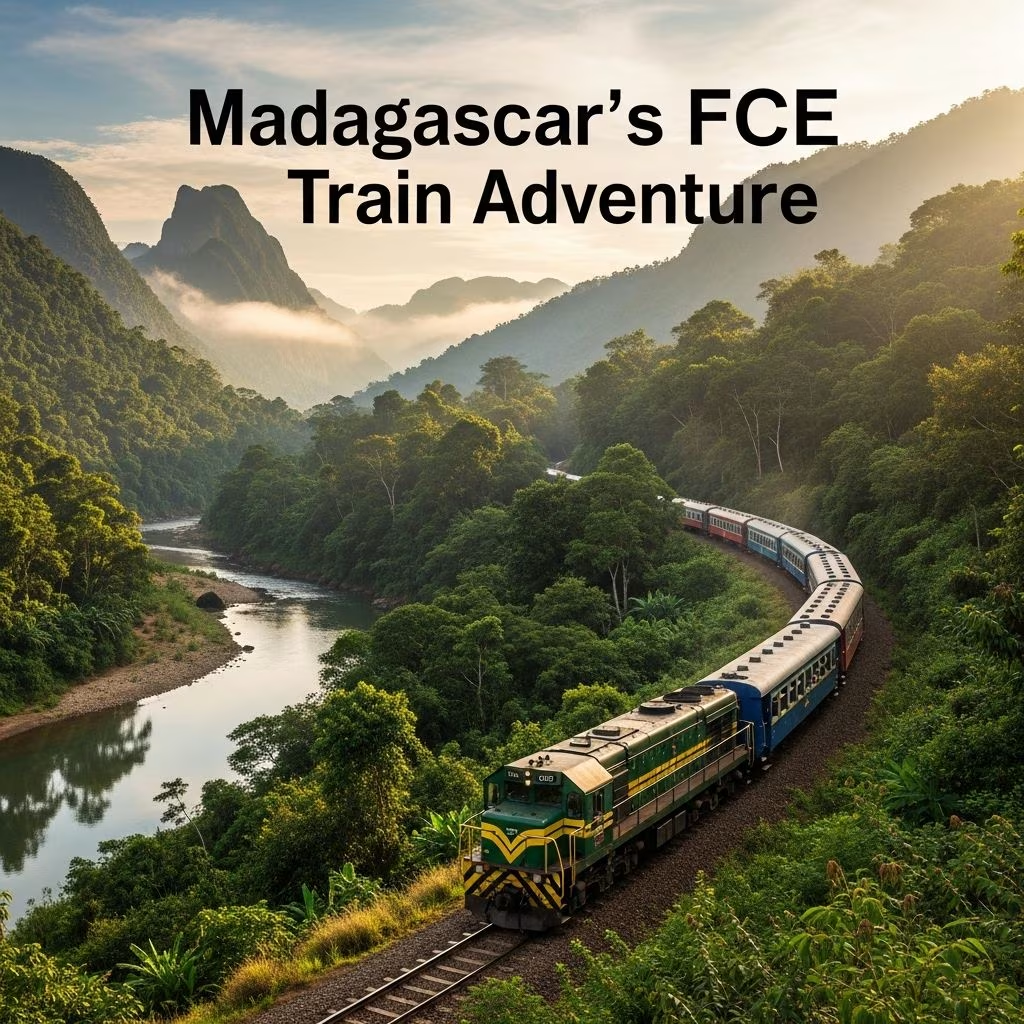 Travel Essentials
The Fianarantsoa-Côte Est (FCE) railway stands as Madagascar’s sole surviving passenger train service, linking the elevated city of Fianarantsoa at 1,100 meters to the coastal hub of Manakara over 163 kilometers. What should be a brief trip stretches into 12 to 24 hours—or longer—due to the line’s steep gradients, frequent mechanical issues, and heavy freight loads. Yet, this sluggish pace transforms the voyage into a profound immersion in Madagascar’s untouched wilderness and vibrant communities, far removed from modern haste.
Constructed in the early 1930s by French colonial engineers, the FCE utilized rails repurposed from Germany as World War I reparations. Spanning diverse ecosystems from misty highlands to humid lowlands, the track snakes through 18 stations, many inaccessible by road. This lifeline has endured cyclones, political upheavals, and economic woes since Madagascar’s independence in 1960, with minimal maintenance leading to chronic derailments and breakdowns. Today, a single locomotive hauls both passengers and cargo on just two weekly runs each direction, amplifying overcrowding and unpredictability.
Despite these trials, the railway persists as a vital artery for trade. Villagers load rice, vanilla, and litchis at dawn, turning stations into bustling markets where vendors hawk grilled meats and fresh fruits. The train’s average speed hovers at 20 km/h, occasionally dipping to 15 mph on uneven sections bolted from short rail segments rather than welded beams.
Departing Fianarantsoa, the train climbs through terraced rice paddies and pine forests before plunging into denser jungles. The pinnacle of beauty unfolds between Sahambavy and Fenomby: viaducts arch over plunging ravines, tunnels pierce granite cliffs, and open windows invite breezes scented with wild orchids and damp earth. Passengers glimpse lemurs darting in the canopy and rare birds flitting by, a sensory feast unavailable by road.
For optimal views, board southward from Fianarantsoa to traverse prime sections in daylight. Northbound trips risk navigating these in darkness after prolonged halts.
Services depart Fianarantsoa Tuesdays and Saturdays at 7 a.m. (in theory), returning from Manakara Wednesdays and Sundays. Tickets cost around Ar40,000 for first class and Ar16,000 for second, purchasable at stations amid chaotic queues. Arrive early—doors may seal hours before official times due to overload. First class offers marginally more space and benches; second is standing-room pandemonium with sacks piled high.
| Aspect | Details |
|---|---|
| Schedule | Fianarantsoa to Manakara: Tue/Sat 7am; Manakara to Fianarantsoa: Wed/Sun 7am |
| Duration | 12-24+ hours |
| Classes | 1st: Ar40,000 (~$10 USD); 2nd: Ar16,000 (~$4 USD) |
| Stations | 18 total, major: Sahambavy, Irondro, Manakara |
Reaching Fianarantsoa demands grit: bush taxis from Antananarivo jolt 10-15 hours over potholed roads bypassing washed-out bridges. No flights serve the route, cementing the FCE’s isolation.
Expect the unexpected. Breakdowns strand trains overnight; one account notes arrival at 00:15 after 17 hours. Toilets overflow midway, prompting discreet bush breaks. Heat builds without fans, dust coats everything, and crowds press in with livestock and goods. Yet, these hardships forge camaraderie—locals share mangoes, children wave endlessly, and stars blaze through open roofs at night.
Overloading exacerbates dangers on rickety tracks. Recent cyclones have battered infrastructure, yet the single engine soldiers on, hauling essentials to roadless hamlets.
Skip the dull Fianarantsoa-Sahambavy leg by overnighting at Lac Hôtel in Sahambavy, a serene lakeside retreat amid tea plantations (lachotel.com). Alight at intermediate spots like Irondro for river hikes or Vakimpety to explore vanilla farms. Manakara rewards with canal boat rides and seafood feasts.
Pack light but smart: water (buy en route), snacks, rain poncho, headlamp, power bank, and motion sickness meds. Cash rules—no ATMs. Earplugs mute rooster crows; a sarong doubles as blanket or curtain. Learn basic Malagasy phrases like “Misaotra” (thank you) to charm fellow travelers.
In an era of high-speed rails, the FCE revives travel’s essence: unhurried discovery. It unveils Madagascar’s soul—resilient people, biodiverse wilds, raw authenticity—beyond tourist trails. Riders treasure mishaps as stories: midnight station feasts, dawn viaduct sunrises, bonds with strangers. This isn’t transport; it’s transformation.
Environmentally, the train eases road strain in a nation where 90% travel by foot or cart. Culturally, it sustains traditions amid modernization pressures.
While derailments occur, passenger injuries are rare. Stay calm during halts; follow crew instructions.
Dry season (May-Oct) minimizes rain delays; southbound for daylight scenery.
No—buy on-site. Agents in Fianarantsoa offer guides for reliability.
Overnights happen; locals host or stations provide shelter. Carry supplies.
Adventurous families cope; under-10s may find it taxing.
| Mode | Time (Fianar-Manakara) | Cost | Scenery Access | Comfort |
|---|---|---|---|---|
| FCE Train | 12-24h | Low | Excellent | Basic |
| Bush Taxi | 14-20h (indirect) | Medium | Poor | Poor |
| Private 4×4 | 10-15h | High | Moderate | Good |
Advocates push for rehabilitation funding, citing tourism potential. Community co-ops maintain sections, blending heritage with sustainability. Riders contribute by supporting station vendors, bolstering local economies.
