

 Travel Essentials
 Travel Essentials

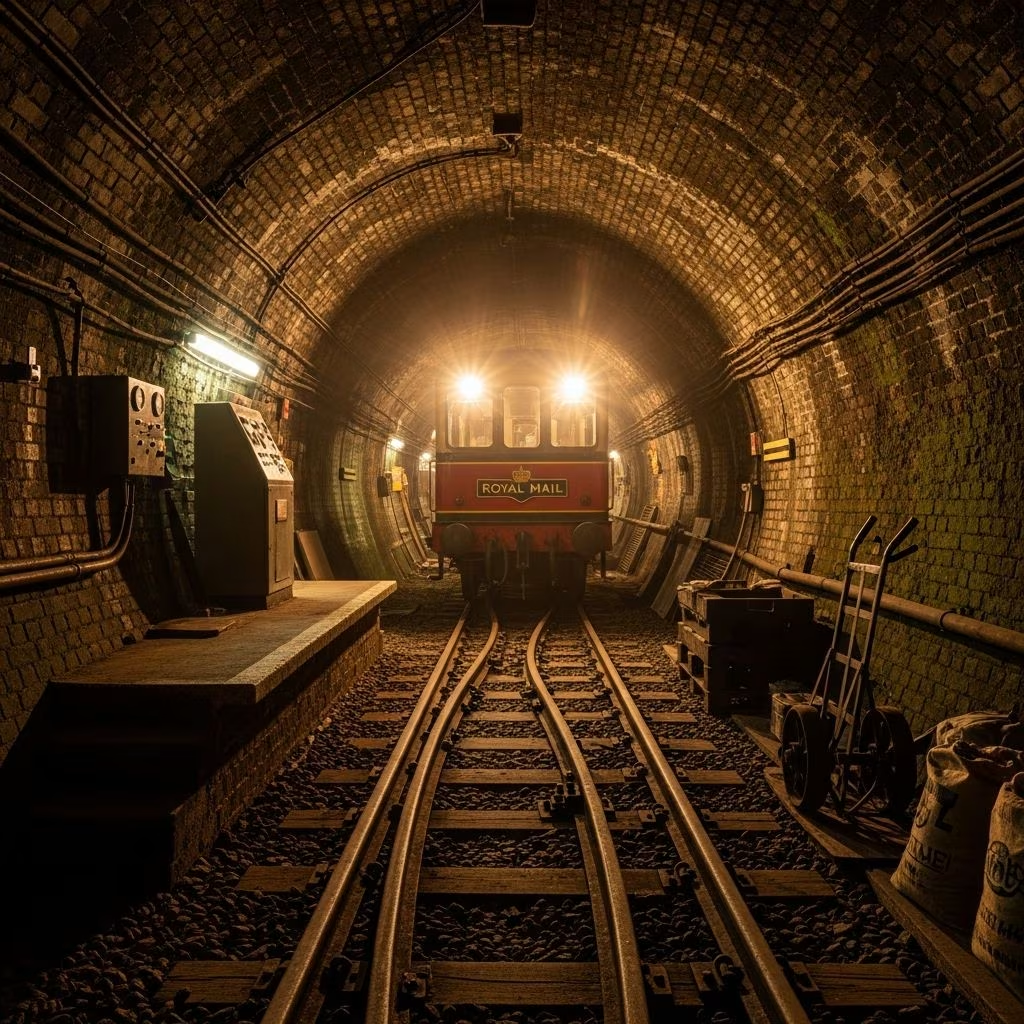
Explore the revival of London's subterranean Mail Rail, a narrow-gauge network that transported mail for decades and is now open to the public via The Postal Museum.
 Travel Essentials
Deep beneath the bustling streets of London lies a forgotten engineering triumph: the Mail Rail, a narrow-gauge underground railway designed exclusively for transporting mail. Operational for 76 years until its closure in 2003, this driverless network once handled up to 4 million letters daily, connecting key sorting offices and stations across the city. Today, a portion of this subterranean world has been meticulously restored and reopened to the public as part of The Postal Museum, offering riders a unique glimpse into London’s hidden history.
In the early 20th century, London’s postal service grappled with overwhelming volumes of mail amid rapid urbanization and growing commerce. Surface transport proved inefficient, plagued by traffic and weather delays. Inspired by systems like Chicago’s Tunnel Company, the General Post Office envisioned a dedicated underground railway to streamline operations.
Construction began in 1911, but World War I delayed progress. The line finally opened on December 4, 1927, stretching 6.5 miles from Paddington in the west to Whitechapel in the east, with stops at key sites including Mount Pleasant, the massive central sorting office. This 2-foot gauge (610 mm) network featured electric-powered, driverless trains that navigated tunnels as deep as 70 feet below ground.
The system’s ingenuity lay in its automation: trains ran on a milk-run schedule, stopping briefly at stations where postal workers loaded and unloaded sacks via specialized platforms. Gradients of 1-in-20 helped decelerate approaching trains and accelerate departures, minimizing energy use and maximizing efficiency.
At its zenith, Mail Rail operated 22 hours a day, shuttling millions of items with remarkable precision. Tiny electric locomotives, each pulling up to four small wagons, zipped through at speeds up to 35 mph, far quicker than street-level alternatives.
Mount Pleasant station served as the nerve center, directly beneath the Royal Mail’s London Central Mail Centre. Here, mail arrived from across the city, was sorted, and dispatched onward. The network bypassed notorious bottlenecks like Oxford Circus, where tunnels ran perilously close to the Bakerloo line, and even snaked under landmarks like Selfridges department store.
This efficiency transformed postal delivery, enabling same-day handling for urgent items and supporting Britain’s expanding communication needs during the interwar boom and World War II.
By the late 20th century, technological shifts doomed Mail Rail. Electronic communications reduced physical mail volume, while vans and lorries became cheaper for remaining loads. Operating costs soared as the system aged, with only three stations active by the 1990s, running at a third capacity.
The final train ran on May 10, 2003. Rather than demolish, Royal Mail preserved the infrastructure, maintaining minimal staff for safety. Tunnels from Mount Pleasant still extend to Paddington and Whitechapel, a ghostly reminder of past efficiency.
Recognizing its cultural value, The Postal Museum spearheaded a revival. After years of restoration, a 1,200-foot section at Mount Pleasant reopened in September 2017, allowing public rides for the first time.
Visitors board replica miniature trains in groups of up to 18, embarking on a 15-minute round trip through original tunnels. Narration recounts the railway’s story, while immersive lighting evokes the working era. The experience culminates in the atmospheric workshop, once bustling with maintenance.
“We’re standing in the old workshop at Mount Pleasant, which is the heart of the Mail Rail network.”
Museum tickets include one ride, blending thrill with education. Beyond the rail, exhibits chronicle 500 years of postal innovation, from Victorian letterboxes to modern sorting machines.
The Mail Rail offers an authentic, compact adventure, but it’s not for everyone. Tunnels are narrow (just 7 feet wide), and boarding requires stepping down into low-slung carriages—no lifts or ramps.
| Aspect | Details |
|---|---|
| Duration | 15 minutes round trip |
| Capacity | 18 passengers per train |
| Accessibility | Limited; step-free alternative virtual ride available |
| Ticket Price | Included in museum entry (adult ~£16, child ~£9) |
| Location | 15-20 Phoenix Place, London WC1X 0DA |
Pro tip: Book timed slots online to avoid queues, especially weekends. Nearby King’s Cross or Chancery Lane stations provide easy Tube access.
The Postal Museum, housed in repurposed Mount Pleasant spaces, elevates the Mail Rail from mere ride to historical cornerstone. Interactive displays trace mail’s societal impact:
Family-friendly zones like the Phonemail explore sound-recorded letters, while adult exhibits delve into philately and underground engineering.
Mail Rail’s design was ahead of its time. Tunnels, bored by compressed air shields, curve gently to follow street grids. Stations feature shallower depths for easy mail lifts, with clever airshafts ventilating fumes.
Driverless tech relied on timed circuits and track switches, predating modern automation. Post-closure surveys confirmed structural integrity, enabling safe reopening with minimal changes.
In a city packed with icons, Mail Rail stands out for intimacy and surprise. It’s a time capsule of industrial grit, evoking London’s unsung innovators. Riders emerge with fresh appreciation for everyday infrastructure that shaped the modern world.
Pair it with nearby British Museum or a Camden stroll for a full day. As one curator noted, preservation turns industrial relic into joy for thousands.
Tunnels are narrow but well-lit and narrated; opt for virtual ride if concerned.
About 6.5 miles from Paddington to Whitechapel.
Yes, minimum age 3-4ft tall; under 18s need adult.
Private, narrow-gauge, mail-only; never on public maps.
Currently limited to Mount Pleasant; full revival unlikely due to costs.
