

 Travel Essentials
 Travel Essentials

Malawi’s national parks are rebounding with Big Five wildlife, community-led conservation, and affordable safari experiences.
 Travel Essentials
Malawi, often called the Warm Heart of Africa, is witnessing a profound transformation in its natural landscapes. Once plagued by poaching and neglect, key national reserves are now bustling with wildlife, offering visitors unparalleled safari experiences. This revival stems from strategic partnerships, ambitious translocation projects, and community engagement, positioning Malawi as an emerging gem for nature enthusiasts.
The story begins in the early 2000s when Malawi’s wildlife reserves faced near collapse. Poaching had decimated populations of elephants, lions, and rhinos, leaving vast areas eerily empty. In a pivotal move, the Malawian government partnered with African Parks, a non-profit organization dedicated to restoring Africa’s protected areas. This 25-year agreement for Majete Wildlife Reserve marked the start of a nationwide effort.
African Parks brought expertise in fencing, anti-poaching measures, and animal reintroductions. By securing boundaries and deploying trained rangers, they halted illegal activities. Local communities, previously reliant on bushmeat and snares, were integrated into sustainable programs like beekeeping and farming cooperatives, fostering long-term support for conservation.
Majete, spanning 70,000 hectares in southern Malawi, was a poacher’s paradise until 2003. African Parks invested heavily, translocating over 2,500 animals including the Big Five: elephant, rhino, buffalo, leopard, and lion. Lions returned in 2012 after a 30-year absence, a historic milestone celebrated by conservationists.
Today, Majete hosts more than 12,000 animals and 300 bird species. Cheetahs were introduced in recent years, adding speed and grace to the ecosystem. Luxury lodges like Mkulumadzi provide immersive stays, with game drives revealing herds of sable antelope, eland, and Nile crocodiles along the Shire River.
Liwonde, along the Shire River, became an African Parks reserve in 2015. Elephants, hippos, and crocodiles now thrive in this lush, riverine environment. The organization removed thousands of snares and pit traps, confiscating illegal weapons through community patrols.
Reintroductions have brought lions, leopards, and rhinos, completing the Big Five lineup. Birdwatchers delight in 400+ species, including fish eagles and Pel’s fishing owls. Walking safaris and mokoro canoe trips offer intimate encounters with buffalo herds and grazing antelopes.
| Park Feature | Liwonde Highlights |
|---|---|
| Landscape | Miombo woodlands, lagoons, riverbanks |
| Big Five | All present post-reintroduction |
| Unique Experiences | Hippo pods, croc sightings, guided walks |
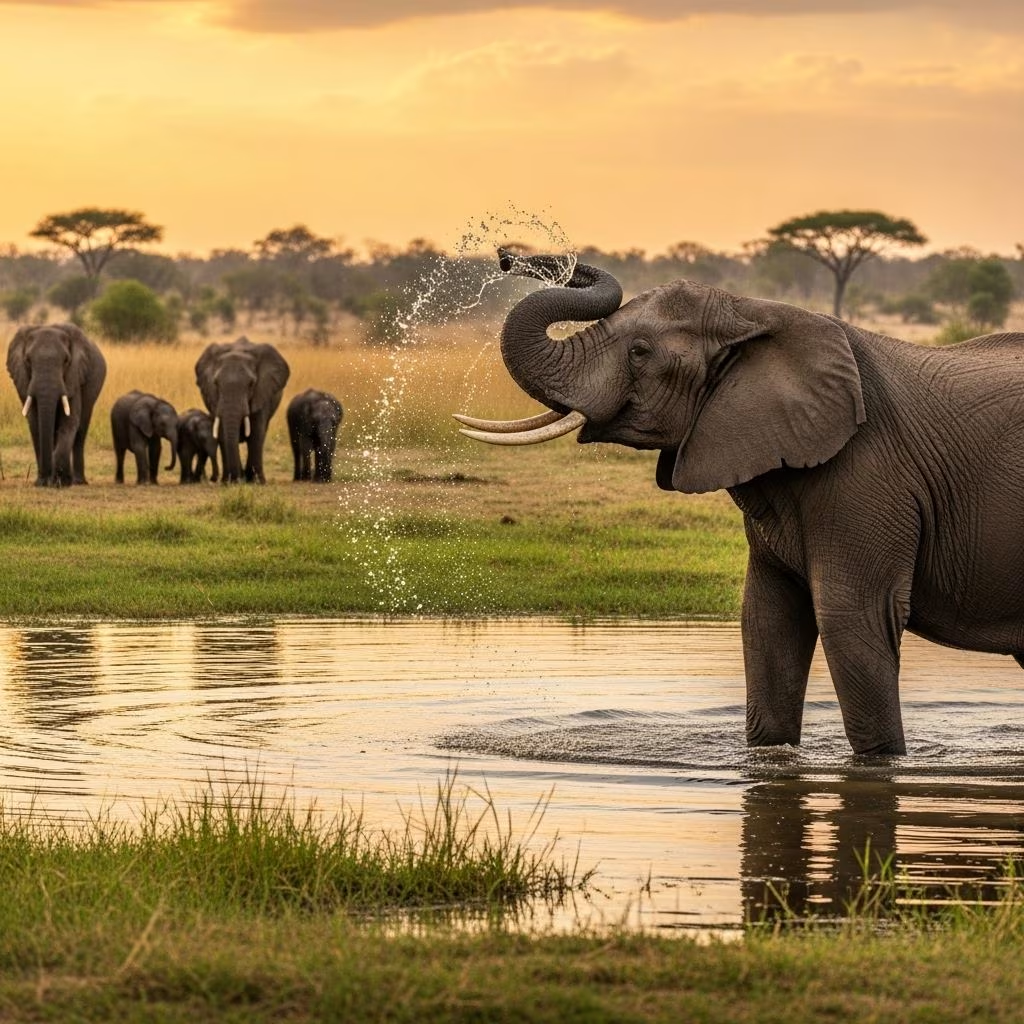
Malawi’s largest reserve at 1,800 square kilometers, Nkhotakota was nearly silent until 2015. African Parks orchestrated the world’s largest elephant translocation, moving 500 elephants from Majete and Liwonde. Over 2,000 other animals like sable, kudu, zebra, and buffalo followed, revitalizing the rugged terrain.
This operation, dubbed the “500 Elephants” project, drew global attention. The reserve’s dense forests make spotting trickier, but rewards include close views of elephant matriarchs leading families and vibrant birdlife with 320 species. Kayaking and mountain biking add adventure to traditional game viewing.
Success hinges on people. African Parks collaborates with locals, providing jobs as rangers, guides, and lodge staff. Revenue from tourism funds schools, clinics, and infrastructure. Beekeeping initiatives replace poaching income, while snare removal teams empower former hunters.
In Liwonde, communities have collected hundreds of wire traps, shifting to agriculture. This model ensures reserves are buffered by supportive neighbors, reducing human-wildlife conflict through crop insurance and problem animal protocols.
Malawi offers affordable, uncrowded safaris. Combine parks with Lake Malawi’s beaches for hybrid trips. Majete suits luxury seekers, Liwonde families, and Nkhotakota adventurers.
Costs are lower than East African rivals, with game drives under $200 daily. Multi-park itineraries showcase the renaissance’s scope.
Despite progress, threats persist: climate change, population pressure, funding needs. African Parks manages 22 parks across 12 countries, using tech like drones and camera traps. Lion populations in Majete now supply others, signaling ecosystem health.
Future plans include more translocations and ecotourism expansion. Malawi aims for sustainable growth, balancing wildlife with community prosperity.
Yes, Majete and Liwonde now host all Big Five species thanks to reintroductions.
Yes, reserves are secure with professional anti-poaching units. Stick to guided activities.
Very; expect 30-50% less than Kenya or Tanzania, with high wildlife density.
Its massive size, elephant mega-translocation, and forested wilderness for immersive hikes.
Recently introduced to Majete, they represent the latest conservation milestone.
Book through reputable operators for seamless logistics. Pack neutral clothing, binoculars, and malaria prophylaxis. Ethical tourism supports the revival—choose lodges funding conservation.
