

 Travel Essentials
 Travel Essentials

Comprehensive guide to Malaysia's transport options including trains, buses, urban rail, taxis, ferries, and driving tips for tourists and locals alike.
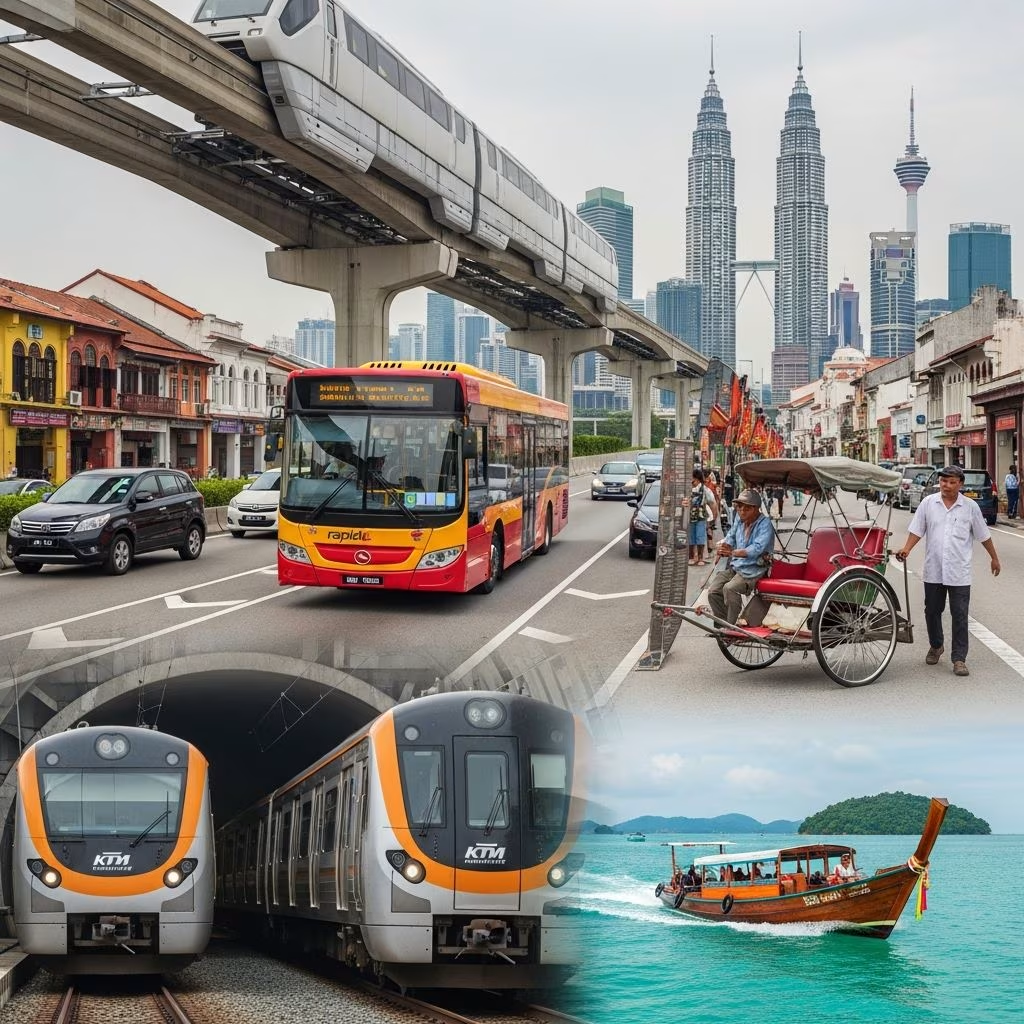 Travel Essentials
Malaysia’s transport system blends modern efficiency with budget-friendly accessibility, making it easy for visitors to explore its vibrant cities, lush landscapes, and island paradises. From high-speed trains slicing through karst mountains to extensive bus networks and app-based rideshares, options cater to every traveler’s needs and budget.
Rail travel stands out as a comfortable, scenic choice for intercity trips in Peninsular Malaysia. The Electric Train Service (ETS), operated by Keretapi Tanah Melayu (KTM), connects key hubs like Kuala Lumpur Sentral to Ipoh, Penang, and beyond with tilting trains that handle curves smoothly while offering air-conditioned comfort and onboard snacks.
A typical KL to Ipoh trip covers 200km in about 2 hours and 20 minutes, far quicker than buses, with fares from 25-55 MYR depending on class and advance booking. Multiple daily departures ensure flexibility, and online reservations via the KTM app or website are recommended to secure seats.
Complementing ETS are KTM Komuter services for suburban routes around Kuala Lumpur and Selangor, ideal for daily commutes or short excursions. These electric trains run frequently, linking the capital to nearby towns with fares under 10 MYR. For airport transfers, the KLIA Ekspres zips non-stop from KL Sentral to Kuala Lumpur International Airport in 28 minutes, complete with Wi-Fi and spacious seating.
Buses dominate Malaysia’s intercity travel, offering unmatched coverage to remote areas trains skip. Operators like Transnasional, Plusliner, and premium services such as Aeroline provide air-conditioned coaches with reclining seats and sometimes meals. A 5-hour Penang to KL journey costs 35-50 MYR on economy lines, rising slightly for luxury options.
Terminals like Pudu Sentral in KL or Penang’s Sungai Nibong hub serve as gateways, with frequent departures day and night. Booking apps like redBus or 12Go simplify schedules and payments, ensuring reliability even during peak seasons. Local buses within cities are equally vital, with Kuala Lumpur’s Rapid KL network spanning neighborhoods for 1-5 MYR fares. Free GO KL buses loop tourist spots like Bukit Bintang and Chinatown, a boon for sightseers.
In Penang, routes like bus 101 from George Town to Batu Ferringhi cost just 2.70 MYR, while free CAT shuttles cover heritage sites. Buses arrive every 5-15 minutes on busy lines, though rush hours bring crowds—flag drivers and state your stop for flexible service.
Kuala Lumpur’s integrated rail web—MRT, LRT, Monorail, and Komuter—forms a robust Layer One for urban mobility. These elevated and underground lines ferry millions daily, with Touch ‘n Go cards enabling seamless fares from 1-15 MYR across systems.
The MRT’s driverless trains zip through the Klang Valley, linking KL Sentral to bustling areas like Nu Sentral mall. LRT covers east-west routes, while the Monorail loops central hotspots. Despite occasional integration gaps, apps like Moovit provide real-time tracking and route planning.
Expansion continues, with new lines easing congestion and supporting eco-friendly travel over cars or motorcycles. Students and tourists praise the speed: a university-to-city center commute takes minutes versus traffic-clogged roads.
| System | Key Routes | Fare Range (MYR) | Best For |
|---|---|---|---|
| MRT | KL Sentral – Sungai Buloh | 2-10 | Suburban links |
| LRT | Kelana Jaya – Ampang | 1-8 | City center |
| Monorail | KL Sentral – Titiwangsa | 2-5 | Shopping districts |
| Komuter | Tanjung Malim – Port Klang | 2-15 | Regional commutes |
Grab reigns supreme for flexible urban hops, outshining traditional taxis that sometimes resist meters. Summon a car, bike, or van via the app for transparent pricing—short KL rides start at 5-10 MYR, with surge pricing during peaks.
In Penang, Kummute vans offer flat 1 MYR air-conditioned rides in George Town and suburbs, cashless only. Taxis cluster at malls and stations; negotiate fixed fares for longer trips or use Grab after dark for safety. On Borneo, Kuching and Kota Kinabalu rely on similar setups, with local buses filling gaps. Rickshaws persist in Melaka and Penang for nostalgic, short jaunts.
Boats unlock Malaysia’s coastal gems. Frequent ferries link Penang to Butterworth (15 minutes, 1.20 MYR), while Langkawi’s high-speed crafts from Kuala Kedah take 90 minutes for 60 MYR. In Sabah, ferries connect mainland to islands like Labuan or Tioman equivalents in the east.
East Malaysia’s rivers demand longboats for interior Borneo access, from Sibu to remote longhouses. Schedules align with tides; book ahead for popular routes. Mopeds rule islands like Perhentian or Redang—rent for 30-50 MYR/day, but wear helmets and watch for sand.
Renting cars or motorcycles grants flexibility for road trips through tea plantations or beach drives. International licenses work for 90 days; expect 150-300 MYR/day for economy autos via Hertz or local firms. Tolls on North-South Expressway use Touch ‘n Go cards, with scenic stops at rest areas offering nasi lemak.
Drive on the left, yield to motorbikes, and avoid night travel due to potholes and animals. Apps like Waze navigate floods or jams effectively. For Borneo, 4WDs handle unpaved roads to national parks.
AirAsia and Malaysia Airlines make skipping Peninsular-East divides cheap—KL to Kota Kinabalu from 50 MYR one-way. Airports like Subang or Senai serve domestic feeders, with budget carriers dominating.
Budget buses via Transnasional cost 35-45 MYR for 5 hours; ETS trains are faster but pricier at 60+ MYR.
Yes, with sharing trip details and high ratings; preferred over street hails.
Touch ‘n Go works across MRT, LRT, Monorail, and buses.
Ferries from Kota Kinabalu or Sandakan, plus mopeds on-site.
No—buses, trishaws, and Grab cover George Town and beaches efficiently.
Mastering these options unlocks Malaysia’s diversity, from skyscraper skylines to rainforest depths, all without breaking the bank.
