


 Food & Culture
Food & Culture
Malaysian Cuisine: A Multicultural Food Journey
Explore Malaysia's vibrant food culture shaped by Malay, Chinese, Indian, and indigenous influences, from street stalls to regional specialties.
 Food & Culture
Malaysia stands as one of Asia’s most compelling culinary destinations, where the kitchen serves as a bridge between communities and centuries of cross-cultural exchange. The nation’s food landscape reflects its complex history of migration, trade, and cultural coexistence, creating a gastronomic identity that belongs entirely to Malaysia while drawing inspiration from across the globe.
The Historical Roots of Malaysian Gastronomy
Understanding Malaysian food requires looking backward to the 15th century, when the region became a crucial junction for maritime commerce. Arab traders navigating these waters introduced spices from the Middle East, fundamentally altering local cooking practices. Later arrivals—Portuguese, Dutch, and English colonizers—brought New World ingredients including peanuts, pineapples, tomatoes, and squash, which became seamlessly integrated into traditional recipes.
This layering of influences did not result in a confused cuisine but rather a sophisticated system where each community adapted foreign elements to their own palate. Chinese Malaysians diluted Indian curries to suit their preferences, while Malay cooks transformed Chinese noodle techniques into distinctly local preparations. The outcome is a cuisine that feels authentically Malaysian precisely because it embraces rather than rejects its multicultural DNA.
The Backbone of Malaysian Meals: Understanding Core Ingredients and Techniques
Malay cooking relies heavily on a foundational spice blend known as rempah empat beradik—literally “the four sibling spices”—comprising star anise, cinnamon, cardamom, and clove. These aromatic elements create the robust, layered flavors characteristic of Malay dishes. However, Malay cuisine extends beyond these traditional spices to encompass bold use of chili, coconut milk, and fermented pastes that deliver complex heat and depth.
The structure of a traditional Malay meal places rice at the center, with all other components—proteins, vegetables, condiments—functioning as accompaniments rather than equals. This hierarchy reflects both practical considerations and cultural values around sustenance and family dining. The rice serves as a canvas upon which other flavors and textures are applied, allowing diners to balance intensity and variety with each bite.
Breakfast as Cultural Identity
Morning dining in Malaysia transcends mere nutrition and becomes a social ritual that unites diverse ethnic groups. The breakfast tradition encompasses accessible, economical dishes that have achieved iconic status across the nation. These morning staples represent more than nostalgia; they function as markers of cultural identity that connect Malaysians regardless of ethnic background.
Essential breakfast dishes include:
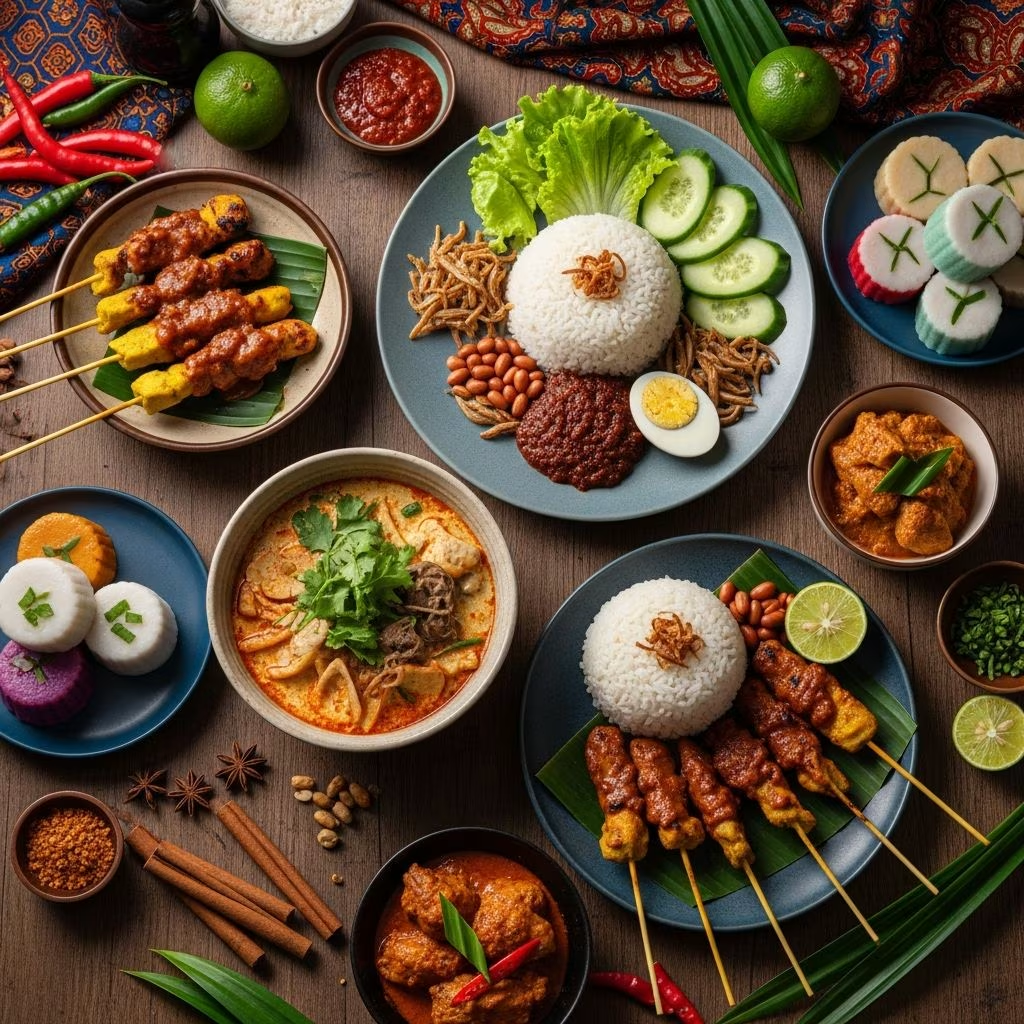
- Nasi Lemak — fragrant rice cooked in coconut milk and pandan leaf, typically accompanied by fried chicken, roasted peanuts, anchovies, cucumber slices, and sambal belacan, a spicy shrimp paste condiment
- Roti Canai — flaky layered flatbread served with curry sauce for dipping, requiring skillful hand-tossing technique during preparation
- Teh Tarik — literally “pulled tea,” a frothy beverage created by pouring hot tea between cups from height, combining evaporated milk with strong black tea
These breakfast traditions have been transmitted across generations, ensuring cultural continuity while remaining accessible to all economic strata. The breakfast culture demonstrates how food functions as a unifying force in Malaysian society, bringing together individuals from different backgrounds over shared culinary experiences.
Regional Variations: From Northern Heights to Southern Coastal Traditions
Malaysia’s geography and demographic composition create distinct regional food identities, each reflecting local ingredients, historical influences, and community preferences.
Northern Malaysian Influences
The northern regions, particularly Kedah, showcase strong Sumatran and Southern Thai influences alongside core Malay traditions. Nasi lemuni represents a distinctly northern specialty, featuring rice cooked with extracted juice from native lemuni plant leaves, creating a subtly bitter undertone balanced by coconut milk addition. This regional dish illustrates how access to specific local ingredients shapes unique culinary expressions.
Eastern Coastal Specialties
Terengganu and other east coast states produce distinctive rice-based and seafood-forward preparations. Bubur lambuk, a savory rice porridge consumed during Ramadan, combines lemongrass, spices, vegetables, and protein, typically prepared communally at local mosques for evening fast-breaking. In Terengganu specifically, this dish incorporates wild herbs, budu (fermented fish sauce), sweet potatoes, and seafood. Keropok lekor, another regional specialty, features shredded fish mixed into batter and fried until crispy, traditionally served with hot sauce.
Central Peninsula Traditions
Ipoh’s culinary identity centers on Cantonese cooking traditions emphasizing light, clean flavors that allow fresh produce characteristics to dominate. The region developed particular affinity for various noodle preparations—meen (wheat noodles), mai fun (rice vermicelli), and hor fun (flat rice noodles)—served stir-fried, braised, or in aromatic broths.
Southern Coastal Heritage
Malacca represents a cultural crossroads where Nyonya cuisine emerged from blended Malay and Chinese traditions adapted by Straits-born communities. Asam pedas, a must-try regional dish, features fish cooked in spicy-sour broth accented by chili, tamarind, galangal, and lemongrass, exemplifying how southern cooks balance multiple flavor dimensions.
The Institution of Communal Eating Spaces
Malaysian food culture extends beyond recipes into the social infrastructure supporting daily eating practices. Kopitiams (traditional coffee shops) serve as gathering spaces where locals consume breakfast and light meals, offering variety within affordable price ranges. These establishments function as community anchors where regular patrons encounter familiar faces and flavors.
Mamak stalls represent perhaps Malaysia’s most influential culinary institution. Operated by members of Malaysia’s Tamil Muslim community, these establishments have developed a distinctive culinary style wielding influence disproportionate to their operators’ numbers. Available throughout the nation and frequently operating 24 hours daily, mamak stalls offer diverse food selections served in casual environments where hands-on eating is expected and accommodated. Many mamak spaces include sinks, acknowledging that traditional South Indian eating methods rely on manual techniques rather than utensils.
Night markets provide another essential dining venue, particularly for Chinese-influenced Malaysian dishes. These bustling evening markets create informal culinary theaters where vendors specialize in specific preparations, allowing customers to sample multiple dishes from different stalls during single visits.
Ethnic Communities and Their Culinary Contributions
Malaysia’s demographic composition—approximately 69% Malay, 23% Chinese, 7% Indian, and 1% other communities—creates a foundation for distinct yet interconnected food traditions.
Malay Culinary Traditions
Malay cuisine emphasizes strong, spicy flavors built upon the foundational spice blend mentioned earlier. Rice remains the centerpiece, with accompanying dishes providing flavor variety and textural contrast. Beyond basic preparations, Malay cooking encompasses elaborate festive dishes and specialized regional recipes developed over centuries.
Chinese-Malaysian Adaptations
Chinese Malaysians have skillfully adapted traditional cooking techniques to local ingredients and flavor preferences. Chinese noodles merged with Indian and Malay tastes, creating distinct Malaysian versions of fried noodles that differ from their progenitors. Cantonese influences remain particularly strong in northern regions, while Hokkien traditions characterize coastal areas like Penang.
Indian-Malaysian Synthesis
Indian food maintains tremendous popularity, with dedicated Little India neighborhoods in major cities. Traditional Malaysian Indian dishes typically incorporate curry leaves, diverse spices, fresh coconut in multiple forms, and complex flavor layering. The mamak tradition, originated by Tamil Muslims, created an entire food culture extending far beyond standard Indian cuisine.
Signature Dishes Across Regional Boundaries
Laksa represents perhaps Malaysia’s most versatile national dish, with each region claiming distinctive versions. Curry laksa derives richness from coconut milk and curry paste, while asam laksa achieves distinctive sourness through tamarind and flaked mackerel additions. The regional variations demonstrate how single dish concepts can accommodate local preferences and ingredient availability.
Hokkien Mee showcases regional interpretation in Penang, where the dish appears in prawn-based soup rather than the dry, dark soy sauce preparation common in Peninsular Malaysia. Nasi kandar, originating from Indian Muslim traders who carried curries in clay jars suspended from carrying poles, has become synonymous with Penang’s food identity. The tangy Penang Laksa and Hokkien Mee represent locally celebrated specialties drawing international recognition.
Satay and Rendang appear throughout Malaysia in countless variations, with spice levels, protein selections, and sauce compositions shifting based on local tradition and family recipe. These dishes demonstrate Malaysian cooking’s flexibility in responding to available ingredients while maintaining core flavor profiles.
The Philosophy Behind Malaysian Cooking
Malaysian food culture reflects a fundamental philosophy of adaptation and inclusion. Rather than segregating cuisines into separate categories, Malaysian cooks have created a unified system where diverse traditions inform each preparation. Tom Yam, Thailand’s most celebrated dish, has been adopted and adapted until becoming distinctly Malaysian, illustrating how open culinary boundaries strengthen rather than dilute regional identity.
This adaptive approach extends to ingredient substitution and technique modification. When specific imported elements prove unavailable or economically inaccessible, Malaysian cooks develop equivalent preparations using local resources. This necessity-driven innovation creates continuous culinary evolution while maintaining cultural authenticity.
Dining Experiences and Food Tourism
Experiencing Malaysian food authentically requires venturing beyond restaurants into community eating spaces where locals gather daily. Street-level food courts, night markets, and mamak stalls provide superior authenticity and value compared to tourist-oriented establishments. These venues showcase not just recipes but the social rituals surrounding Malaysian eating culture.
Regional food exploration reveals how geography, climate, and cultural demographics shape local specialties. Penang’s coastal position enables fresh seafood preparation impossible in inland regions, while northern areas showcase Thai and Sumatran influences absent in southern zones. Understanding these regional variations deepens appreciation for Malaysia’s overall culinary complexity.
Frequently Asked Questions
- What makes Malaysian cuisine distinct from other Southeast Asian food traditions?
- Malaysian cuisine uniquely blends Malay, Chinese, Indian, and indigenous influences into integrated rather than parallel cooking systems. Unlike neighboring countries with more homogeneous culinary traditions, Malaysia’s food reflects genuine multicultural coexistence at the recipe level.
- Are Malaysian dishes typically very spicy?
- Spice levels vary considerably. While Malay and Indian-influenced dishes tend toward substantial heat, Chinese-Malaysian preparations often employ lighter seasoning. Diners can generally request heat adjustments at street stalls and casual restaurants.
- What should first-time visitors prioritize when exploring Malaysian food?
- Breakfast culture represents the optimal entry point, with accessible, beloved dishes including Nasi Lemak, Roti Canai, and Teh Tarik. Following this orientation, regional specialties and mamak dining experiences provide deeper cultural immersion.
- Where do locals eat daily?
- Locals frequent kopitiams for breakfast, night markets for Chinese-influenced dishes, and mamak stalls for Indian and fusion preparations. These casual venues offer superior food quality and authenticity compared to tourist restaurants.
- How has Malaysian cuisine evolved historically?
- Trade routes, colonization, and migration continuously reshaped Malaysian food traditions. Arab traders introduced Middle Eastern spices, colonial powers brought New World ingredients, and community intermingling created fusion dishes transcending single ethnic origins.
Conclusion: The Living Heritage of Malaysian Flavors
Malaysian cuisine represents far more than sustenance; it embodies a sophisticated culinary philosophy celebrating diversity while maintaining coherent identity. Each dish tells stories of historical movement, cultural adaptation, and community innovation. The breakfast traditions, regional specialties, communal eating spaces, and fusion dishes collectively create a food culture that welcomes new influences without losing essential character.
Exploring Malaysia through its food requires embracing complexity rather than seeking simplicity. The best culinary experiences emerge through humble street stalls rather than prestigious restaurants, through everyday meals rather than special occasions, through community spaces rather than establishments catering to outsiders. This democratic, inclusive approach to food culture makes Malaysian gastronomy uniquely accessible and perpetually evolving.
References
- 7 days exploring the rich food and culture of Malaysia — Lonely Planet. April 2026. https://www.lonelyplanet.com/articles/malaysia-food-culture
- Malaysian cuisine — Wikipedia. https://en.wikipedia.org/wiki/Malaysian_cuisine
- Breakfast culture in Malaysia: dining experience in a multi-ethnic society — UNESCO Intangible Cultural Heritage. https://ich.unesco.org/en/RL/breakfast-culture-in-malaysia-dining-experience-in-a-multi-ethnic-society-02113
- Discover the joys of Malaysia’s multi-ethnic food — Contiki. https://www.contiki.com/six-two/article/multi-ethnic-food-in-malaysia/
- A Taste of Malaysia: Exploring the Nation’s Diverse Regional Flavors — Michelin Guide. https://guide.michelin.com/my/en/article/travel/malaysias-diverse-regional-flavors
- The Fascinating History of Malaysian Food — Think CZ. https://www.think.cz/english/wining-dining/malaysian-food/
On This Page
The Historical Roots of Malaysian Gastronomy The Backbone of Malaysian Meals: Understanding Core Ingredients and Techniques Breakfast as Cultural Identity Regional Variations: From Northern Heights to Southern Coastal Traditions The Institution of Communal Eating Spaces Ethnic Communities and Their Culinary Contributions Signature Dishes Across Regional Boundaries The Philosophy Behind Malaysian Cooking Dining Experiences and Food Tourism Frequently Asked Questions Conclusion: The Living Heritage of Malaysian Flavors← Previous
Pakistan Travel Guide: Safety, Visa Tips, Best Time to Visit
Next →
Southern Peru Food Guide: Cusco, Puno & Arequipa Cuisine
Related Reading
More in Food & Culture
Food & Culture Food & Culture
 Food & Culture
Best Places to Eat in Rome: Neighborhood Dining Guide
 Food & Culture
 Food & Culture