

 Travel Essentials
 Travel Essentials

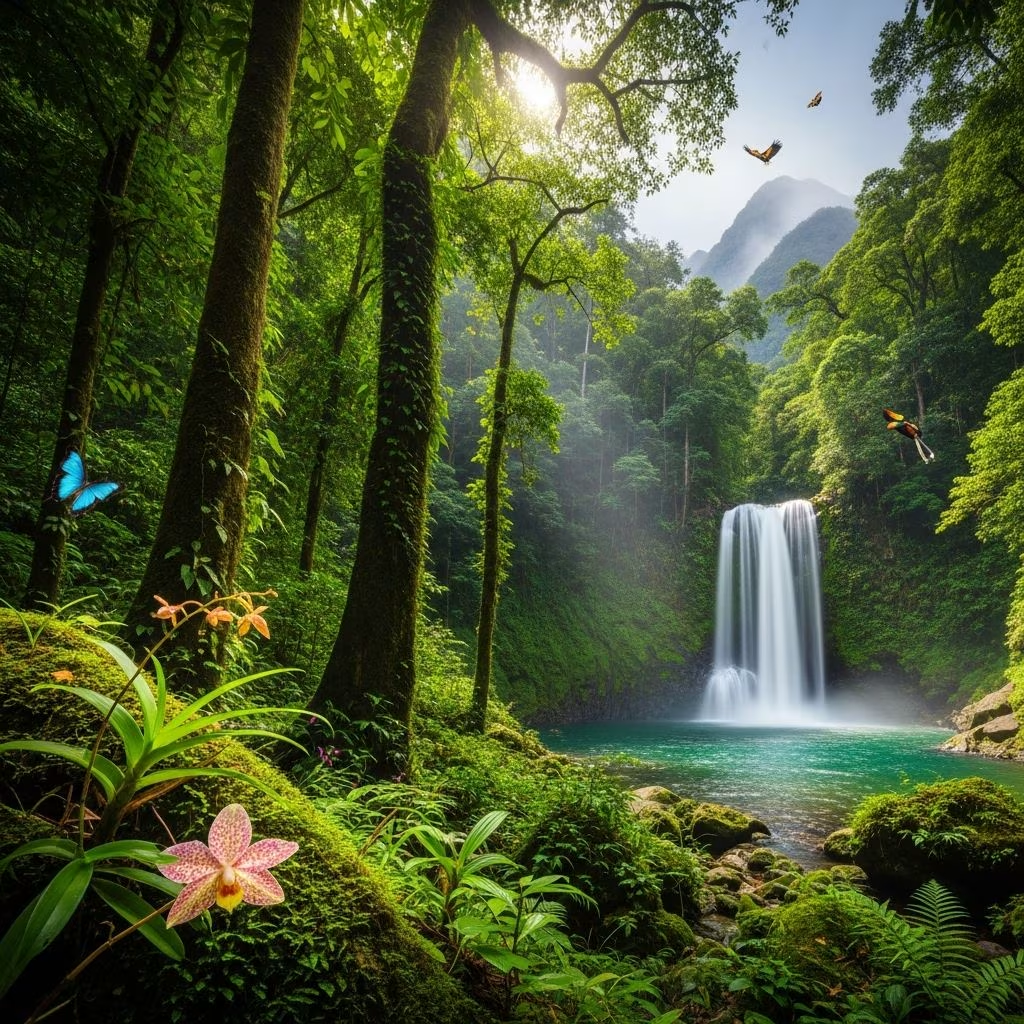
Explore Malaysia's premier national parks featuring ancient rainforests, limestone caves, mountain peaks, and diverse wildlife across Peninsular Malaysia and Borneo.
 Travel Essentials
Malaysia stands as one of Southeast Asia’s most biodiverse nations, with a remarkable collection of protected areas that showcase the region’s ecological richness. These conservation spaces span diverse terrains—from millennia-old cave systems carved into limestone mountains to dense rainforests teeming with endangered species. Whether you seek adventure through challenging treks, peaceful wildlife observation, or geological wonders, Malaysia’s national parks offer unforgettable experiences that connect visitors with pristine natural environments.
At the heart of Malaysia’s protected wilderness lies Taman Negara National Park, a vast expanse spanning three states and covering approximately 4,343 square kilometers. This ancient rainforest ecosystem ranks among the world’s oldest tropical forests, with geological evidence suggesting its age exceeds 130 million years. The park’s longevity has fostered extraordinary biodiversity, creating habitats for numerous species found nowhere else on Earth.
The landscape within Taman Negara encompasses multiple habitat types, from riverine environments to lowland forests and highland plateaus. This ecological diversity supports populations of critically endangered Malayan tigers, Asian elephants, and countless bird species. The park’s river systems, particularly the Tembeling River, provide essential water corridors that visitors can explore via guided boat tours.
Accessibility to Taman Negara typically begins through Kuala Tahan, a small settlement in Pahang state situated near the Tembeling River. The park offers varied accommodation options ranging from boutique jungle resorts within park boundaries to budget hostels in nearby communities, making it accessible to visitors with different comfort preferences and financial requirements.
One of Taman Negara’s signature experiences involves traversing the canopy walkway, an elevated pathway system that provides visitors with bird’s-eye perspectives of the forest canopy. This unique vantage point allows observation of arboreal wildlife and forest structure that ground-level visitors cannot access. Additionally, Kerachut Beach, a picturesque coastal feature within the park, serves as a habitat for marine species including green sea turtles. The beach’s meromictic lake—a water body with distinct layers that do not mix—adds geological interest to the broader ecological narrative.
Guided jungle treks form another cornerstone of the Taman Negara experience, offering opportunities to encounter the park’s resident megafauna and experience the forest’s sensory richness. Trained guides facilitate wildlife spotting and provide ecological context that enriches visitors’ understanding of forest dynamics and conservation challenges.
Gunung Mulu National Park, situated in Malaysian Borneo and designated as a UNESCO World Heritage Site, presents a radically different geological story than Taman Negara. This park’s defining characteristics emerge from its spectacular limestone karst landscape, sculpted over millions of years through water erosion. The park encompasses vast cave networks that rank among the world’s most extensive and impressive.
The Sarawak Chamber, contained within the Mulu cave system, holds distinction as one of the largest cave chambers globally by area. This colossal underground cavity demonstrates the dramatic scale of the park’s subterranean geography. Equally dramatic, though in contrasting fashion, stands the Pinnacles formation—a series of razor-sharp limestone spikes that ascend dramatically above the surrounding rainforest canopy. These geological formations create some of Southeast Asia’s most visually striking landscapes.
Trekking Challenges and Rewards: The Mulu Pinnacles trek represents one of Malaysia’s most demanding hiking experiences, requiring a minimum of three days to complete and incorporating rock climbing segments. This challenging route appeals to experienced trekkers seeking test their capabilities while rewarding effort with unparalleled geological and ecological views.
Beyond the Pinnacles, the Clearwater Cave system ranks among the world’s longest cave formations, offering visitors opportunities to explore underground rivers and crystalline pools. The Canopy Skywalk, described as the world’s longest tree-based walk, extends through the rainforest canopy and provides an alternative perspective on the park’s ecosystems.
Bako National Park distinguishes itself among Malaysia’s protected areas through its unique accessibility requirements. Unlike other national parks, reaching Bako necessitates crossing the South China Sea via boat. This marine barrier creates a sense of wilderness separation that enhances the park’s mystique while protecting its ecosystems from excessive development pressures.
Once visitors arrive, Bako presents Sarawak’s lush rainforest environment in concentrated form. The combination of coastal and rainforest ecosystems creates habitat diversity that supports specialized species adapted to transitional ecological zones. The boat journey itself becomes part of the experience, offering opportunities for marine wildlife observation before arriving at the terrestrial park boundaries.
Kinabalu Park, Malaysia’s first UNESCO World Heritage Site, centers around Mount Kinabalu, Southeast Asia’s highest peak at 4,095 meters. This alpine environment creates ecological conditions dramatically different from lowland rainforests, with distinct vegetation zones that transition from tropical forest to alpine meadows as elevation increases.
The Summit Challenge: Ascending Mount Kinabalu’s peak represents a substantial physical undertaking, though achievable for visitors with moderate fitness levels and proper acclimatization. The panoramic views from the summit encompass Borneo’s landscape in dramatic fashion, rewarding the exertion required to reach the mountain’s highest point.
Complementary Experiences: Beyond mountain climbing, Kinabalu Park offers multiple visitor attractions:
Endau-Rompin National Park, spanning the Johor and Pahang state border, remains less visited than Malaysia’s premier parks, earning designation as a “lesser-known gem”. This status reflects its location in Malaysia’s more remote regions and its emphasis on rugged landscapes rather than dramatic geological formations or mountain peaks.
The park’s primary attractions center on enchanting waterfall systems such as Buaya Sangkut and Upeh Guling. Waterfall trekking through dense forest creates immersive nature experiences where visitors encounter the forest ecosystem in its most elemental form. Night safari opportunities allow observation of nocturnal species, revealing entirely different dimensions of the park’s wildlife community.
Royal Belum State Park, located in Perak state, forms part of the larger Belum-Temengor Forest Complex, itself among the world’s oldest rainforest systems. Unlike some more developed national parks, Royal Belum maintains a relatively untouched character that appeals to visitors seeking pristine wilderness experiences with minimal infrastructure development.
Boating safaris across Temengor Lake provide access to remote forest areas and opportunities for observing wildlife in undisturbed habitats. The park serves as a refuge for threatened species including Malayan tigers, Malaysian sun bears, and white-handed gibbons. Seasonal Rafflesia blooms—the world’s largest flower species—draw botanically-minded visitors seeking encounters with these remarkable botanical specimens.
Gunung Ledang National Park, centered on Mount Ophir (Gunung Ledang), showcases Johor state’s highest mountain terrain at 1,276 meters elevation. This park attracts hiking enthusiasts seeking challenging ascents and highland ecosystem experiences. The mountain’s elevation creates distinct vegetation zones and microclimate conditions that differ significantly from lowland rainforest environments.
| Park Name | Primary Features | Location | UNESCO Status |
|---|---|---|---|
| Taman Negara | Ancient rainforest, wildlife, canopy walks | Pahang, Kelantan, Terengganu | No |
| Gunung Mulu | Limestone caves, pinnacles, subterranean rivers | Sarawak (Borneo) | Yes |
| Kinabalu Park | Highest peak, alpine ecosystems, botanical gardens | Sabah (Borneo) | Yes |
| Bako National Park | Coastal rainforest, marine access required | Sarawak (Borneo) | No |
| Endau-Rompin | Waterfalls, dense forests, nocturnal wildlife | Johor-Pahang border | No |
| Royal Belum | Ancient forest, boating safaris, rare species | Perak | No |
Seasonal Factors: Malaysia’s equatorial climate produces rainfall throughout the year, with monsoon seasons affecting different regions during distinct periods. Visitors should research seasonal patterns specific to their chosen park to optimize conditions for planned activities.
Physical Preparation: Different parks present varying physical demands. Summit climbs require cardiovascular fitness and altitude acclimatization, while jungle treks demand heat tolerance and appropriate footwear. Casual nature walks suit visitors with limited hiking experience.
Accommodation and Services: Park accessibility varies considerably. Taman Negara offers diverse lodging options within and near park boundaries, while more remote parks may require staying in gateway towns and commuting daily to park areas. Facilities range from luxury eco-resorts to basic dormitory accommodations.
Wildlife Viewing Guidance: Engaging trained local guides substantially enhances ecological understanding and wildlife observation success. Guides possess knowledge of animal behaviors, seasonal patterns, and optimal viewing locations unavailable to unaccompanied visitors.
Malaysia’s national parks function as critical biodiversity reservoirs in an increasingly developed region. These protected areas maintain habitat continuity for species facing pressure from agricultural expansion and urban development. The parks serve educational functions by demonstrating ecosystem values and connecting visitors with conservation imperatives. Many protected areas support research activities that advance understanding of tropical ecology and inform conservation strategies.
Taman Negara offers the most comprehensive visitor infrastructure and diverse activity options, making it ideal for visitors unfamiliar with Malaysian national parks. Its accessibility via multiple transportation routes and varied accommodation options accommodate different travel styles.
Physical demands vary dramatically. Casual walks and canopy skywalk experiences require minimal fitness, while Mulu Pinnacles treks and Mount Kinabalu summits demand substantial preparation. Choose activities matching your capability level.
Each region experiences different rainfall patterns. Generally, December through February offers drier conditions for many areas, though specific parks have optimal visiting periods. Research your chosen park’s monsoon schedule beforehand.
While some activities proceed safely without guides, engaging guides substantially enhances wildlife observation success, safety, and ecological understanding. Guides prevent visitors from becoming disoriented and provide context transforming observations into meaningful learning experiences.
Lowland rainforest parks support tigers, elephants, and diverse bird species, though spotting megafauna requires patience and luck. More reliably observed creatures include monkeys, squirrels, insects, and amphibians. Alpine parks showcase entirely different species adapted to mountain conditions.
Malaysia’s national parks represent irreplaceable repositories of tropical biodiversity and geological wonder. Each park tells distinct stories—through ancient forests, dramatic limestone formations, rushing waterfalls, and resilient wildlife communities. Visiting these protected areas creates direct connections with environments that sustain countless species while offering profound personal experiences of natural majesty. Whether seeking adventure, ecological understanding, or simple respite in wilderness settings, Malaysia’s parks await discovery.
